Egypt’s wheat imports to its ports plunged 84% in the first half of September, underscoring how geopolitics and shipping costs are reshaping one of the world’s most watched grain markets.
Egypt wheat imports plunge 84% in early September
The drop matters because Egypt is not just any buyer. As the world’s largest wheat importer, its procurement patterns ripple through Black Sea exporters, global freight markets and food prices at home. When flows into Egyptian ports slow this sharply, it is usually a sign that buyers, sellers and shippers are all recalculating risk rather than simply running short of grain.
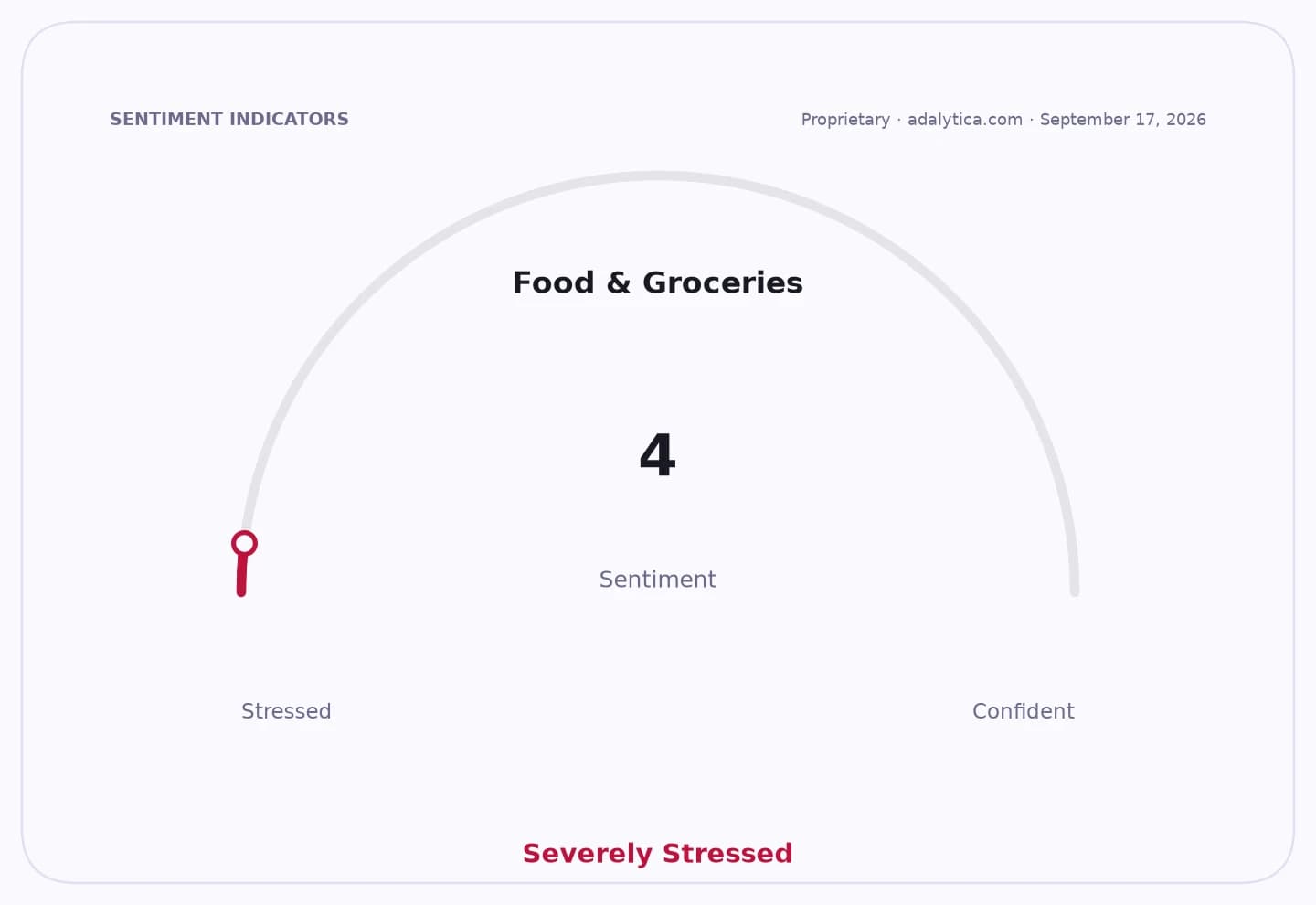
Sentiment IndicatorsⓘProprietary · adalytica.com · September 17, 2026
This is a snapshot — live sentiment, awareness and momentum for 130+ markets update continuously in the dashboard.Open AlphaPulse
Only 143,900 tons of wheat arrived in the first half of September, down from 876,100 tons a year earlier, according to sources cited by local newspaper Al Borsa. The cargoes came only from Romania, Russia and Ukraine, with no shipments for the state grain buyer, the General Authority for Supply Commodities. That detail is important: it suggests the public sector is either sitting out the market or being forced into tougher terms.
The crunch is not about availability, traders say. Wheat is still flowing in the Black Sea and Mediterranean regions. The real problem is getting it to Egypt on acceptable terms. One importer told Al Borsa that tensions involving Russia and Ukraine, plus developments around Iran and the Strait of Hormuz, have pushed Brent crude above $100 a barrel, lifting freight and insurance costs. Russian and French wheat is now around $320 a ton, while Canadian wheat is closer to $330, roughly $80 higher than a year ago.
That price jump is squeezing Egypt’s buyers at the worst possible time. Suppliers that once accepted 270-day letters of credit are now demanding cash payment, according to the report. For a country that relies heavily on imported wheat to stabilize bread supplies, that shift raises the financing burden and makes every tender more expensive. It also makes public procurement less flexible, which can complicate subsidy management and food security planning.
For investors, the key lesson is that this is not just an Egyptian procurement story. It is a signal that elevated geopolitical risk is now baked into agricultural logistics, and that could keep a floor under global grain prices and shipping costs even when harvests are adequate. Wheat producers and grain traders with access to diversified origins may benefit, while import-dependent buyers and companies exposed to food inflation face more pressure.
There is some offset on the domestic side. Egypt’s wheat acreage has expanded to 3.76 million feddans in the 2025-26 season, and the government collected more than 4.7 million tons of local wheat by the end of the season on Aug. 15. The FAO also said Egypt’s 2026 wheat output rose to 10.2 million tons, up about 7% from average production. That helps, but it does not erase the country’s structural reliance on imports.
The bigger takeaway for long-term investors is that food security is becoming a logistics and financing story as much as an agricultural one. As long as the Black Sea remains politically fragile and energy prices stay volatile, Egypt’s import bill can swing sharply even if global supply is sufficient. That makes agricultural equities, freight-linked businesses and global food suppliers worth watching, while import-dependent economies remain exposed.
| Entity | Gains | Losses |
|---|---|---|
| Black Sea exporters | ▲Higher cash pricing | ▼Softer Egyptian demand |
| Shipping and insurers | ▲Higher freight premiums | ▼Fewer easy credit deals |
| Egypt’s private importers | ▲Access to cargoes | ▼Higher financing costs |
| Egyptian consumers and state buyers | ▲Larger local harvests | ▼More imported inflation |