AI is moving from meeting summaries to actual workflow execution, a shift that could change how enterprises manage labor, permissions and software spending.
Enterprise AI Moves From Notes to Workflow Execution

At Enterprise AI Summit 2026 in Hanoi, local developer Base.vn showcased Amber Note, a device that can capture in-person meetings and phone calls, structure the conversation into data and turn it into tasks, CRM updates or operating workflows. The pitch is simple but economically important: if AI can reliably identify who should do what after a meeting, companies spend less time on manual follow-up and more time on execution.
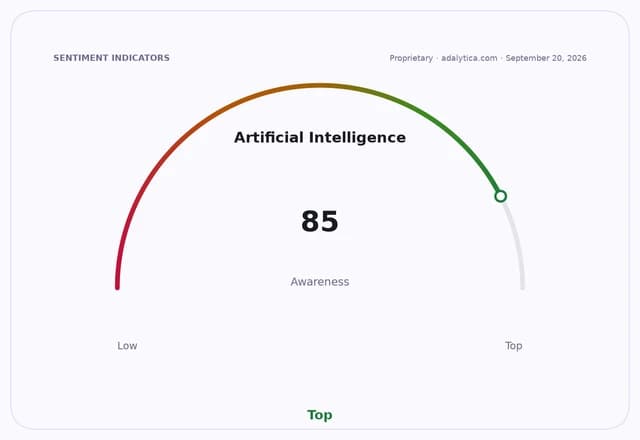
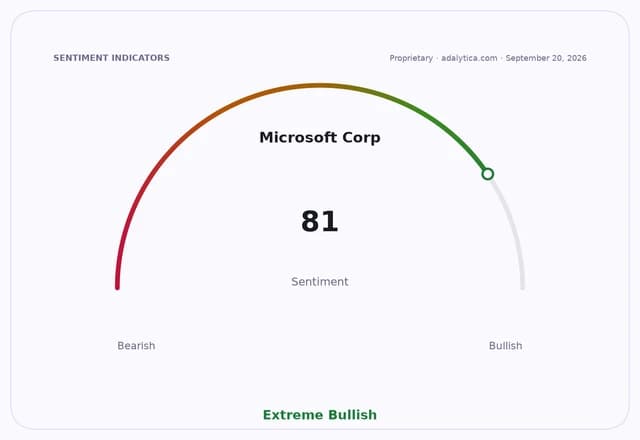
Sentiment IndicatorsⓘProprietary · adalytica.com · September 20, 2026
This is a snapshot — live sentiment, awareness and momentum for 130+ markets update continuously in the dashboard.Open AlphaPulse
That matters because the next phase of enterprise AI is not transcription, but automation inside core business systems. The article’s central question — whether AI can assign work to employees — goes to the heart of how companies measure productivity, control access to data and allocate responsibility when a machine takes an action rather than merely drafts a note.
For investors, the implications are broad. Microsoft, ServiceNow and UiPath are among the companies exposed to a market that increasingly wants AI agents embedded in workflows, not standalone tools. Microsoft shares last closed at $493.78, below the 50-day moving average of $464.20 but still above the 200-day average of $430.08, while Adalytica’s Microsoft earnings sentiment stands at 81, labeled “Greed,” even as awareness reads just 11, or “Extreme Fear.” ServiceNow finished at $135.47, well under its 50-day average of $122.66 and 200-day average of $117.39 after a volatile year in which the stock has been pressured despite a rebound from spring lows. UiPath, at $13.39, remains far below its 2025 highs and has been trading under both its 50-day average of $14.35 and the broader resistance zone implied by its recent technical range.
The economic case is straightforward: software vendors that can turn meetings into approved actions, routing decisions and system updates may capture more of the enterprise workflow budget. That can lift retention, deepen platform lock-in and reduce the need for separate tools that sit between human decision-making and execution. But the same expansion in AI authority raises hard questions on security, governance and liability if a system assigns the wrong task or accesses the wrong data.
That is why the story is bigger than a productivity feature. Enterprise buyers are no longer asking only what AI can generate; they are asking how much operational authority they should hand over. The next catalyst for the sector will be whether companies can prove these systems work safely inside real corporate processes, not just in demos.
| Entity | Gains | Losses |
|---|---|---|
| Enterprise software vendors | ▲Higher workflow adoption | ▼Higher execution risk |
| Companies using AI agents | ▲Faster task routing | ▼More governance burden |
| Employees | ▲Less manual admin | ▼Less control over assignments |
| Microsoft, ServiceNow, UiPath | ▲Deeper platform lock-in | ▼Pressure to prove safety |