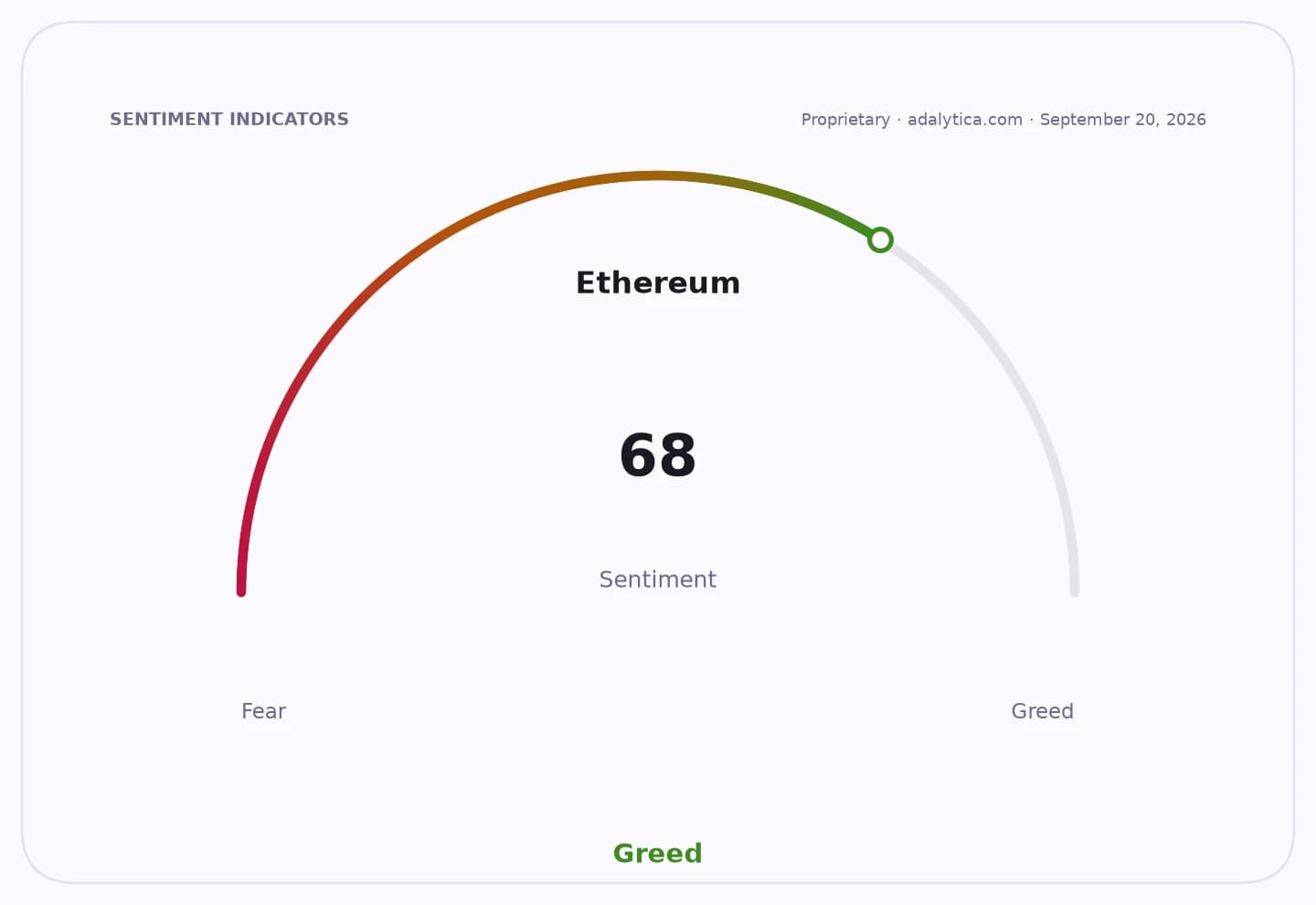
Ethereum’s 31% rally is being driven less by token-specific news than by a broad shift in global liquidity and investor positioning as the U.S. dollar slides, real yields ease and capital rotates into risk assets.
Ethereum rises as dollar weakens
The move matters because a weaker dollar tends to lift dollar-priced assets across the board, from gold to cryptocurrencies, while also improving the financial conditions that support speculative buying. In that setup, Ethereum has emerged as one of the clearest beneficiaries: it outpaced Bitcoin in the latest leg higher and has been repriced alongside a broader de-risking of the greenback rather than a change in the network’s fundamentals.
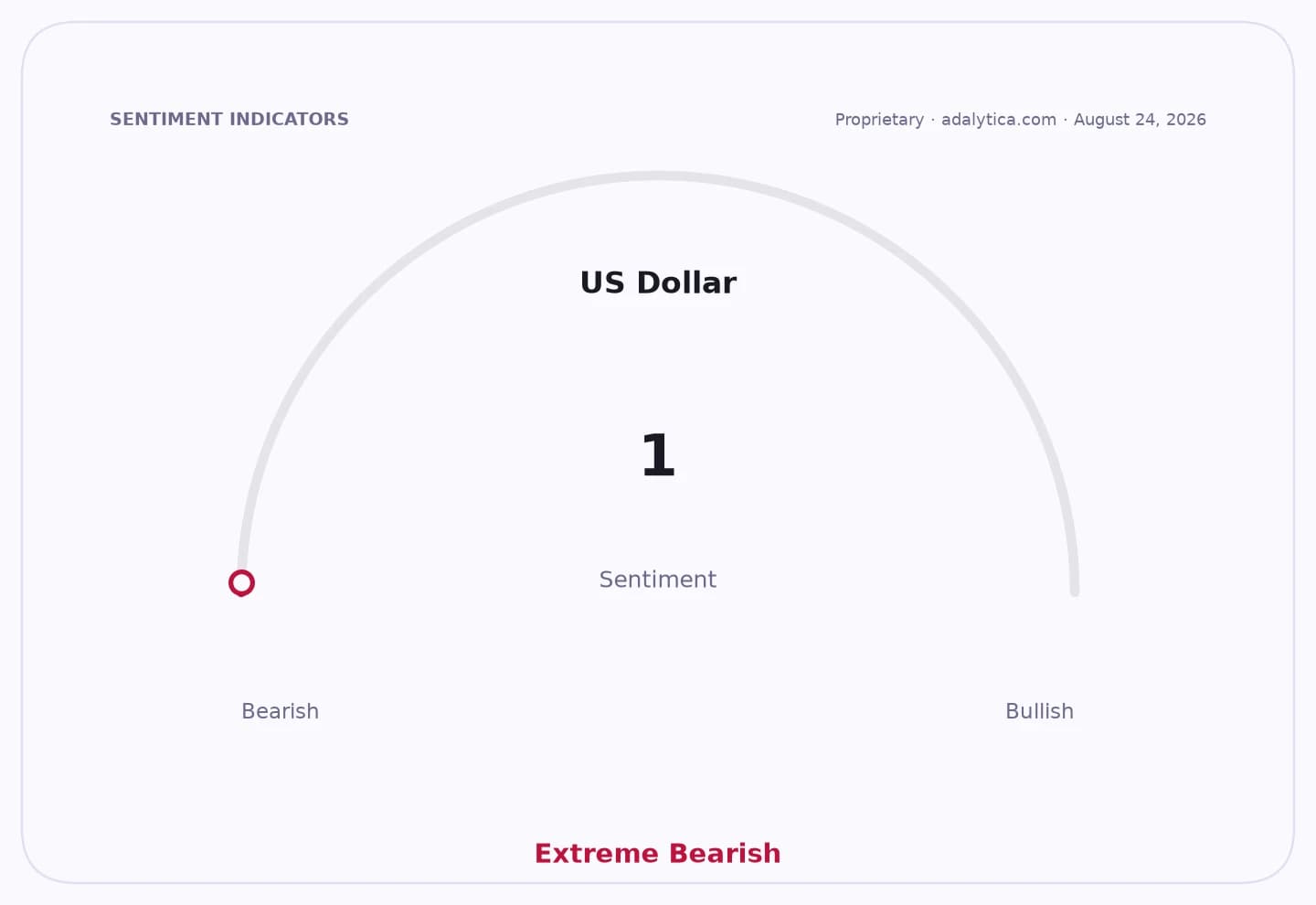
Sentiment IndicatorsⓘProprietary · adalytica.com · August 24, 2026
This is a snapshot — live sentiment, awareness and momentum for 130+ markets update continuously in the dashboard.Open AlphaPulse

That macro backdrop has been reinforced by the dollar’s sharp deterioration. Adalytica’s U.S. Dollar Trade Signals show the currency in “Extreme Fear” with sentiment at 1 and awareness at 96, while the gauge also points to a 63-point drop over 30 days. In the market, the dollar has fallen against the yen, euro, won, Taiwan dollar and Singapore dollar, reflecting softer U.S. real rates and thinner foreign capital inflows. Gold has already responded, touching a three-month high, and Ethereum is now trading as part of the same anti-dollar trade.
Ethereum’s price action shows how aggressively that thesis is being priced in. The token rose to $2,493.99 on Aug. 24 from $2,424.25 the day before, with trading volumes still elevated at nearly $19.9 billion. The rally has also pushed Ethereum far above its 50-day moving average of $1,934.78 and 200-day moving average of $2,010.36, while RSI readings in the high 80s indicate the market is stretched. MACD remains positive, which supports the trend, but the technical setup also suggests the move is becoming crowded.
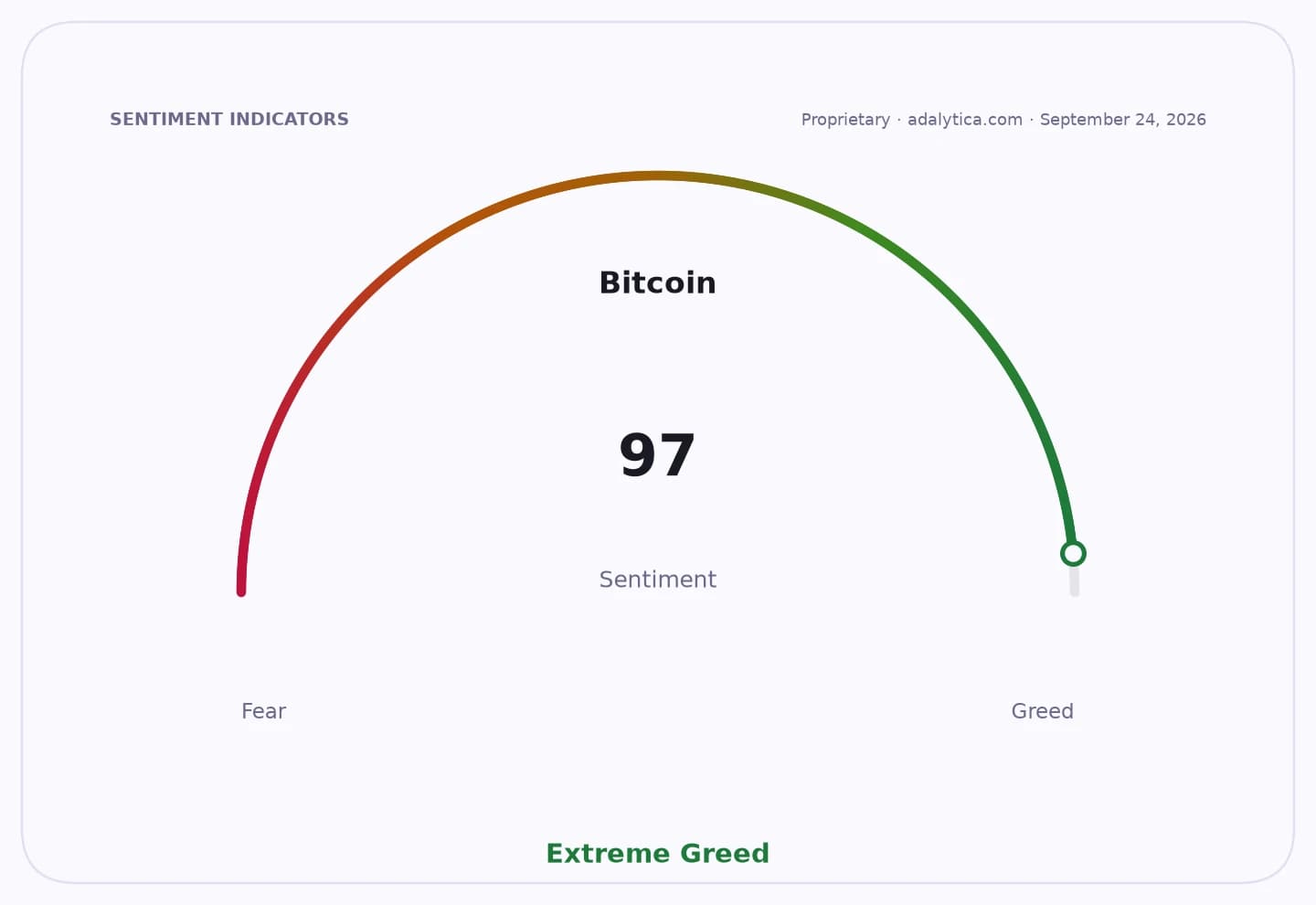
Bitcoin is confirming the broader crypto bid, but not quite to the same extent. It has climbed to $78,570.61, near its own upper Bollinger Band, with Adalytica’s Bitcoin Fear & Greed Index at 90, or “Extreme Greed.” Even so, Ethereum’s 31% jump stands out because it suggests investors are not just buying crypto beta; they are selectively moving into the assets they think offer the most torque to a falling dollar and easier financial conditions.
For investors, the key question is whether the move is the start of a durable re-rating or a momentum spike vulnerable to a reversal if the dollar stabilizes. The bull case is that falling U.S. real rates and persistent policy uncertainty keep the dollar under pressure, sustaining demand for alternative stores of value and high-beta digital assets. The bear case is that Ethereum’s overextended technicals leave it exposed to a sharp pullback if inflation data or central bank messaging reverses the rate narrative.
The next catalyst is the same macro data that drove the move in the first place: inflation readings, bond yields and any sign that foreign demand for U.S. assets is improving. Until then, Ethereum is likely to remain a leveraged expression of the dollar’s weakness.
| Entity | Gains | Losses |
|---|---|---|
| Ethereum bulls | ▲Price momentum | ▼Overbought risk |
| Dollar bears | ▲Anti-dollar trade | ▼FX exposure |
| Bitcoin | ▲Rising crypto sentiment | ▼Relative underperformance |
| Gold | ▲Safe-haven demand | ▼None directly |