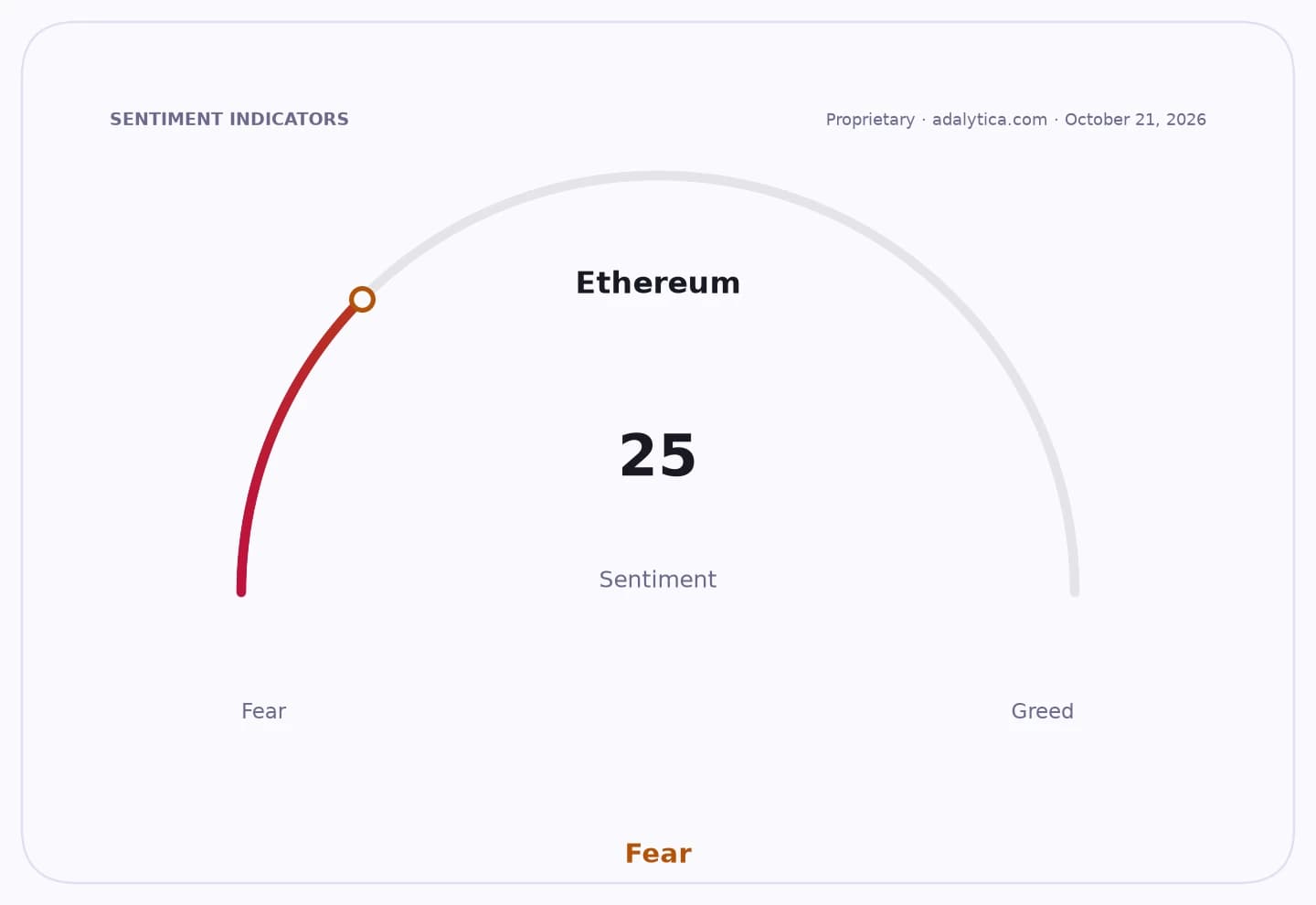
Ethereum’s recovery above $2,400 is giving investors a clearer, if still fragile, picture of the market: large holders are accumulating again even as institutional product development remains uneven.
Ethereum Recovers Above $2,400 as Whales Accumulate
That matters because Ethereum has been trading less like a pure momentum asset and more like a balance-of-flows story. On one side, whale withdrawals worth roughly $61 million point to long-term holders taking coins off exchanges, a pattern that can tighten supply and support prices. On the other, VanEck’s decision to abandon its Lido Staked Ethereum ETF proposal underscores how difficult it remains to package Ethereum exposure into products that meet regulators’ and institutions’ standards.
Sentiment IndicatorsⓘProprietary · adalytica.com · October 23, 2026
This is a snapshot — live sentiment, awareness and momentum for 130+ markets update continuously in the dashboard.Open AlphaPulse
The price action reflects that tension. Ethereum has climbed back to about $2,400 from an October low near $2,381 and is still well above its 200-day moving average around $2,156, suggesting the broader uptrend has not been broken. But it remains below its 50-day moving average near $2,549, which tells traders the rebound has not yet fully restored near-term momentum. RSI readings in the low 40s point to a market that is recovering, but not overheated, while the MACD remains negative, a sign that bullish conviction is still tentative.
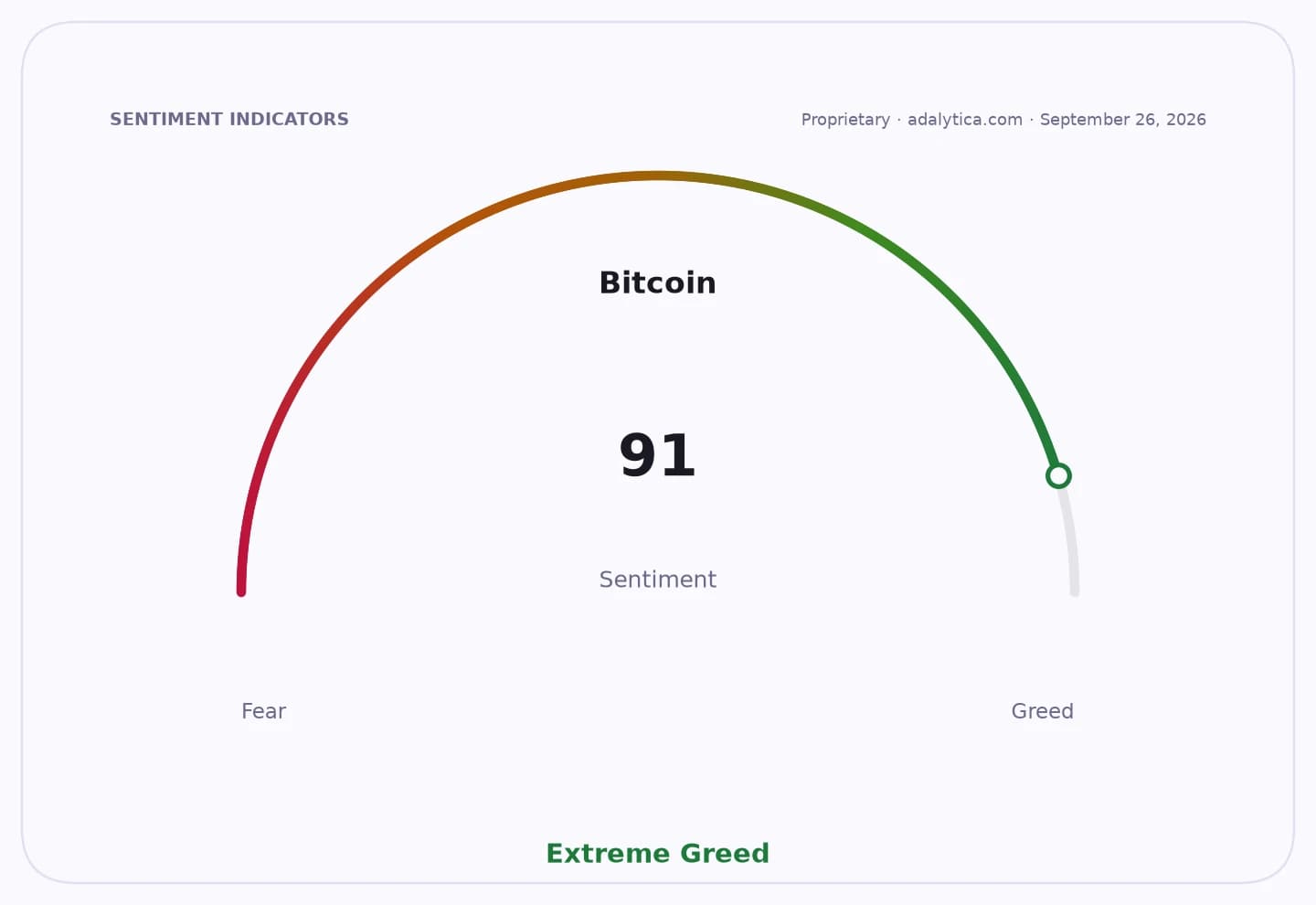
The bigger macro backdrop has also helped. Easier Treasury yields have improved risk appetite across speculative assets, while the crypto market’s recent volatility has kept positioning light enough for selective buying to move prices. That said, the contrast with Bitcoin is notable: BTC is trading around $81,600, above its 200-day average near $72,859, but its own market gauge from Adalytica shows fear at 23, indicating investors remain cautious across the sector.
For investors, the implication is that Ethereum is still being driven by a narrower set of catalysts than Bitcoin. Whale accumulation can support the token in the short term, but a sustained rerating likely depends on clearer institutional adoption, stronger ETF-linked demand and evidence that staking-related products can survive regulatory scrutiny. If those pieces do not improve, Ethereum may remain trapped between long-term accumulation and short-term disappointment.
The next test is whether buyers can hold the $2,400 area and extend gains toward the 50-day average. A failure there would suggest the recent bid is mostly tactical. A decisive break above that level would strengthen the case that Ethereum’s supply dynamics are improving despite the ETF setback.
| Entity | Gains | Losses |
|---|---|---|
| Ethereum whales | ▲Lower entry costs | ▼Less chance to buy weakness |
| Ethereum bulls | ▲Supply support | ▼ETF disappointment |
| VanEck | ▲Risk control | ▼Stalled product launch |
| Short-term traders | ▲Rebound volatility | ▼Missed downside momentum |