European equities are still trading less like a simple growth story and more like a live gauge of geopolitical stress, with broad funds such as VGK, EZU and IEV pressing higher even as risk indicators remain elevated and tail behavior appears to cluster around regime shifts. That matters because when geopolitical risk becomes persistent rather than episodic, it changes how investors price capital, defensives, exporters and cross-border earnings across the region.
Europe ETFs Rise as Geopolitical Risk Stays Elevated

The clearest signal is that Europe is holding gains while the macro backdrop remains unsettled. VGK closed at 91.74 on Sept. 4, up from 75.78 in late November, and sits above both its 50-day and 200-day moving averages. EZU and IEV are also trading above their longer-term trend lines, with IEV at 75.01 versus a 70.41 200-day average. In other words, investors are still willing to own Europe, but they are doing so in a market that has recovered from sharp spring drawdowns and remains vulnerable to sudden swings in risk appetite.
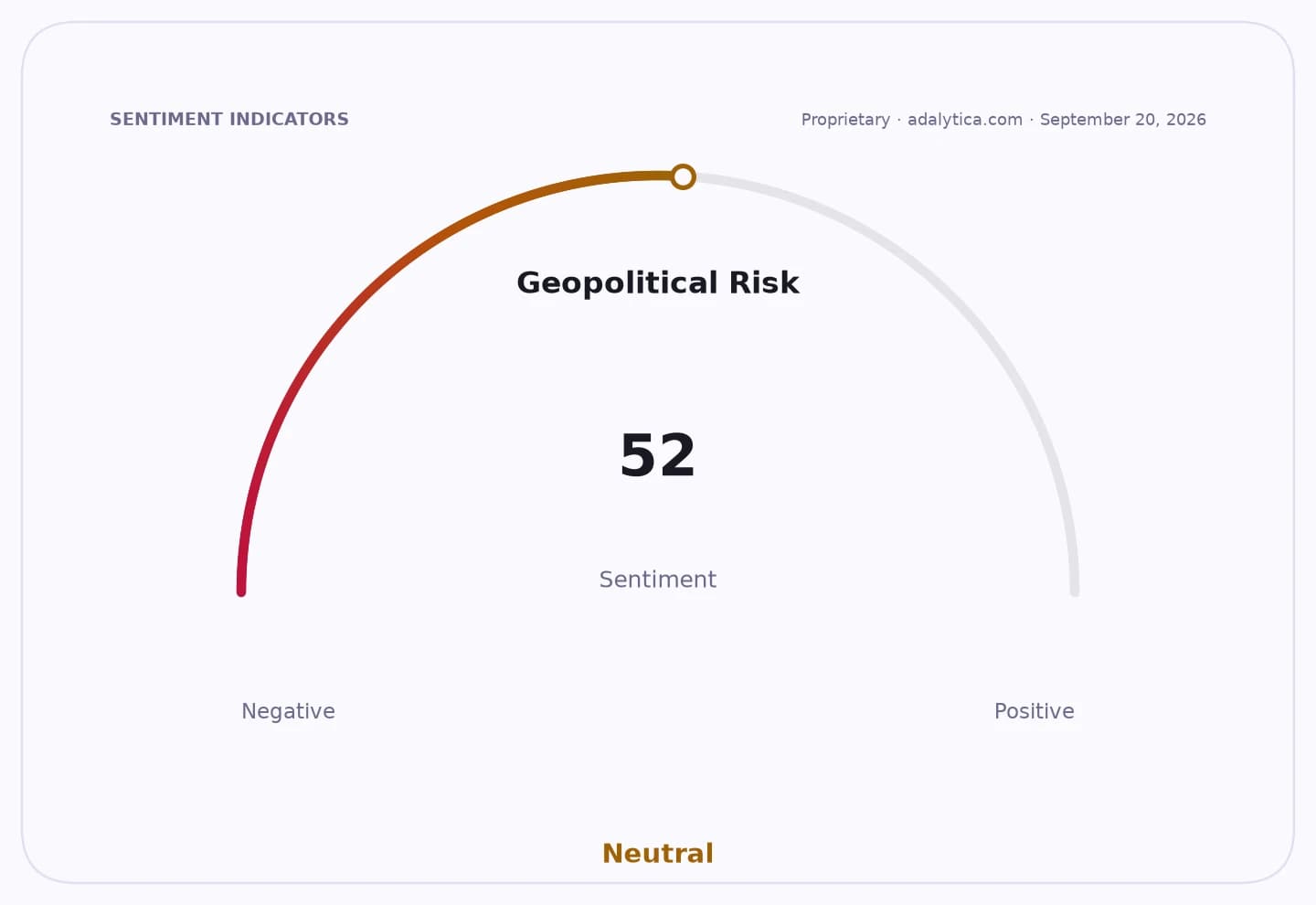
Sentiment IndicatorsⓘProprietary · adalytica.com · September 4, 2026
This is a snapshot — live sentiment, awareness and momentum for 130+ markets update continuously in the dashboard.Open AlphaPulse
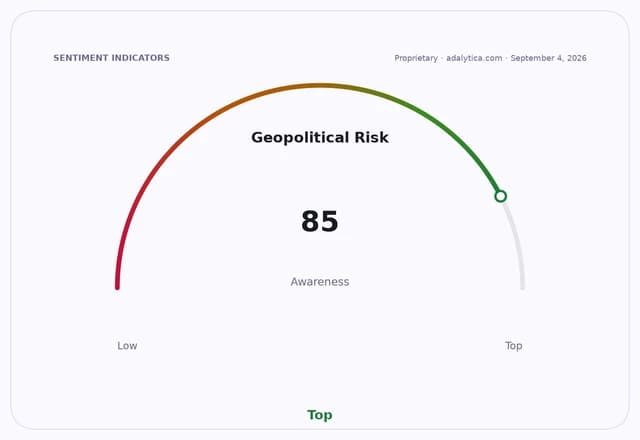
That is exactly the kind of backdrop where tail connectedness matters. In plain terms, shocks are not staying isolated inside one country or one sector; they are propagating through the region and keeping correlations high when investors least want them to. The regime is persistent, not random. When that happens, portfolio diversification inside Europe becomes less effective just as headlines around geopolitics, energy and central-bank policy are forcing investors to reassess macro exposures all at once.
Adalytica’s Global Stability Sentiment, at 44 and in neutral territory, shows the market is not in full panic. But the 7-day drop of 41 points tells you confidence has weakened quickly. At the same time, FX volatility signals sit in extreme fear, underscoring the transmission channel investors care about most: currency swings can amplify equity losses, especially for exporters, importers and multinational earnings streams. That is why geopolitical risk can keep European tail dependence elevated even when headline indices appear calm.
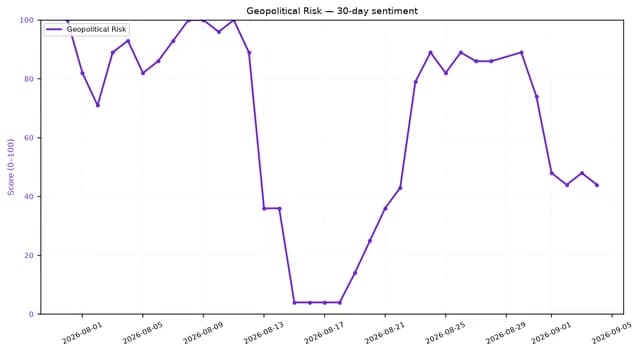
The bond market adds another layer. The U.S. 10-year Treasury yield is still near 4.8%, a level that keeps global discount rates restrictive and leaves little room for error if growth slows or energy prices rise again. That matters for Europe because higher U.S. yields tighten financial conditions worldwide, while a stronger dollar and volatile commodity prices can hit European cyclicals and travel through to corporate margins. European equity buyers are therefore not just betting on earnings; they are betting that geopolitical shocks will stay contained enough not to trigger a broader re-pricing of risk assets.
From an investor’s perspective, this is a stock-picker’s market hiding inside an index trade. The winners are the businesses and ETFs that can absorb regime persistence: exporters with pricing power, defense-linked names, infrastructure assets, and companies with hard-asset or dollar-linked revenue. The losers are the crowded beta trades that depend on stable FX, easy funding and low energy input costs. That is why the market underestimates the opportunity in Europe’s defensive and geopolitical beneficiaries even as broad benchmarks grind higher.
The setup argues for positioning ahead of the next volatility spike, not after it. If geopolitical risk remains sticky, the market will continue rewarding cash flow durability, balance-sheet strength and exposure to resilience themes over pure cyclical leverage. For investors, that means Europe is still investable — but the better trade is not blind index beta. It is selective exposure to the parts of the market that profit when tail risk stops being tail risk and becomes the regime itself.
| Entity | Gains | Losses |
|---|---|---|
| European defensive stocks | ▲Higher relative demand | ▼Cyclical underperformance |
| Exporters with dollar earnings | ▲FX translation support | ▼Importers with margin pressure |
| Broad Europe ETFs | ▲Gradual inflows | ▼Sharp correlation spikes |
| Importers and rate-sensitive firms | ▲-- | ▼Volatility and higher discount rates |