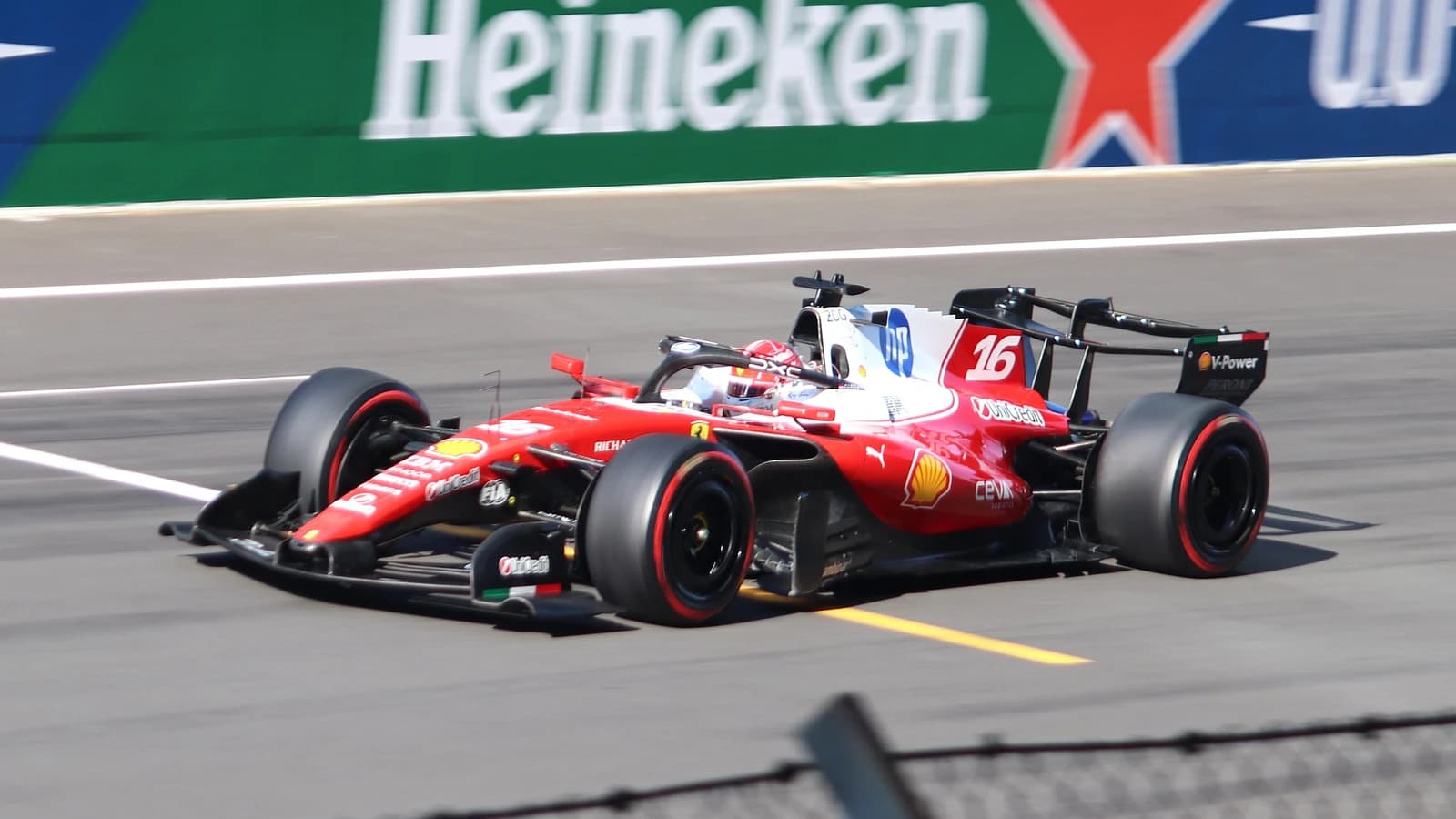
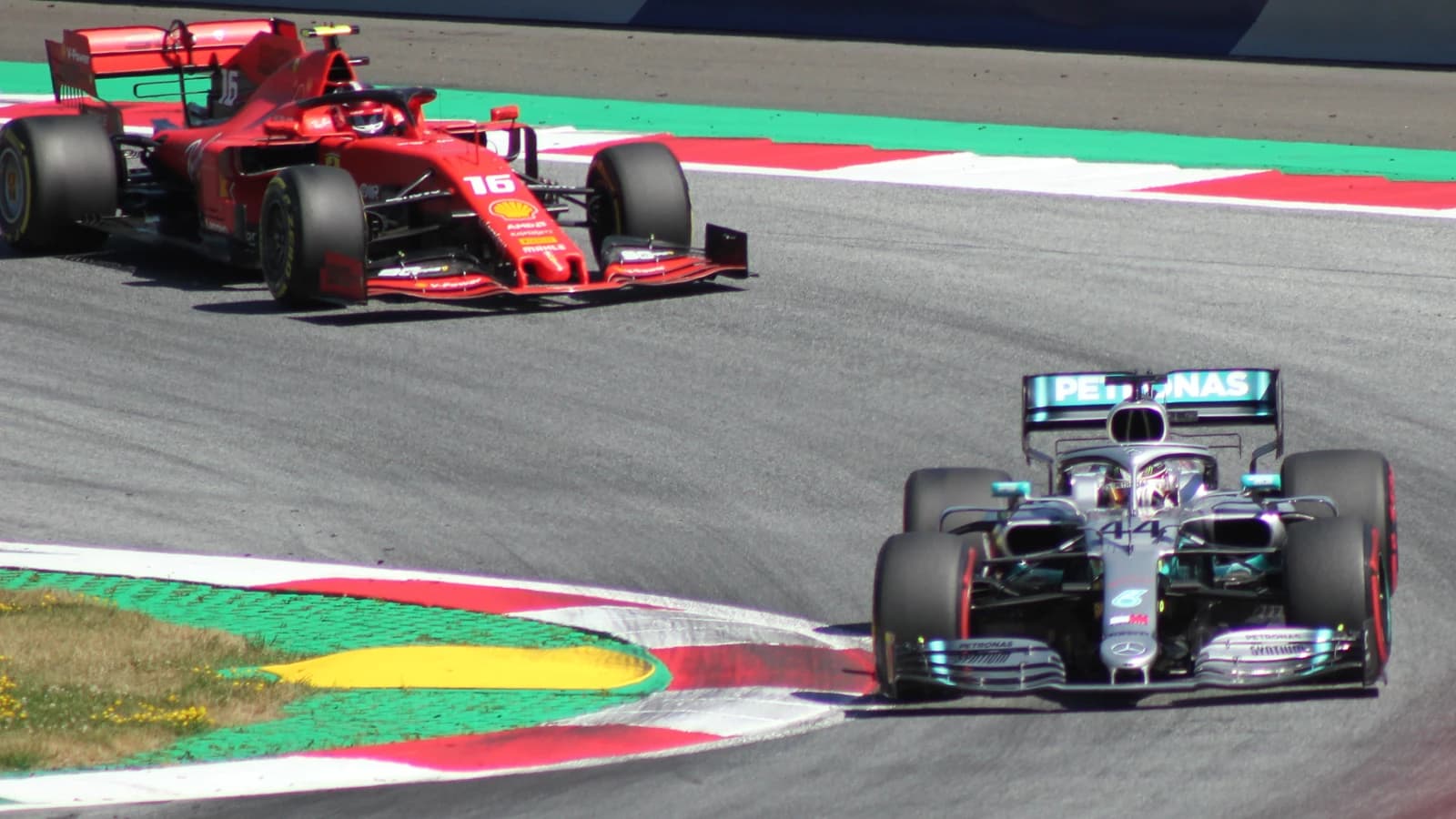
Ferrari’s inability to codify clear team-order rules for Lewis Hamilton and Charles Leclerc is now emerging as a governance issue as much as a racing one, with a reported Leclerc contract clause potentially constraining how the Scuderia manages its two star drivers.
Ferrari Leclerc clause raises team-order questions
The immediate commercial risk is not a single Grand Prix result but a deeper loss of control over one of Formula 1’s most valuable brands. If Ferrari has contractually granted Leclerc preferential treatment on sporting and technical matters, it could narrow Fred Vasseur’s room to impose written rules of engagement at a time when Hamilton is demanding exactly that after the Mexico City Grand Prix.
Hamilton’s frustration is understandable from a performance perspective. Ferrari had positioned itself for a possible one-two in Mexico before the internal duel between its drivers handed momentum to Max Verstappen and Red Bull. Leclerc’s five-second penalty for gaining an advantage off track ultimately left Hamilton second and Leclerc fourth, a result that was costly in both points and optics. For a team trying to convert ambition into championships, intra-team friction that helps a rival win is a direct competitive drain.
The reported clause, first raised by Formula 1 business journalist Marc Limacher, would help explain why Ferrari has not set out written procedures despite repeated pressure from Hamilton. Limacher said Leclerc has had a preferential clause in place since 2020 covering sporting and technical equity, though Ferrari has not confirmed the claim and the exact legal effect remains unclear. It is not known whether such a provision would bar all written team rules or simply limit decisions that materially disadvantage the Monegasque driver.
That uncertainty matters because Ferrari’s challenge is no longer just about driver rivalry; it is about corporate structure and accountability. A team that cannot formalize how its own leaders should compete is more vulnerable to ad hoc decision-making, and that can become expensive in a sport where marginal strategy calls decide podiums, prize money and sponsor exposure. Ferrari also renewed Leclerc on a multiyear basis in June without disclosing contractual details, leaving investors and rivals to infer how much flexibility management retained.
From an investor standpoint, the stock market is watching Ferrari less for the disciplinary dispute itself than for what it says about execution. Ferrari shares have been firm, with the stock closing at $422.50 on Thursday after trading as high as $429.42, above both its 50-day moving average and 200-day moving average. The shares also remain elevated relative to recent ranges, and the short-term technical picture suggests investors are still willing to look through operational noise. But repeated headlines about internal conflict can weigh on sentiment if they start to look structural rather than episodic.
Bullish investors will argue that star drivers, even difficult ones, are part of Ferrari’s competitive edge. Hamilton’s arrival brought experience, commercial heft and pressure on the organization to professionalize. A clear internal hierarchy, if achievable, could sharpen performance and reduce self-inflicted errors. The bear case is that Ferrari may have tied its own hands in the process of recruiting and retaining talent, leaving management unable to impose the discipline needed to win against better-coordinated rivals.
The next test comes at the Sao Paulo Grand Prix, where Vasseur will face renewed scrutiny over whether Ferrari can avoid another costly collision between its drivers. If the Leclerc clause exists in the form reported, investors should expect management to keep talking about principles rather than rules. That may be enough to keep the peace in the short term, but it leaves Ferrari exposed to the same problem each time Hamilton and Leclerc fight for the same piece of track.
| Entity | Gains | Losses |
|---|---|---|
| Charles Leclerc | ▲Preferential contract leverage | ▼Team-order constraints around him |
| Lewis Hamilton | ▲Clarity and written rules | ▼Frustration over ambiguity |
| Ferrari management | ▲Time to avoid public rupture | ▼Control over driver strategy |
| Red Bull / rivals | ▲Internal Ferrari friction may help | ▼Harder fight if Ferrari unifies |