Figma shares tumbled after the design software company told investors its push into AI will pressure gross and operating margins in the near term, underscoring the cost of chasing growth in a crowded software market.
Figma Shares Fall After AI Margin Warning

The stock fell to $18.81 on Nov. 6, down from $30.62 on Aug. 27, as Wall Street focused on Figma’s disclosure that AI investments tied to products such as Figma Make and its agent features will weigh on profitability before they contribute materially to sales. The selloff came with heavier volume and pushed the shares further below the 50-day moving average, a sign momentum has weakened sharply after a summer run-up.
Sentiment Indicators

For investors, the issue is not whether Figma can add AI features — it is whether those features can turn into durable revenue fast enough to justify the spending. The company’s latest filing says the new tools and rapid development cycle are likely to compress margins in the short term, a reminder that generative AI is still expensive to build, deploy and support.
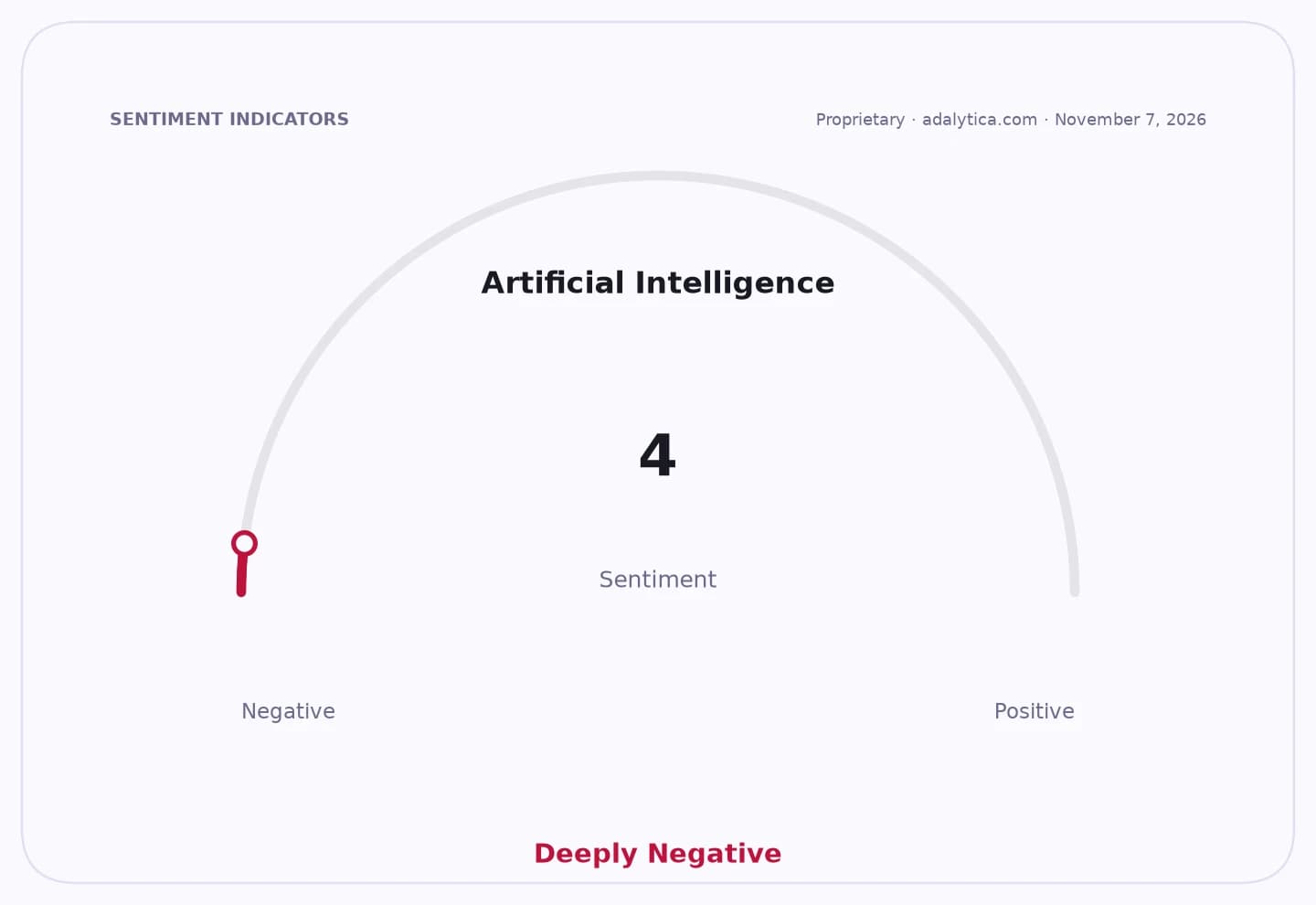
The reaction also reflects a broader market reset around AI monetization. Companies are increasingly showing productivity gains and operational lift from AI, but revenue growth has lagged the pace of investment, leaving investors more skeptical of businesses that ask for margin sacrifice before proving a payback. Adalytica’s AI sentiment gauge sits in extreme fear territory, suggesting sentiment has swung hard against the theme after a stretch of exuberance.

Figma is facing that skepticism at a fragile technical moment. The shares closed below both the 50-day and 200-day moving averages, while the RSI has dropped into oversold levels, indicating the market has already repriced a lot of optimism out of the name. Microsoft’s AI-related earnings sentiment, by contrast, is in extreme greed ahead of results, highlighting how selectively investors are rewarding companies they believe can convert AI scale into cash flow.
The near-term test is whether Figma can show AI features driving adoption, pricing power or retention without extending the margin hit. If it cannot, the market is likely to keep penalizing the stock for spending ahead of revenue; if it can, the current selloff could give way to a rerating as investors gain confidence that AI is becoming a growth engine rather than a cost center.
| Entity | Gains | Losses |
|---|---|---|
| Figma customers | ▲New AI features | ▼Higher-cost rollout |
| Figma management | ▲Product differentiation | ▼Near-term margins |
| Long-term bulls | ▲Optionality on AI monetization | ▼Short-term earnings pressure |
| Competitors | ▲Stronger case for discipline | ▼Less room to lag on AI |