Canva’s decision to cut as many as 1,270 jobs is a warning shot for every software company trying to turn artificial intelligence from a buzzword into a business model.
Canva Layoffs Put Pressure on Software AI Margins

The Perth-founded design platform says AI is forcing it to rethink how much work still needs human hands, and that matters far beyond one startup. When a company built on simplifying creative work says it needs fewer people, investors should read that as a sign that AI is no longer just a sales pitch — it is starting to change the economics of software itself. That can be good for margins over time, but it also raises a hard question: which companies can use AI to make more money, and which will simply spend more to keep up?
Sentiment Indicators
Artificial Intelligence
For long-term investors, the key lesson is not the layoff headline itself. It is the competitive pressure behind it. AI is lowering the cost of building and distributing software features, which can intensify rivalry, squeeze pricing power and reward firms with scale, data and sticky customer relationships. That is exactly why market leaders such as Adobe and Salesforce matter so much in this phase of the cycle. They are not just being compared with smaller rivals on product quality anymore; they are being judged on whether they can defend their moats while funding the next wave of AI development.
The market has already been grappling with that tension. Adobe’s shares have been volatile, and recent technical readings show the stock sitting below both its 50-day and 200-day moving averages, with a weak RSI pointing to heavy caution among traders. Salesforce has also come under pressure, with its share price slipping and momentum indicators showing fading strength. That does not mean the business cases are broken. It does mean investors are demanding proof that AI can translate into faster growth, better retention and stronger free cash flow — not just bigger spending bills.
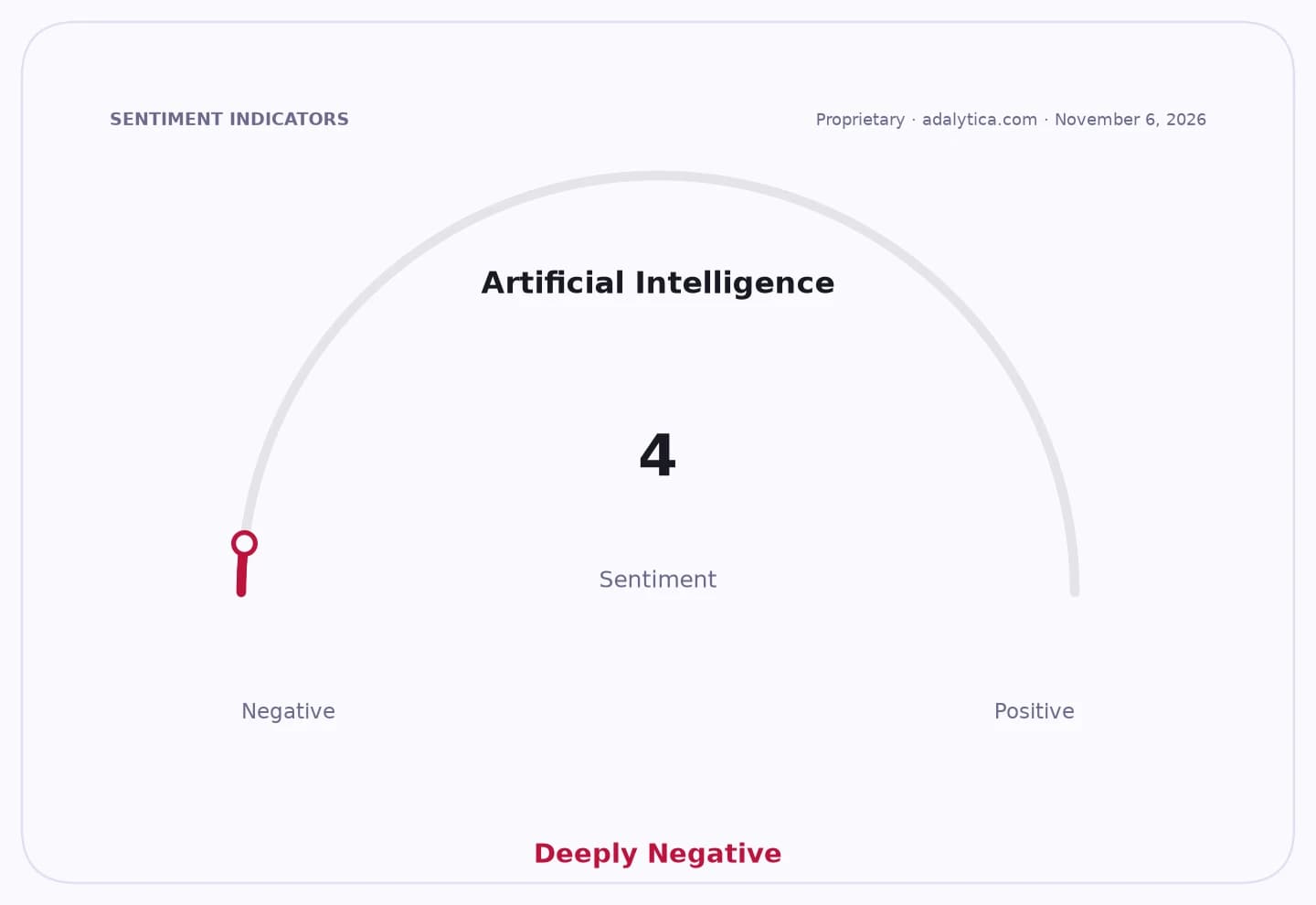
This is the real narrative connecting Canva’s layoffs, the broader tech job cuts and the anxiety around AI: the industry is moving from experimentation to efficiency. Firms are asking where AI can replace labor, where it can speed up product development, and where it can widen margins enough to justify the huge capital outlays now flowing into data centers, model training and software integration. Microsoft’s stronger sentiment reading suggests investors still believe the biggest platforms can win this race. But the extreme fear shown in broader AI sentiment tells you confidence can turn quickly when the promise of productivity runs ahead of the proof.
For investors, that makes quality even more important than ever. Companies with durable customer bases, recurring revenue and real pricing power are better placed to benefit from AI than those that only borrow the theme. Canva’s cuts are a reminder that disruption often arrives first as pain in the labor force and only later as profit in the income statement.
If you own software stocks, this is a moment to stay selective, not skeptical of the whole category. AI is still a historic growth trend, but the winners will be the businesses that use it to compound cash flow over years, not just trim headcount this quarter. For patient investors, the best names in enterprise and creative software remain worth watching and, on weakness, worth adding to a long-term list.
| Entity | Gains | Losses |
|---|---|---|
| Large software leaders | ▲AI leverage, stronger margins | ▼Higher competition scrutiny |
| Smaller AI-first rivals | ▲Faster product adoption | ▼Harder to defend pricing |
| Investors in durable platforms | ▲Long-term compounding | ▼Near-term volatility |
| Tech workers | ▲Fewer roles, restructuring pressure | ▼Job cuts and uncertainty |