Microsoft, Alphabet and Amazon are set to report this week with investors increasingly focused on a simple question: whether the artificial-intelligence boom is still translating into earnings growth, or is starting to look like an expensive race for capacity.
Microsoft, Alphabet, Amazon Face AI Earnings Test

That question matters because the three companies sit at the center of both the S&P 500’s profits and the market’s AI trade. Last week’s selloff in the Nasdaq Composite, its worst session since June, showed how quickly sentiment can turn when investors begin to worry that spending on chips, data centers and model development is outrunning near-term returns. Yet the backdrop remains constructive: more than 120 S&P 500 companies have already reported, and about 83% have beaten earnings estimates, according to FactSet.
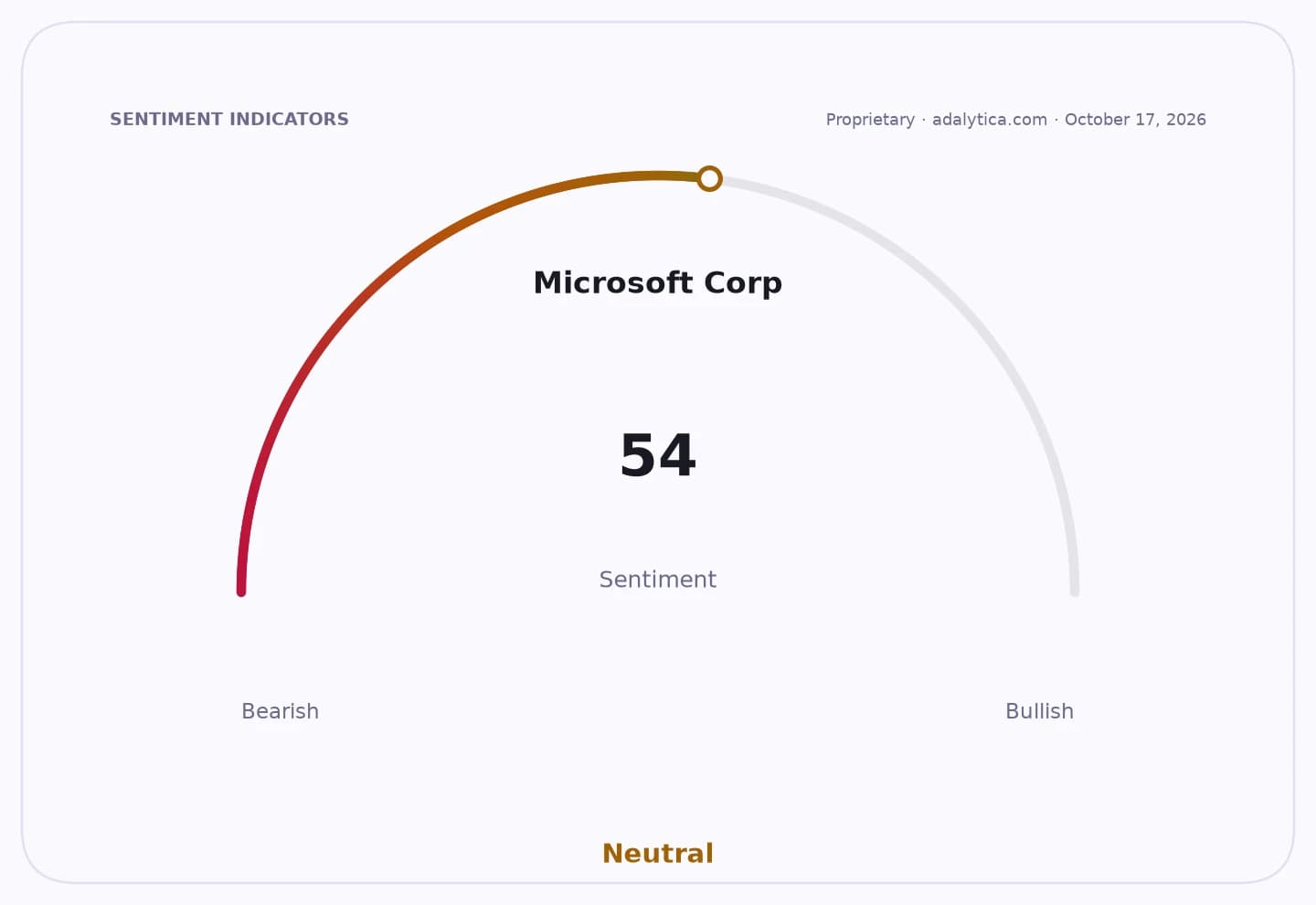
Sentiment Indicators

For the megacaps, the earnings bar is high but not uniform. Alphabet is expected to post roughly 25% revenue growth, according to LSEG, after last quarter’s report showed strong sales but also a higher capital-spending outlook that spooked the stock. Microsoft is forecast to deliver 14.3% earnings growth and 16.8% revenue growth, with investors watching whether Azure and AI products continue to accelerate after the company last quarter booked a $3.2 billion gain tied to its Anthropic stake. Amazon is expected to post flat earnings per share alongside double-digit revenue growth, a combination that would reinforce the case that retail resilience and AWS strength can offset heavy investment elsewhere.
The core issue is margin discipline. AI has become a capital allocation story as much as a growth story, and markets are now asking which companies can fund that buildout without permanently compressing returns. That is especially true for Microsoft and Alphabet, whose scale gives them the resources to spend aggressively, but also the most to lose if investors conclude the payback period is lengthening. Amazon faces a different test: whether AWS can keep reaccelerating enough to justify ongoing infrastructure costs while e-commerce stays resilient despite cautious consumers.
Artificial Intelligence vs MSFTadalytica.com
Explore this data interactively — full history, time series and cross-market comparisons.
Microsoft Corp
There is evidence that expectations remain anchored to execution rather than enthusiasm alone. Microsoft has beaten consensus every quarter since April 2023, according to Bespoke, and Piper Sandler says partner checks point to rising demand for prepackaged AI solutions. Alphabet, meanwhile, has seen recent AI model releases help counter fears it is lagging in frontier-model development, according to BMO Capital Markets. Amazon remains one of the market’s favored large-cap AI beneficiaries, with Jefferies calling the shares attractive versus Alphabet and Walmart.
Still, the reaction risk is asymmetric. The stocks have already moved on the assumption that AI demand will keep compounding, and any hint of slower cloud growth, weaker monetization or another jump in capex could hit valuations harder than the earnings numbers alone suggest. Microsoft’s shares have pulled back from recent highs, Alphabet has dropped sharply in the latest trading sessions, and Amazon’s stock has also softened ahead of results, leaving all three more sensitive to disappointment.
For investors, this week is less about whether these companies are growing and more about what kind of growth they are buying. If Microsoft can show Azure acceleration, Alphabet can defend its AI leadership and Amazon can prove AWS is still expanding while retail holds up, the market may re-embrace the AI spend cycle. If not, the trade shifts from “who wins AI” to “who pays for it.”
| Entity | Gains | Losses |
|---|---|---|
| Microsoft, Alphabet, Amazon | ▲AI growth premium | ▼Capex skeptics |
| Cloud leaders | ▲Revenue expansion | ▼Margin pressure |
| Investors seeking AI exposure | ▲Earnings confirmation | ▼Overpaying for growth |
| Smaller rivals | ▲Competitive opening | ▼Scale disadvantage |