Microsoft heads into earnings with two of its most important businesses looking healthier than investors may have expected, and that matters because cloud and productivity software still drive the bulk of the company’s long-term profit engine.
Microsoft Earnings Outlook on Azure and Microsoft 365
UBS’s call that Azure and Microsoft 365 growth expectations are rising ahead of the report is the key development here. For a company of Microsoft’s size, even modest upside in those franchises can translate into billions of dollars of extra revenue, better operating leverage and a stronger case for the stock as a long-term compounder. Investors do not need explosive surprise after surprise from Microsoft — they need steady, durable growth in the businesses that customers cannot easily walk away from.

That backdrop is especially important because Microsoft has already shown how powerful those segments can be. In its latest annual filing, Azure and other cloud services revenue grew 41%, while Microsoft 365 Commercial cloud revenue rose 17%. Microsoft Cloud revenue increased 27% to $214.4 billion, and the company’s remaining performance obligations jumped 84% to $678 billion, giving investors a glimpse of how much contracted demand is sitting in the pipeline.
That kind of visibility is what separates Microsoft from most large-cap technology names. When cloud demand stays strong and Microsoft 365 keeps expanding inside corporate IT budgets, the company can keep investing heavily in artificial intelligence infrastructure without losing sight of profitability. That combination — growth, scale and a recurring revenue base — is exactly what long-term investors want to see from a market leader.
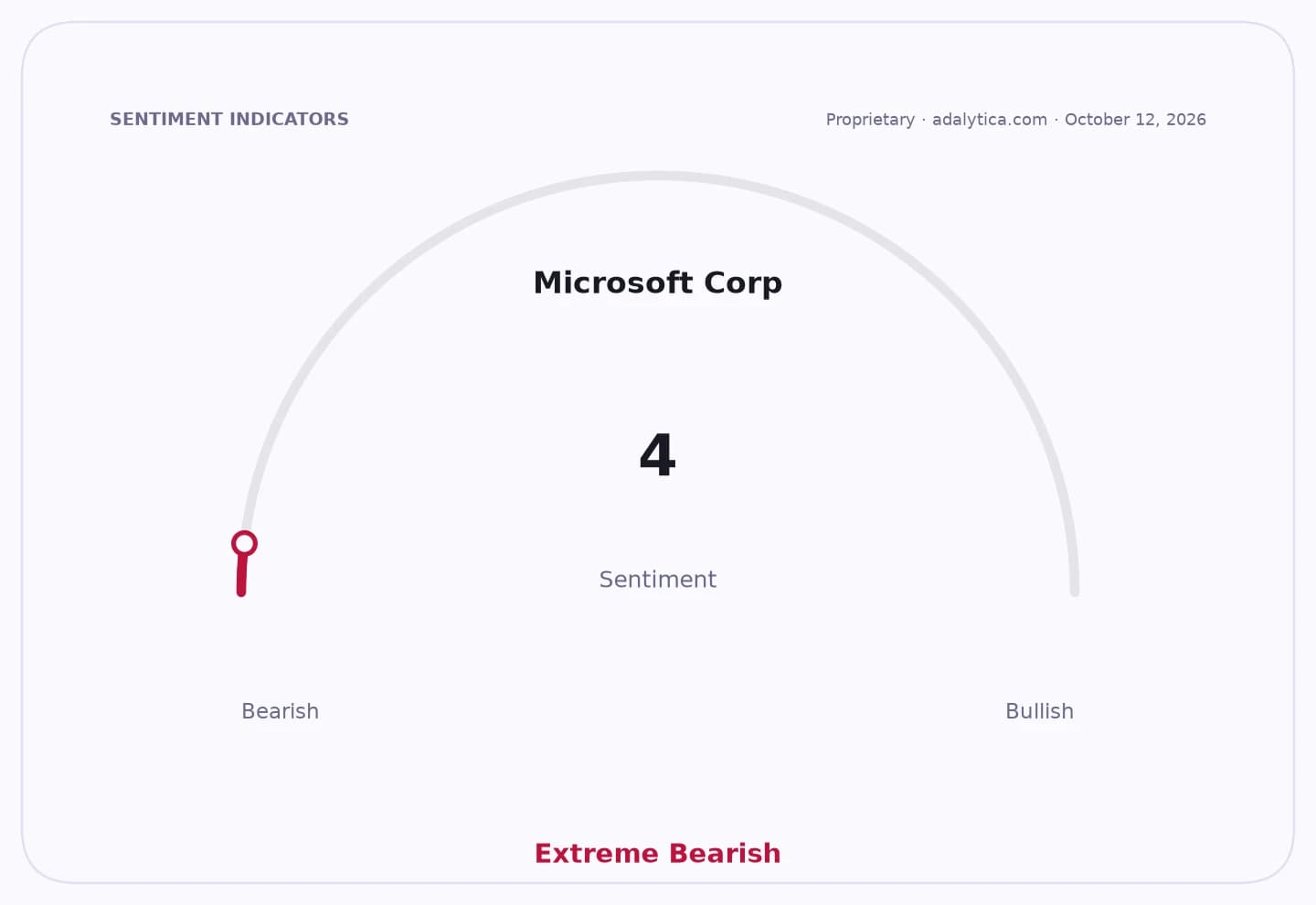
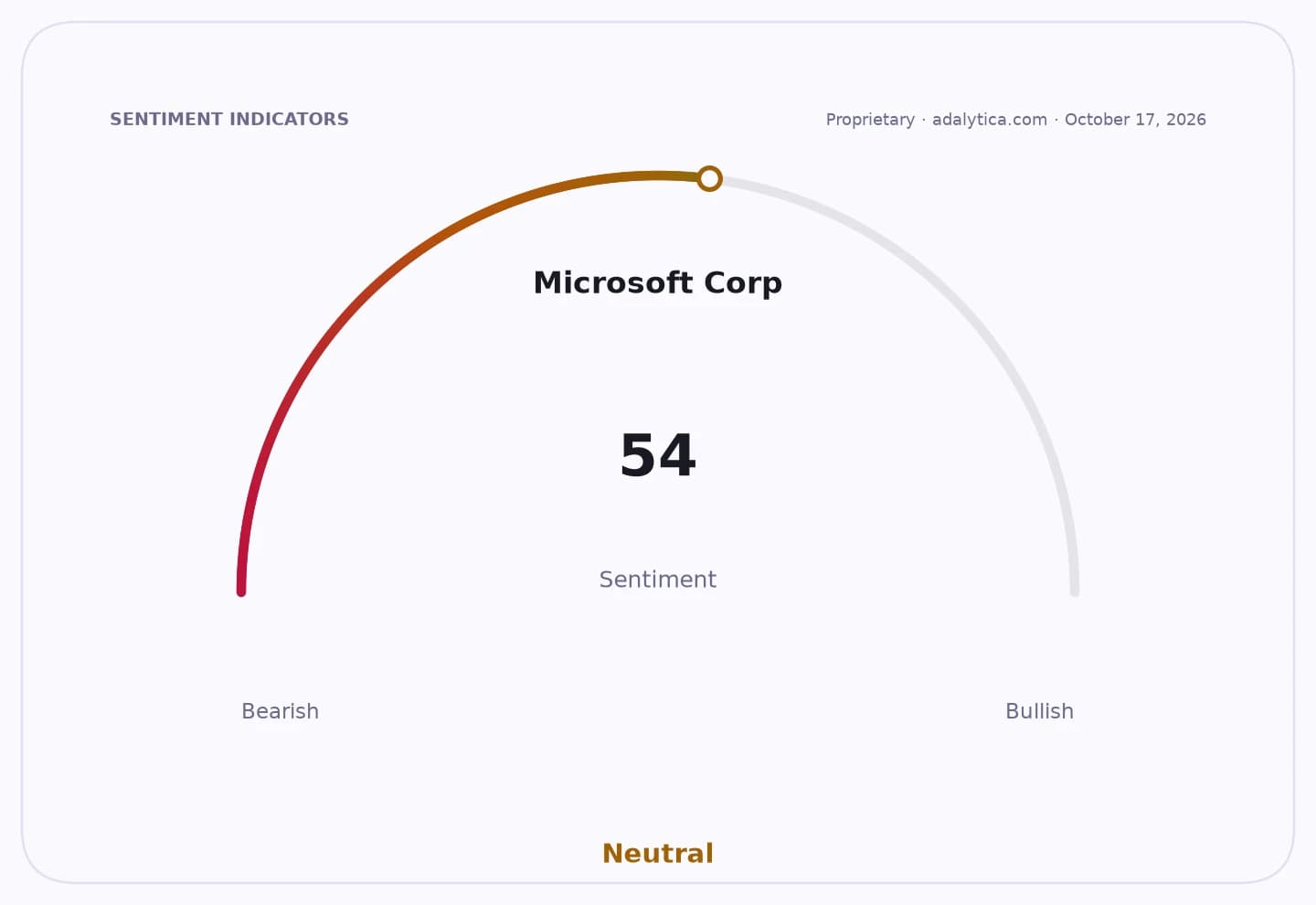
The market has already been rewarding that narrative. Microsoft shares have climbed back above their 50-day and 200-day moving averages, a sign that buyers are willing to look through near-term volatility and focus on the earnings power underneath. Technical readings are not the story, but they do reflect something important: sentiment around Microsoft has improved as investors reposition for another quarter of cloud-led growth.
There is also a broader industry angle. Alphabet, Amazon and Oracle are all leaning harder into cloud expansion, and demand for AI infrastructure has become a central driver across the sector. Adalytica’s AI sentiment gauge shows enthusiasm for the theme remains elevated, even if that excitement often swings sharply from week to week. For Microsoft, the lasting advantage is not just participation in the AI wave — it is the ability to monetize that wave through Azure, Microsoft 365 and the broader Microsoft Cloud ecosystem.
The risk, of course, is that expectations have risen. If Azure growth merely matches the most optimistic forecasts, the shares may need a fresh catalyst to keep climbing. Heavy spending on data centers and AI infrastructure can also pressure margins in the near term, even when the long-term payoff looks attractive.
Still, for investors with a three- to five-year horizon, the investment case remains straightforward: Microsoft owns one of the best software franchises in the world, one of the most important cloud platforms in enterprise computing, and one of the clearest paths to durable cash flow growth in large-cap tech. If Azure and Microsoft 365 come in stronger than expected, that only reinforces the idea that Microsoft remains one of the market’s most resilient long-term holdings.
| Entity | Gains | Losses |
|---|---|---|
| Microsoft long-term investors | ▲Stronger earnings power | ▼Less downside protection on valuation |
| Microsoft | ▲Higher cloud and software revenue | ▼More pressure to keep spending on AI infrastructure |
| Competitors in cloud/software | ▲Less share of enterprise budgets | ▼Harder to match Microsoft’s scale and bundling |
| Short-term traders | ▲Potential earnings volatility | ▼Risk of being caught offside on upside surprise |