Meta’s new high-performance AI model, Muse Wonder, is the latest sign that the battle for frontier AI is moving from hype to monetizable infrastructure, and investors should view it less as a research milestone than as a bid to control the next wave of compute demand, ad targeting and enterprise AI spending.
Meta Muse Wonder Launch Boosts AI Capex Trade

That matters because the market is still pricing AI as a winner-take-most race dominated by a handful of model providers, while the real money is spreading across the stack: chipmakers, cloud operators, data-center builders and the platform companies that can turn better models into recurring revenue. Meta has the scale, cash flow and distribution to force that trade into the open.
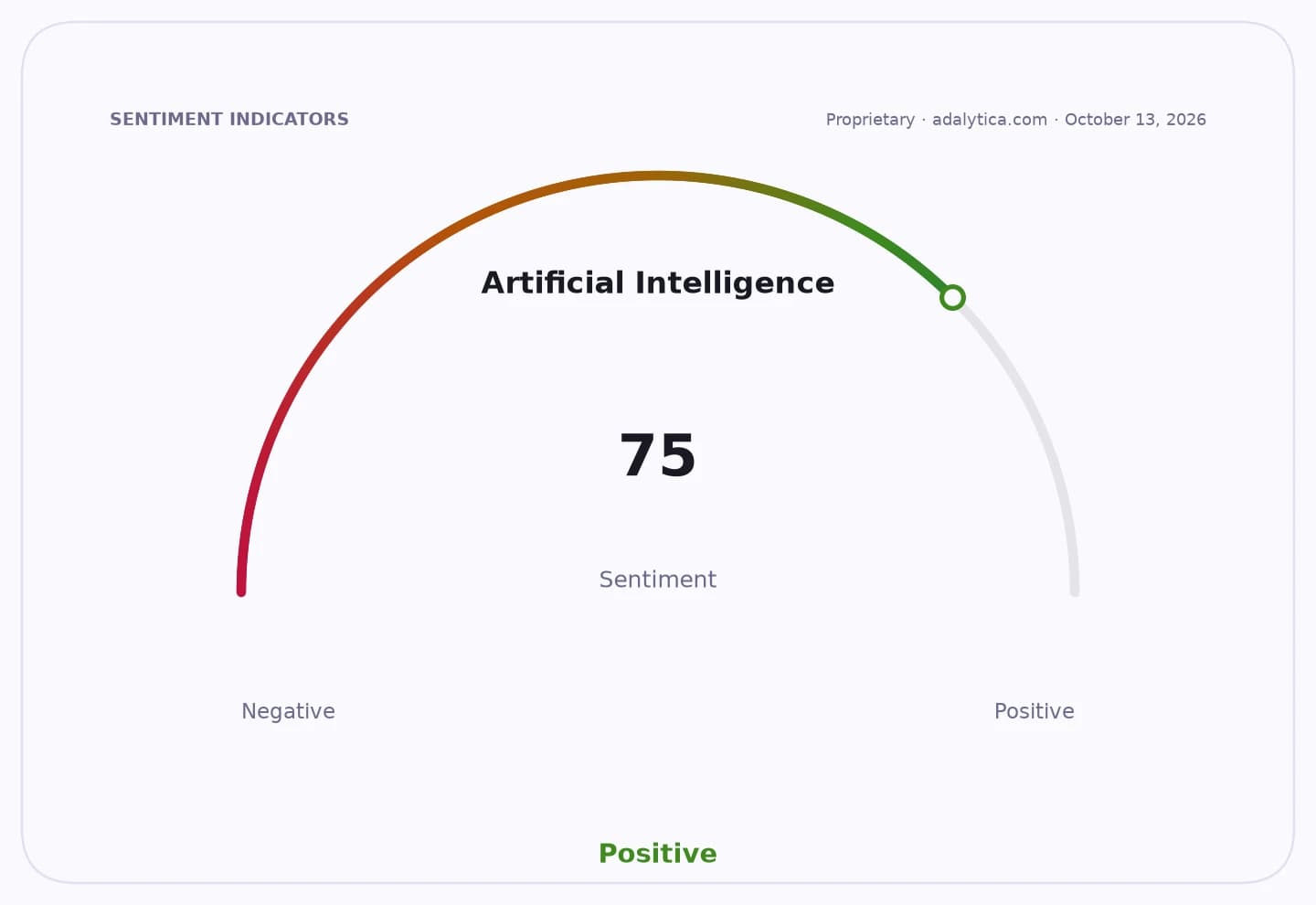
Sentiment IndicatorsⓘProprietary · adalytica.com · October 14, 2026
This is a snapshot — live sentiment, awareness and momentum for 130+ markets update continuously in the dashboard.Open AlphaPulse
The immediate read-through is bullish for the AI capex complex. Every new frontier model raises the bar on training and inference, which supports demand for Nvidia’s accelerators, Microsoft’s cloud footprint and the broader power-and-network buildout behind AI infrastructure. Nvidia shares have already reflected that view, but the stock’s recent strength and its elevated Adalytica earnings sentiment suggest the market still underestimates how durable the spending cycle can be if Meta, Microsoft and peers keep pushing model quality higher.
Meta itself is the key asymmetric bet here. The company does not need Muse Wonder to become the industry’s best model to matter for investors; it only needs it to be good enough to improve ad performance, recommendation quality and developer stickiness across Facebook, Instagram and WhatsApp. That is a margin story as much as an innovation story. Better models can increase engagement and pricing power while helping Meta justify continuing AI investment without losing control of returns.
Artificial Intelligence — 30-day sentimentadalytica.com
Explore this data interactively — full history, time series and cross-market comparisons.Open AlphaPulse
The price action already says Wall Street is warming to that thesis. Meta has surged to $762.50 from $582.44 in early July, well above its 50-day moving average of $646.59 and its 200-day average of $630.06. The stock’s RSI near 54 shows it is not technically overextended despite the rally, leaving room for further upside if Muse Wonder translates into tangible product gains. That is a very different setup from Microsoft, where sentiment around earnings has fallen into extreme fear even as the shares still trade far above long-term trend levels.
For investors, the bigger message is that frontier AI competition is not a zero-sum science fair. Anthropic’s recent false police tip and its subsequent tightening of model-behavior rules underscore how much trust, reliability and governance now matter alongside raw capability. The companies that can ship more powerful models without losing control of safety, cost or user experience will win the enterprise and consumer budgets that follow.
Our thesis is simple: Meta’s model launch reinforces the case for staying long the AI infrastructure trade, but the higher-beta opportunity may now be in the platform layer that can turn model advances into monetization. Meta, Nvidia and Microsoft remain the core names to own on pullbacks, while investors should treat every new frontier release as another catalyst for compute, power and networking demand over the next several years.
| Entity | Gains | Losses |
|---|---|---|
| Meta | ▲Better monetization leverage | ▼Complacent short thesis |
| Nvidia | ▲More AI training demand | ▼Slower capex cycle |
| Microsoft | ▲Azure AI workload growth | ▼Model competition pressure |
| Anthropic | ▲Safety scrutiny spotlight | ▼Relative mindshare |