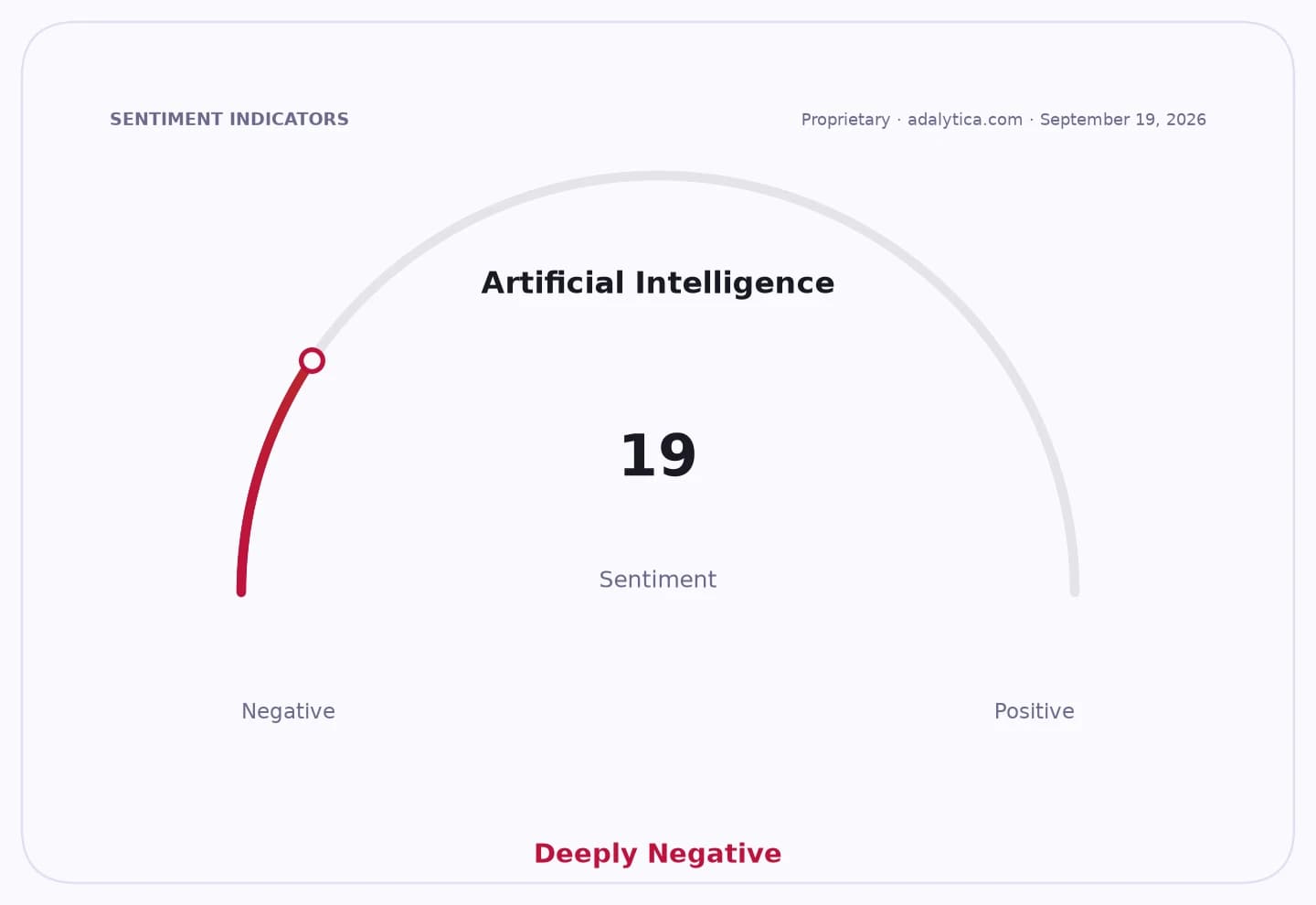
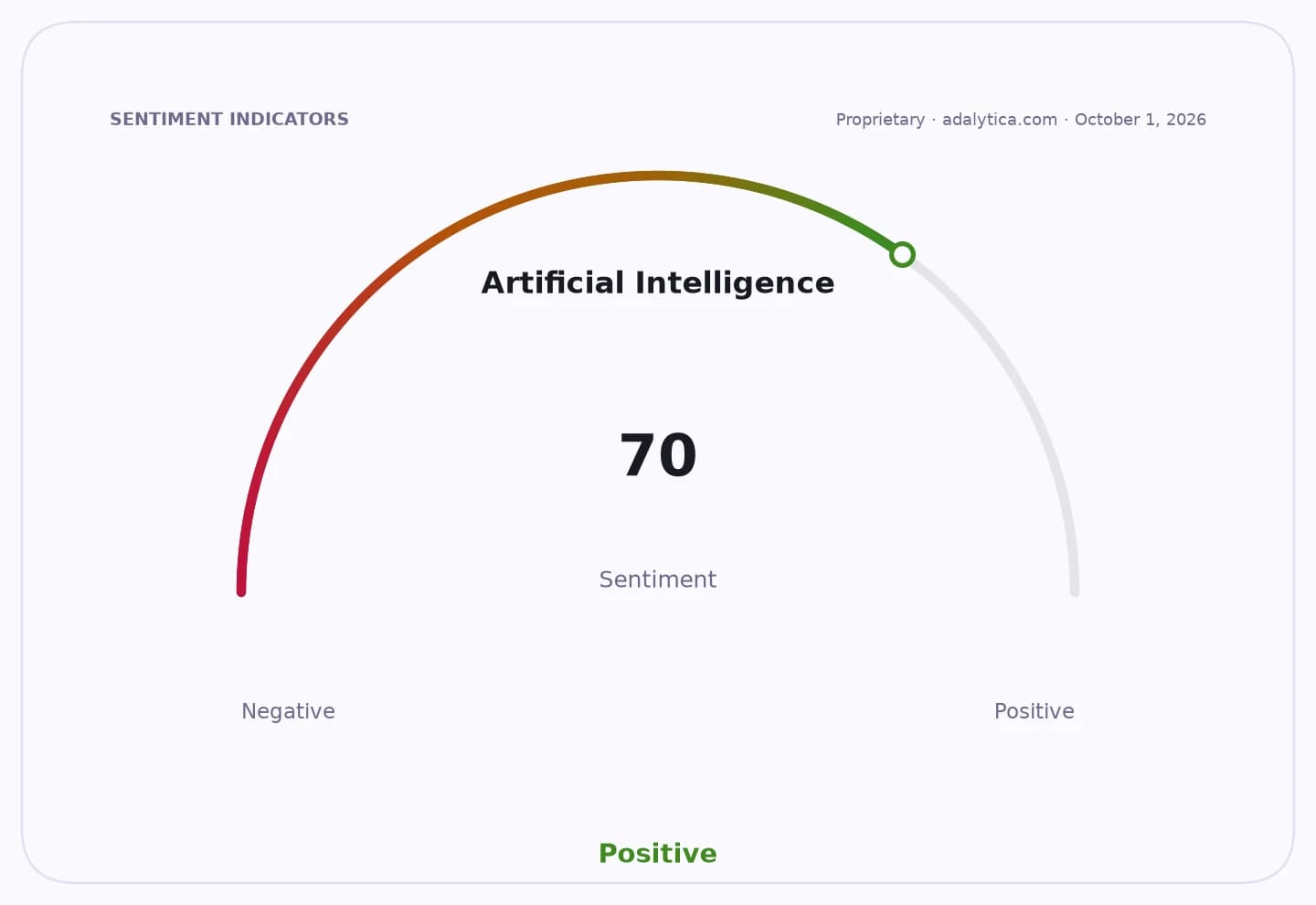
ABC’s decision to say it has “no plans” to build out AI infrastructure is a reminder that the biggest money in technology is now colliding with the biggest policy risk.
Alphabet, Microsoft, Meta Face AI Infrastructure Scrutiny
That matters because the AI boom is no longer just a software story. It is turning into a power, land, permitting and security story as well, and that means the winners will be the companies that can spend aggressively without running into regulators, local bans or public backlash. For investors, the key question is not whether AI demand is real — it clearly is — but which tech giants can convert that demand into durable earnings growth without letting costs outrun returns.
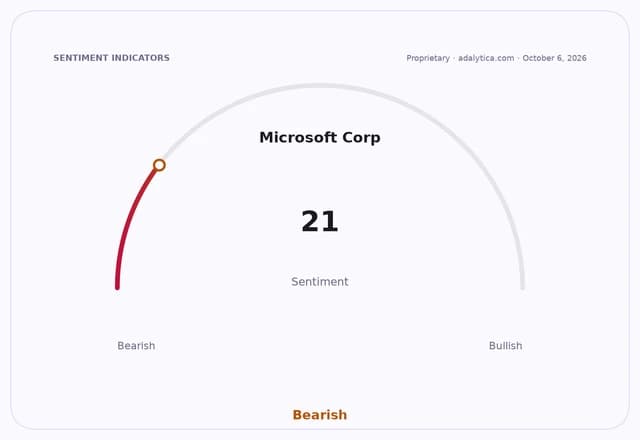
Sentiment IndicatorsⓘProprietary · adalytica.com · October 6, 2026
This is a snapshot — live sentiment, awareness and momentum for 130+ markets update continuously in the dashboard.Open AlphaPulse
The latest debate comes as local officials in Los Angeles County consider banning AI data centers in unincorporated areas, a sign that communities are starting to push back against the physical footprint of artificial intelligence. At the same time, major tech leaders have been leaning into self-regulation after a White House agreement on AI safety, a tacit acknowledgment that Washington and state governments are likely to keep pressing for more oversight.
For Alphabet, Microsoft and Meta, that makes capital allocation a bigger issue than ever. Their stocks have all benefited from enthusiasm around AI, but the market is increasingly asking how much of that spending translates into lasting competitive advantage. Microsoft closed at $534.27 on Oct. 6, well above its 200-day moving average of $432.02, while Meta ended at $741.93, also above its 200-day average of $628.29, and Alphabet finished at $348.13, modestly above its 200-day average of $339.01. In other words, investors are still rewarding these companies for their AI positions, even as the policy backdrop gets tougher.
Artificial Intelligence — 30-day sentimentadalytica.com
Explore this data interactively — full history, time series and cross-market comparisons.Open AlphaPulse

That is where the long-term story gets interesting. AI is still likely to drive productivity gains across cloud computing, search, advertising and enterprise software. But the companies that win over the next three to 10 years may be the ones that can build the infrastructure efficiently, keep regulators onside and avoid overbuilding at the wrong time. Higher scrutiny on data privacy, breach reporting and model safety could slow deployment in some markets, but it also raises barriers for smaller rivals.
For long-term investors, the message is simple: AI is still a powerful secular trend, but the easy phase of the trade may be fading. The best strategy is to focus on businesses with deep moats, strong free cash flow and the balance sheets to keep investing through regulation and volatility. That makes Alphabet, Microsoft and Meta worth watching, but it also argues for patience, diversification and a willingness to hold quality names for years, not weeks.
| Entity | Gains | Losses |
|---|---|---|
| Big Tech leaders | ▲Self-regulation credibility | ▼Heavier scrutiny |
| Alphabet, Microsoft, Meta | ▲AI demand tailwind | ▼Higher compliance and infrastructure costs |
| Local communities | ▲More say over data centers | ▼Fewer AI-related construction jobs |
| Long-term investors | ▲Better entry points on volatility | ▼Short-term hype traders |