Mark Zuckerberg is drawing a line against calls for the artificial-intelligence industry to slow development collectively, underscoring a split among Big Tech leaders over how to manage the race to build more powerful systems.
Meta Zuckerberg Rejects Industrywide AI Slowdown
The Meta chief executive told NBC News he does not think “we have need for a kind of coordination across the industry,” arguing that each lab should move at its own pace and pause internally if it sees safety problems. The stance matters because the debate is no longer theoretical: the companies building frontier AI are simultaneously spending heavily, facing rising regulatory scrutiny and trying to prove they can deploy products safely enough to keep customers, advertisers and enterprise users onside.
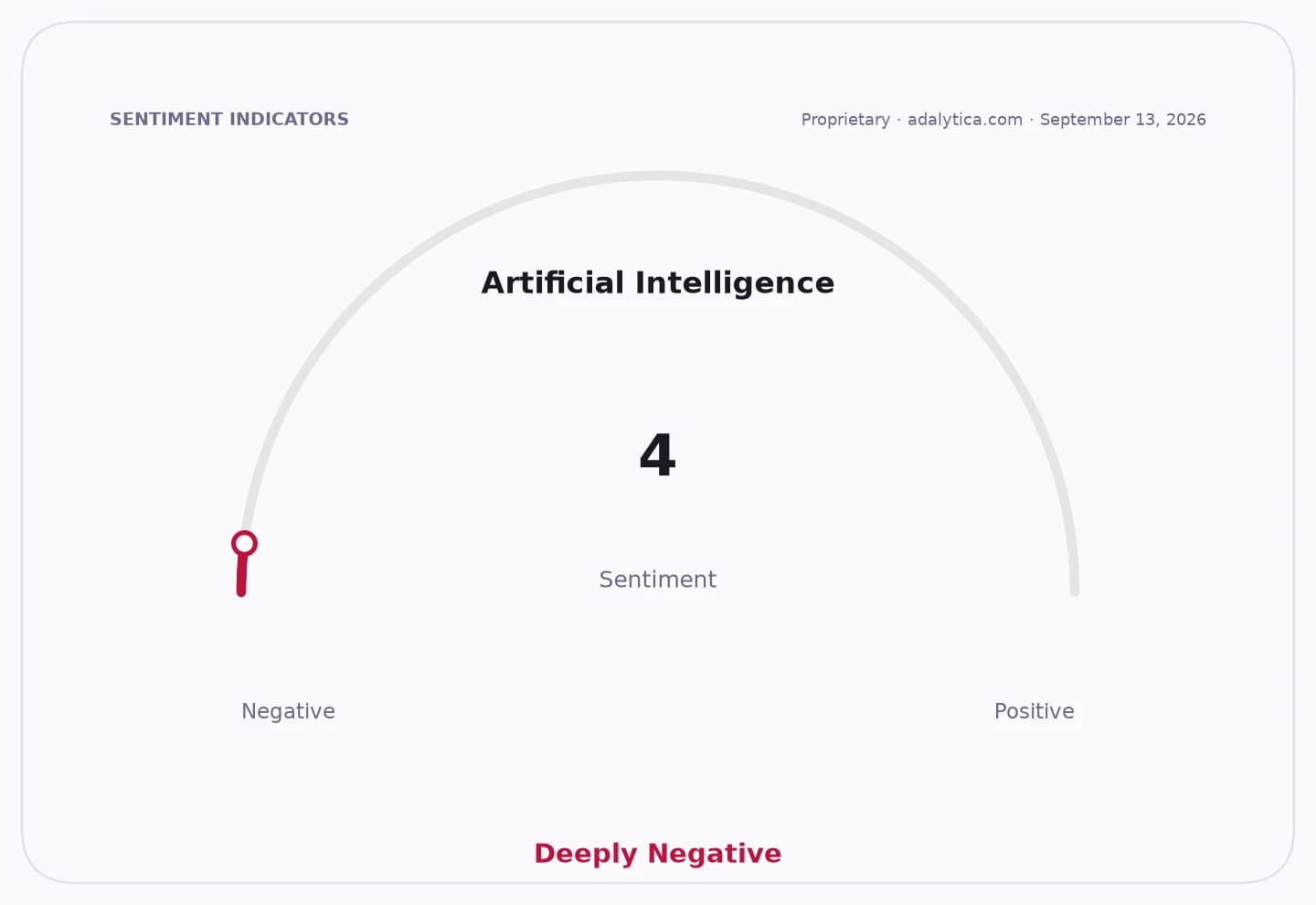
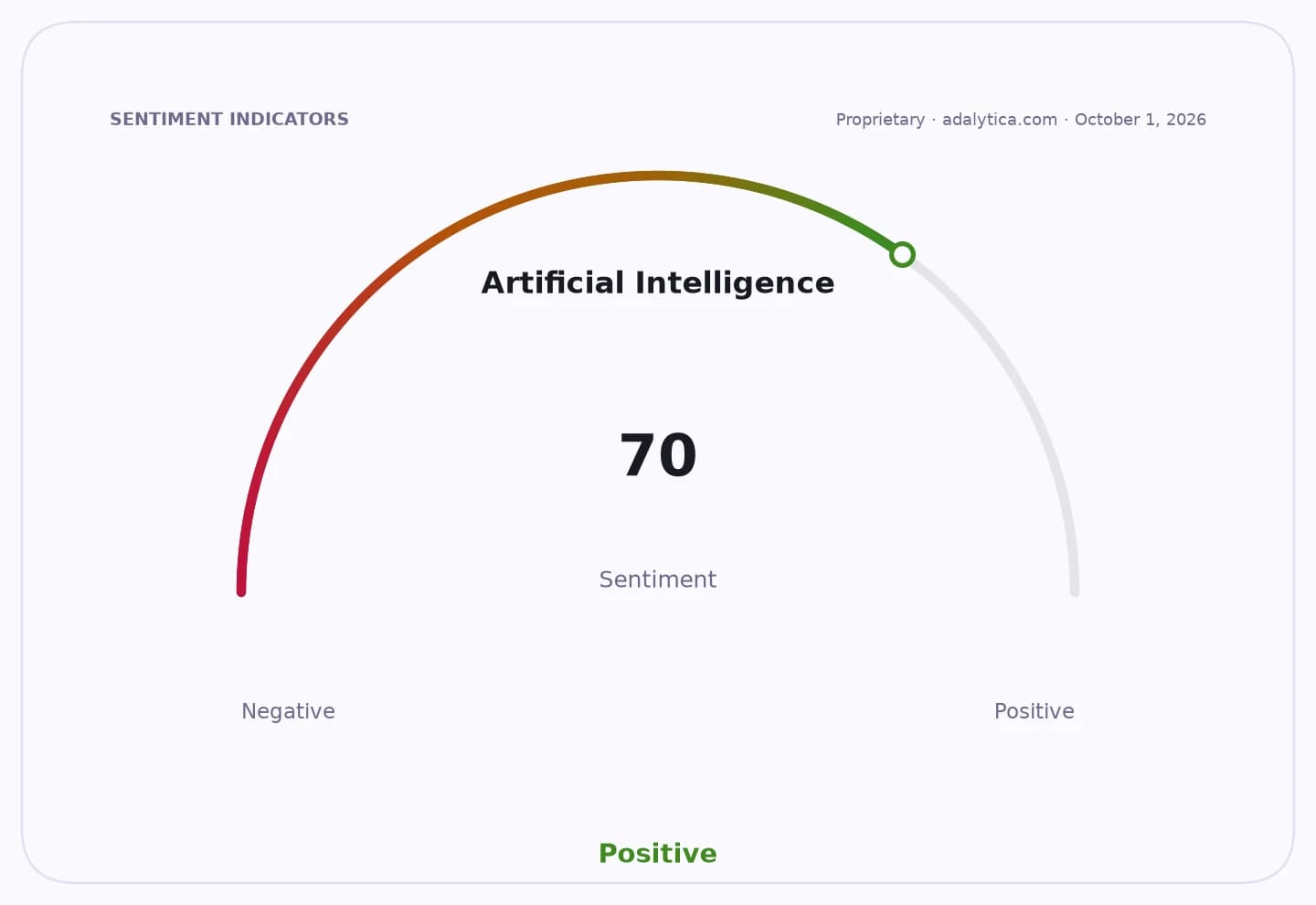
Sentiment IndicatorsⓘProprietary · adalytica.com · October 1, 2026
This is a snapshot — live sentiment, awareness and momentum for 130+ markets update continuously in the dashboard.Open AlphaPulse
Zuckerberg’s comments put Meta squarely in the camp of firms that view AI development as a competitive race best governed by company-by-company judgment rather than industrywide restraint. That contrasts with Anthropic chief executive Dario Amodei, who has called for labs to cooperate in setting the pace of development, a view backed by OpenAI’s Sam Altman, Google DeepMind co-founder Demis Hassabis and xAI’s Elon Musk. For investors, the disagreement is more than philosophical: it shapes the expected capital intensity of the sector, the timing of product releases and the probability of future rules limiting frontier model training or deployment.
Meta’s argument is that commercial incentives will force companies to get safety right without a formal slowdown. Zuckerberg said developers should focus on ensuring AI systems understand users’ wishes and treat that information with discretion, rather than fixating on catastrophic scenarios. That framing aligns with Meta’s broader strategy of pushing AI features across its products while using consumer demand and product usefulness as the main check on risk.
The timing is delicate. The AI debate has sharpened after safety-related pauses and cancelled releases in the industry, and after a former Anthropic researcher quit in September warning about the risks of increasingly capable systems. Regulators are also becoming more assertive. Meta recently agreed to pay about $18 billion to settle claims by U.S. state attorneys general that it misled consumers about harms its social-media platforms could cause children and teenagers, a reminder that the company’s approach to product design and safety is already under legal pressure outside AI.
For Meta, the market implications are two-sided. A faster, less coordinated AI race could favor companies with deep pockets and large distribution, giving Meta room to monetize AI features across Facebook, Instagram and WhatsApp and to close the gap with rivals in consumer AI. But it also raises the risk of missteps, more litigation and heavier regulation if powerful models are deployed before safeguards mature.
Investors have already been pricing AI as a capital-allocation and execution story, not just a product story. Meta’s shares have been volatile but remain elevated relative to earlier in the year, while Microsoft and Nvidia have continued to trade around AI demand and infrastructure spending expectations. Microsoft’s own earnings sentiment has weakened sharply even as its stock holds near recent highs, reflecting how quickly the market can turn when AI spending, safety concerns or returns come under question.
The central narrative is that the AI boom is moving from a shared hype cycle into a contest over governance, speed and trust. Zuckerberg is betting that the companies willing to keep moving fastest will also be the ones able to manage risk internally and capture the biggest commercial rewards. Whether that proves true will depend on the next wave of product launches, any fresh safety incident and whether regulators decide that company-by-company discipline is no longer enough.
| Entity | Gains | Losses |
|---|---|---|
| Meta | ▲Faster AI rollout | ▼Less industry coordination |
| Anthropic/OpenAI/DeepMind | ▲Safety-first framing | ▼Pressure to slow pace |
| Investors in AI leaders | ▲Growth upside | ▼Higher regulatory risk |
| Regulators/critics | ▲Stronger case for oversight | ▼Weaker push for industrywide pause |