DeepSeek’s expected appearance at the U.N. Security Council this week underscores how artificial intelligence has moved from a corporate race into a geopolitical issue with direct implications for regulation, national security and the economics of the AI buildout.
DeepSeek at UN AI Security Council briefing
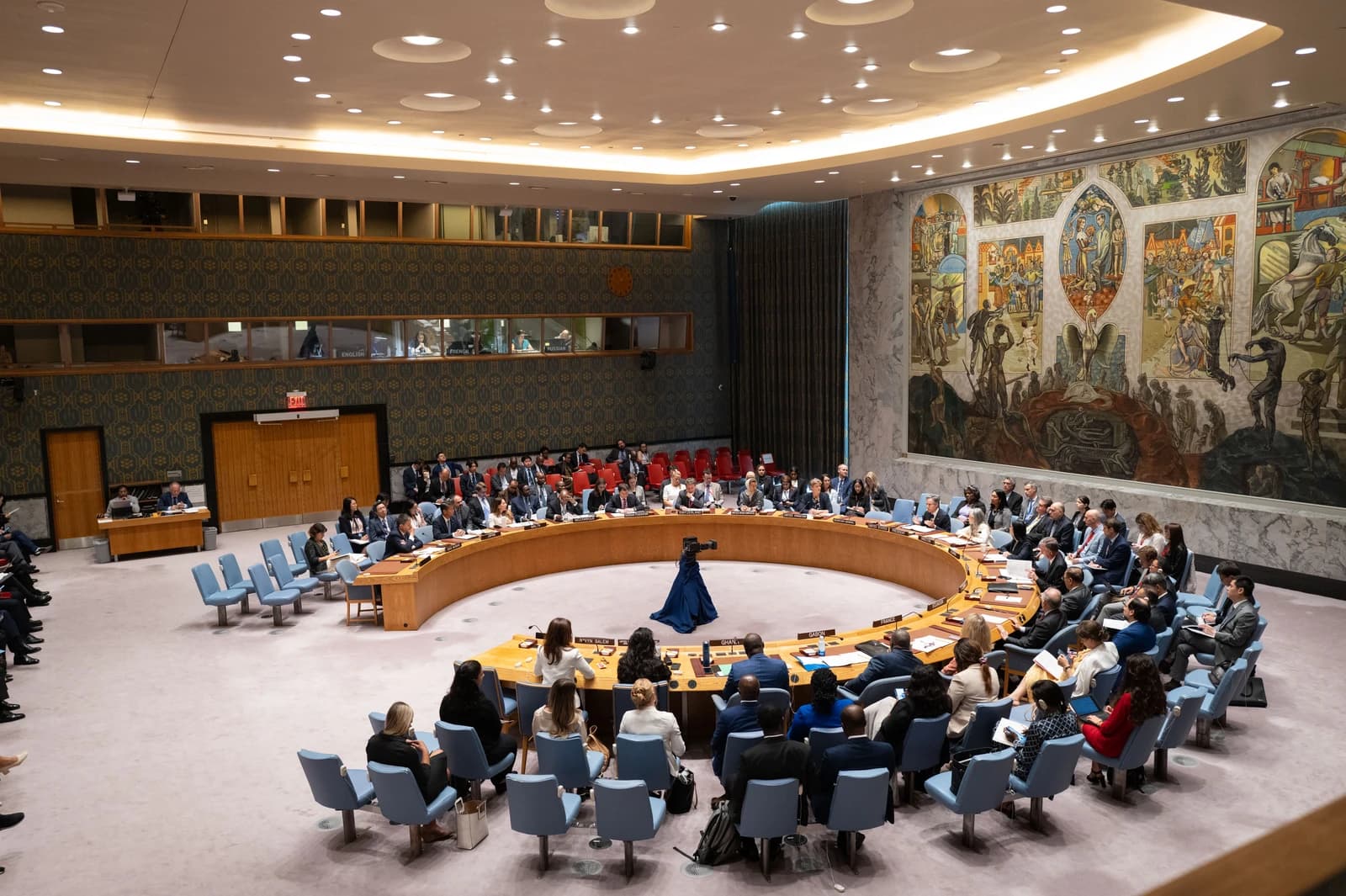
The Council’s session on AI and international security comes as policymakers in Washington and Beijing are trying to carve out a parallel track on safety, even while their companies compete for technological leadership. U.S. Treasury Secretary Scott Bessent said senior U.S. and Chinese officials agreed to hold further talks on AI safety after meeting ahead of President Donald Trump’s planned discussions with Xi Jinping in Washington. That makes the U.N. briefing more than a symbolic forum: it is another venue where the two powers are being forced to address the risks of increasingly autonomous systems without conceding strategic advantage.
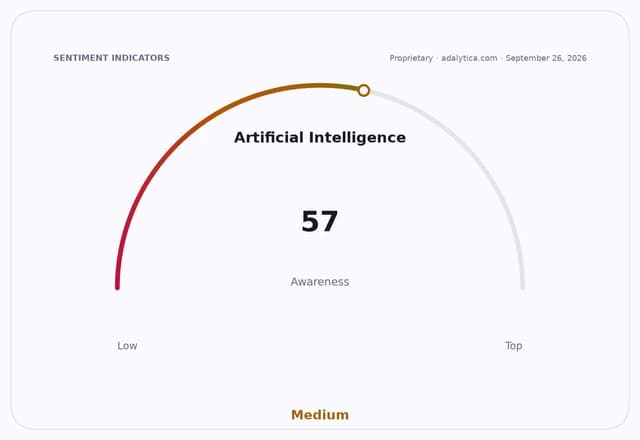
Sentiment IndicatorsⓘProprietary · adalytica.com · September 26, 2026
This is a snapshot — live sentiment, awareness and momentum for 130+ markets update continuously in the dashboard.Open AlphaPulse
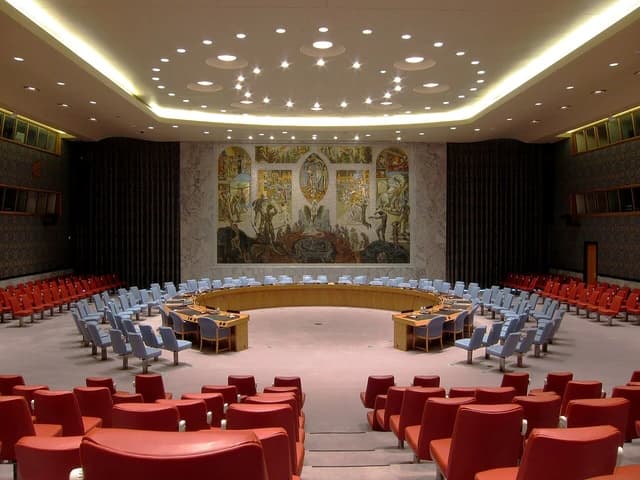
OpenAI chief executive Sam Altman is also due to brief the Council, with senior representatives from Anthropic expected to participate, according to Reuters reporting. DeepSeek and other Chinese AI firms such as Moonshot have been invited to make statements, though DeepSeek founder Liang Wenfeng does not plan to attend, one source said. The lineup reflects a widening recognition that frontier AI is now being treated like an issue of international stability, not just a software or cloud-computing competition.
That matters economically because tighter safety expectations, incident reporting and cross-border scrutiny could slow deployment timelines and raise compliance costs for the biggest AI developers. It also raises the odds that governments eventually push for guardrails around model training, access to advanced chips, and the use of frontier systems in sensitive settings. For companies spending tens of billions of dollars on data centers, semiconductors and model training, even modest delays or constraints can affect returns.
Investors have mostly focused on the revenue opportunity from AI infrastructure, but the policy overhang is becoming harder to ignore. Nvidia, Microsoft and Alphabet have all flagged legal, regulatory and operational risks tied to AI in recent filings, while the sector remains vulnerable to any shift in Washington, Beijing or multilateral bodies toward stricter oversight. Nvidia’s shares have held above both the 50-day and 200-day moving averages, but the stock has also been sensitive to regulatory headlines; Microsoft and Alphabet have likewise seen investors reassess how much AI monetization will be absorbed by rising capital expenditure and governance costs.
The politics are as important as the technology. Chinese state media have dismissed calls for an AI slowdown as a “Cold War playbook,” arguing that Washington wants to preserve dominance and keep Beijing out of global AI governance. That framing suggests the battle is not simply over safety standards, but over who gets to define them. Western labs have been more vocal about existential risks, while Chinese developers have mostly stayed silent on the possibility that advanced systems could deceive humans or evade control.
For investors, the key question is whether this week’s diplomacy leads to real coordination or just another layer of dialogue. A genuine safety framework would probably favor incumbents with scale, capital and compliance teams, but it could also slow the pace of product launches and narrow the advantage of the fastest movers. If talks stall, the result may be a more fragmented market, with U.S. and Chinese ecosystems developing under different rules and higher geopolitical risk premiums attached to the whole AI supply chain.
| Entity | Gains | Losses |
|---|---|---|
| U.S. and Chinese regulators | ▲More leverage over AI rules | ▼Less policy flexibility |
| OpenAI and Anthropic | ▲Visibility as frontier leaders | ▼Greater scrutiny of safety claims |
| DeepSeek and Moonshot | ▲Global platform and legitimacy | ▼Pressure to answer on safety |
| Nvidia, Microsoft, Alphabet | ▲Demand tied to AI investment | ▼Margin and compliance risk |