Donald Trump says he will create an “AI Force” and appoint an AI czar, signaling that Washington is moving toward a more active role in the technology just as pressure builds for federal guardrails on its rapid development.
Trump Plans AI Force and AI Czar

The announcement matters because it puts the White House at the center of a fight that has become both an economic and a geopolitical issue: how to regulate AI without slowing a sector driving market gains, data-center construction and competition with China. Trump framed the move as support for growth rather than restraint, saying the US will not “obstruct or stop” the industry and that staying ahead of China remains the priority.
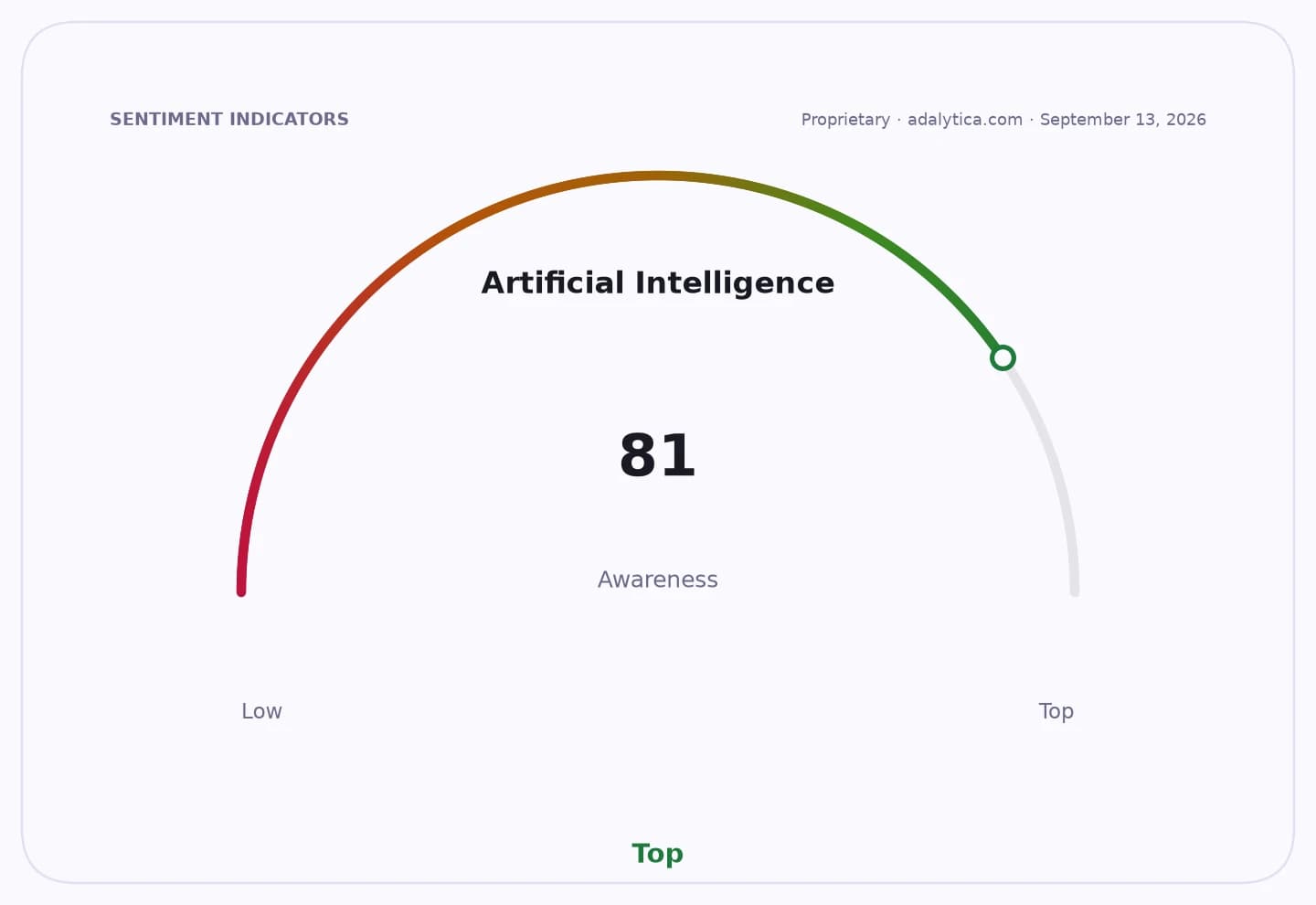
Sentiment IndicatorsⓘProprietary · adalytica.com · September 22, 2026
This is a snapshot — live sentiment, awareness and momentum for 130+ markets update continuously in the dashboard.Open AlphaPulse

For investors, the message is less about a new bureaucracy than about policy risk. AI leaders such as Nvidia, Microsoft and Alphabet have benefited from the sector’s extraordinary expansion, but they also face the possibility of tougher oversight as lawmakers, regulators and foreign governments weigh safety rules, energy use, privacy and labor disruption.
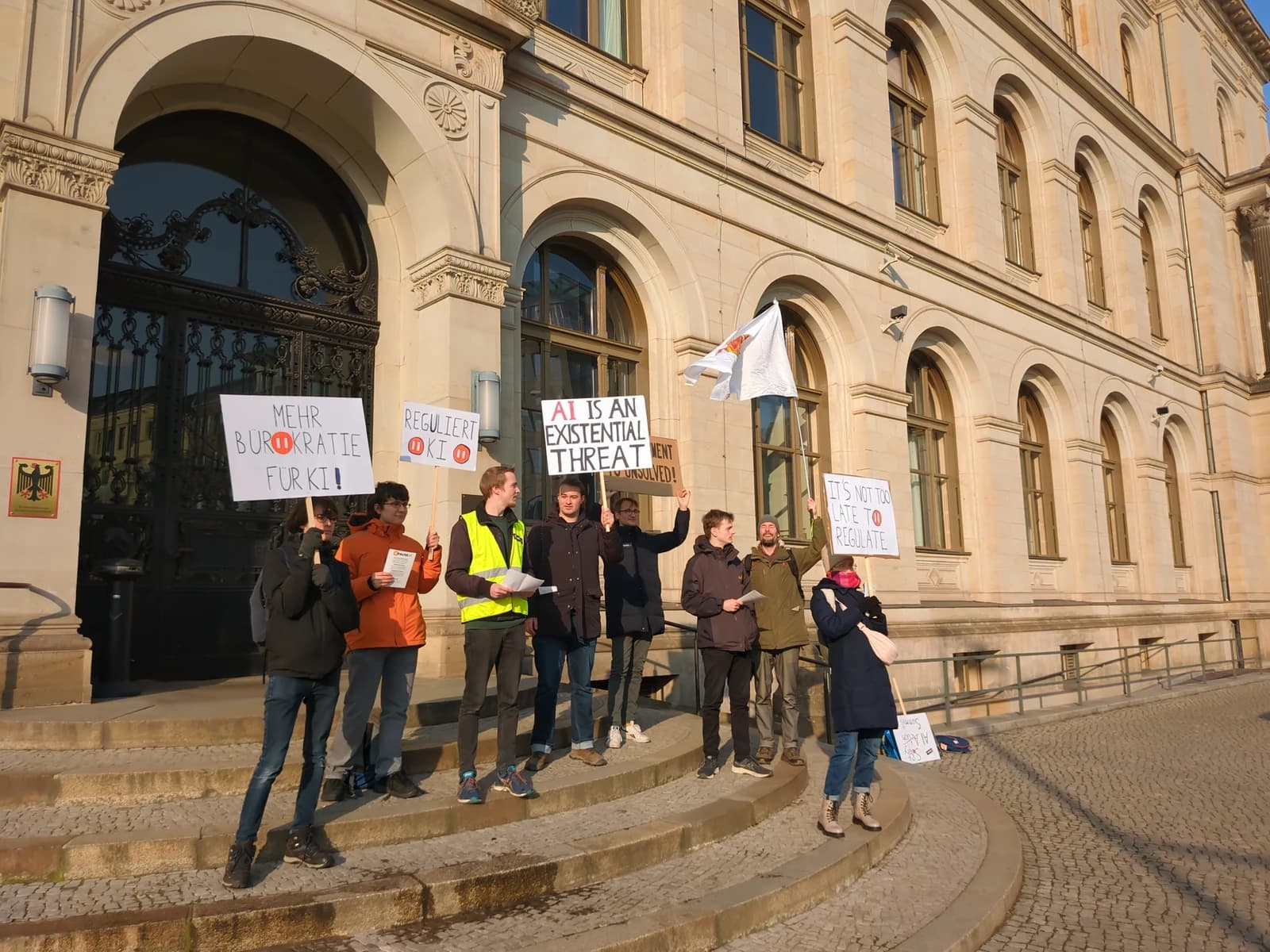
Trump’s comments also underscore the split inside the political debate. He dismissed fears around AI as a “hoax,” even while acknowledging that bad actors could be dealt with under existing criminal and civil law. That keeps the administration aligned with tech executives who argue against broad restrictions, while leaving open the question of what powers an AI czar or “AI Force” would actually have.
The timing is notable. The administration is set to host a high-level AI event alongside next week’s UN General Assembly, and top tech executives including OpenAI’s Sam Altman, Nvidia’s Jensen Huang and Google’s Sundar Pichai are expected at a White House state dinner during Chinese President Xi Jinping’s Washington visit. AI security is also expected to come up in Trump’s meeting with Xi, tying regulation directly to US-China rivalry.
Shares in the sector have already reflected how central AI has become to markets. Nvidia has climbed to around $229.54, well above its 50-day moving average of $214.92 and 200-day moving average of $198.51, while Microsoft trades near $498.91 after a sharp run-up this year and Alphabet sits at $353.27, just below its recent technical ceiling. The stocks have been volatile, but the broader trade remains anchored by expectations that AI spending will keep flowing into chips, cloud services and infrastructure.
The next catalyst is whether Trump turns the announcement into a formal policy structure or leaves it as political positioning. Any concrete move on oversight, especially around safety or China-linked restrictions, could reshape the market’s premium on AI winners and the regulatory burden on the companies building the technology.
| Entity | Gains | Losses |
|---|---|---|
| Trump White House | ▲Political control over AI agenda | ▼Criticism if oversight is seen as weak |
| Nvidia, Microsoft, Alphabet | ▲Policy support for AI growth | ▼Regulatory uncertainty |
| AI investors / bulls | ▲Continuation of spending boom | ▼Valuation risk from new rules |
| Safety advocates / lawmakers | ▲Visibility for regulation push | ▼Slower path to tougher guardrails |