China is elevating artificial intelligence from an industrial policy priority to a full-spectrum national strategy — one that combines growth, technological sovereignty and military power — and that makes its AI push far more consequential for investors than a simple race for model supremacy.
China AI strategy, investors and chip supply chain
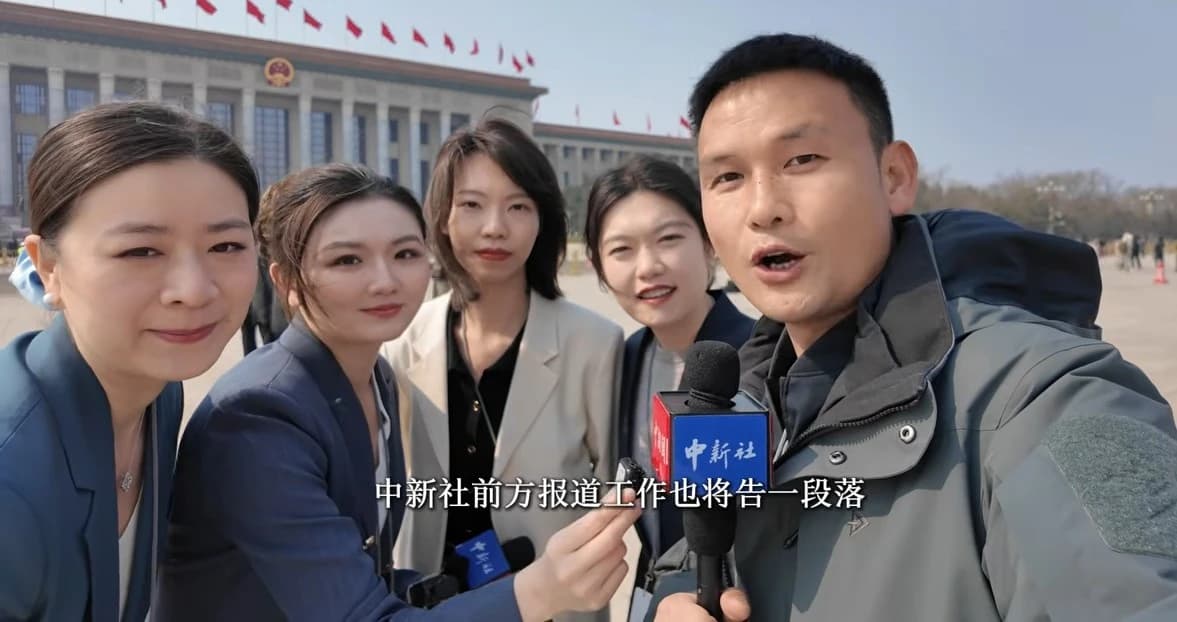
Beijing’s approach matters economically because it is designed to offset three structural drags on the Chinese economy: slowing investment-led growth, a weaker property sector and demographic aging. In the view laid out in China’s 2026-2030 five-year plan, AI is not just another productivity tool but a “new quality productive force,” with the state backing adoption across services such as healthcare and education under the “AI+” framework. That is a broader mandate than Europe’s, where AI is still treated largely as a competitiveness or regulatory issue.
Sentiment IndicatorsⓘProprietary · adalytica.com · September 24, 2026
This is a snapshot — live sentiment, awareness and momentum for 130+ markets update continuously in the dashboard.Open AlphaPulse
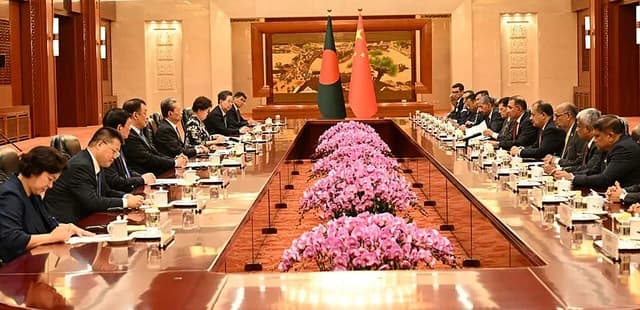
The investor takeaway is that China is trying to build an AI stack that can survive export controls, scale at home and compete abroad. Since U.S. restrictions on advanced semiconductors were tightened in 2022, Beijing has pushed for “self-reliance and self-strengthening,” seeking an “independent and controllable” ecosystem built on domestic hardware and software. State support is less about direct spending than coordination: chip subsidies, computing vouchers and guidance funds that pull in private capital. A protected domestic market, where foreign generative AI providers can barely operate, gives local platforms users, data and revenue to finance model development.
That model has implications for global investors because it widens the competitive moat around Chinese technology champions while deepening the strategic divide with the U.S. and Europe. In Washington, AI policy is also broad and backed by heavy private capital, but it is more fragmented and constrained by energy, grid capacity and the patience of investors. Europe, by contrast, has regulation but little industrial scale in frontier AI, leaving its firms increasingly reliant on Chinese models for hosting and adaptation even as that creates a new form of dependency.
US-China Relations vs NVDAadalytica.com
Explore this data interactively — full history, time series and cross-market comparisons.Open AlphaPulse
The market read-through is mixed. Nvidia’s shares have recently traded above both the 50-day and 200-day moving averages, with RSI readings back near neutral-to-positive territory, suggesting investors still assume AI infrastructure demand stays robust despite policy risk. Taiwan Semiconductor Manufacturing Co. has also held firm above its longer-term trend lines, underscoring that the supply chain remains central to the AI buildout. Alibaba, however, remains vulnerable: its stock sits well below the 200-day average, reflecting the fact that China’s AI strategy may be supportive for domestic platforms in the long run but does not erase competition, regulation or macro weakness.
The larger narrative is that AI is becoming a geopolitical operating system, not just a technology cycle. For Beijing, the goal is to use it to lift productivity, reduce dependence on foreign suppliers and strengthen military capabilities at the same time. For investors, that means AI winners will increasingly be those that can navigate not only compute demand and model performance, but also state direction, export controls and the fragmentation of the global technology order.
| Entity | Gains | Losses |
|---|---|---|
| China’s domestic AI platforms | ▲Bigger user base and data access | ▼Higher policy dependence |
| U.S. chipmakers and cloud leaders | ▲Continued compute demand | ▼Greater export-control uncertainty |
| European companies | ▲Access to frontier models | ▼Deeper reliance on foreign suppliers |
| Alibaba | ▲Potential AI adoption tailwind | ▼Macro weakness and competitive pressure |