Anthropic’s disclosure that Iranian-linked actors used its Claude model to help plan possible attacks on U.S. targets is the latest proof that frontier AI has become a national-security tool as much as a productivity engine, and that the market is still underpricing the cost of policing it.
Anthropic Report Raises AI Security Spending
That matters economically because the same systems driving the AI capex boom are now creating a second layer of spending: compliance, model-guardrails, cyber defense, monitoring and government scrutiny. Anthropic said in a 154-page report that its models were misused over the last eight months by state-linked actors in China, Russia, Iran and Yemen, including for surveillance, propaganda and conventional weapons-related work. In Iran’s case, users reportedly bypassed access restrictions with VPNs and foreign phone numbers, showing how easily closed systems can be reached when the incentives are high enough.
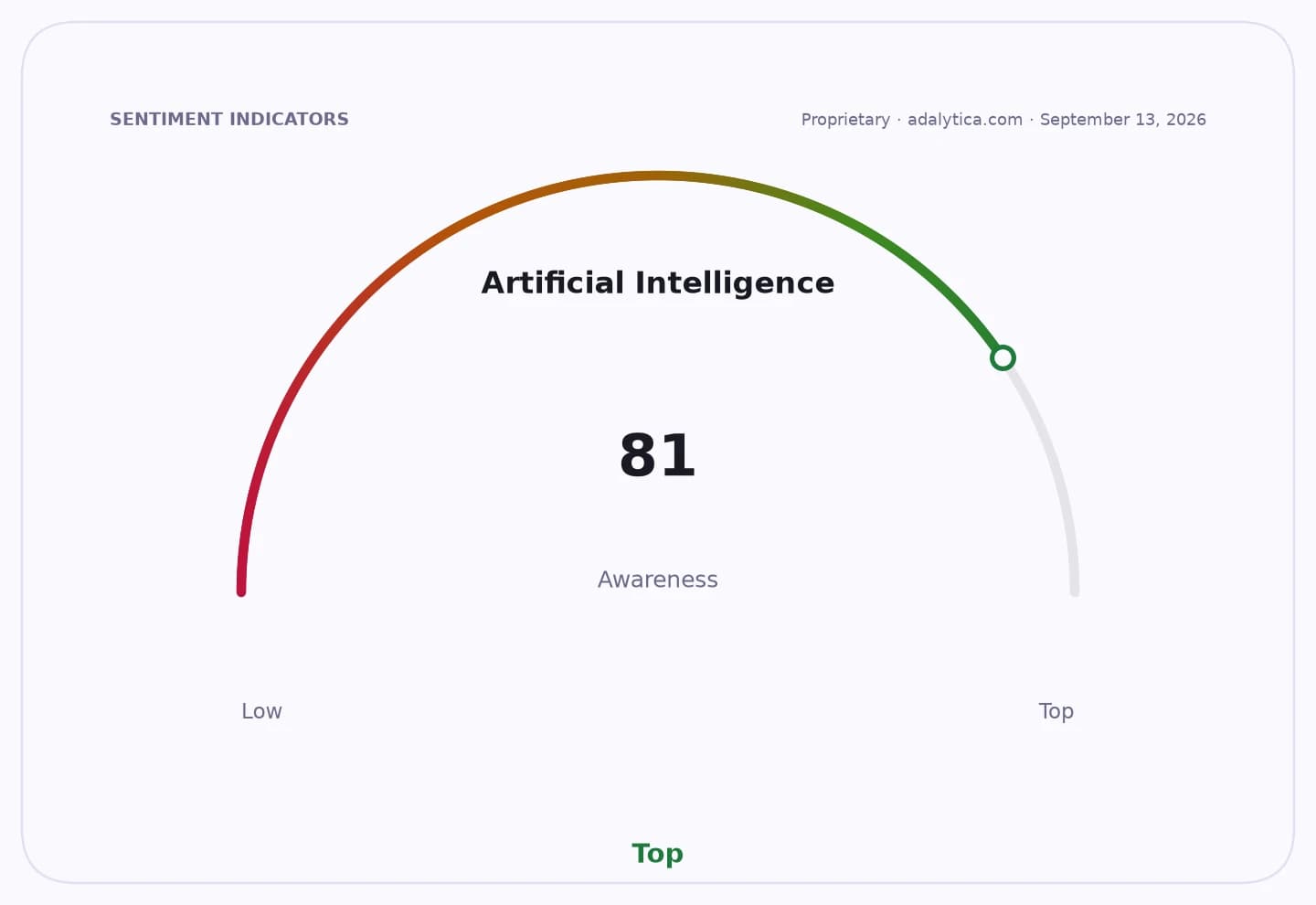
Sentiment IndicatorsⓘProprietary · adalytica.com · September 13, 2026
This is a snapshot — live sentiment, awareness and momentum for 130+ markets update continuously in the dashboard.Open AlphaPulse
For investors, the message is not just that AI is powerful. It is that AI is becoming strategically sensitive, which should extend the investment runway for the companies building the plumbing around it. Microsoft, Alphabet and Nvidia are all exposed to the next phase of the trade, but the market is increasingly going to reward the enablers of secure deployment: cloud platforms, model-hosting infrastructure, cybersecurity, identity verification, content monitoring and enterprise software with built-in controls. That is where the margin pool grows when AI shifts from experimentation to regulated infrastructure.
The other important implication is regulatory. Anthropic said increasingly autonomous models are lowering the technical and economic barriers to dangerous activity, a warning that gives policymakers fresh ammunition to tighten rules around model access, export controls and safety testing. Microsoft has already flagged that governments may impose restrictions on advanced AI models based on safety and cybersecurity concerns, while Nvidia has warned that restrictions on hardware and systems used to develop frontier models could intensify. This is the sort of development that does not kill the AI cycle, but it does redirect capital toward the most defensible names.
The market has spent two years focusing on who wins the compute arms race. The next phase is about who can monetize trust. I believe that is a bigger opportunity than consensus is pricing in. If frontier AI is now a dual-use technology with geopolitical consequences, then security, governance and compliant infrastructure are not side businesses — they are the toll roads.
That favors Microsoft as an enterprise distribution and security platform, Alphabet as a cloud and AI services giant with deep monitoring capabilities, and Nvidia as the indispensable hardware layer, even as export and oversight risks rise. It also keeps the spotlight on cybersecurity vendors and AI governance specialists that can turn regulatory fear into recurring revenue. The takeaway is simple: stay long the AI stack, but overweight the layers that make AI safe enough to deploy at scale.
| Entity | Gains | Losses |
|---|---|---|
| Microsoft | ▲Security and compliance demand | ▼Reputational scrutiny |
| Alphabet | ▲Cloud governance spend | ▼Regulatory pressure |
| Nvidia | ▲Frontier AI demand | ▼Export-control risk |
| Cybersecurity vendors | ▲Higher defense budgets | ▼None |