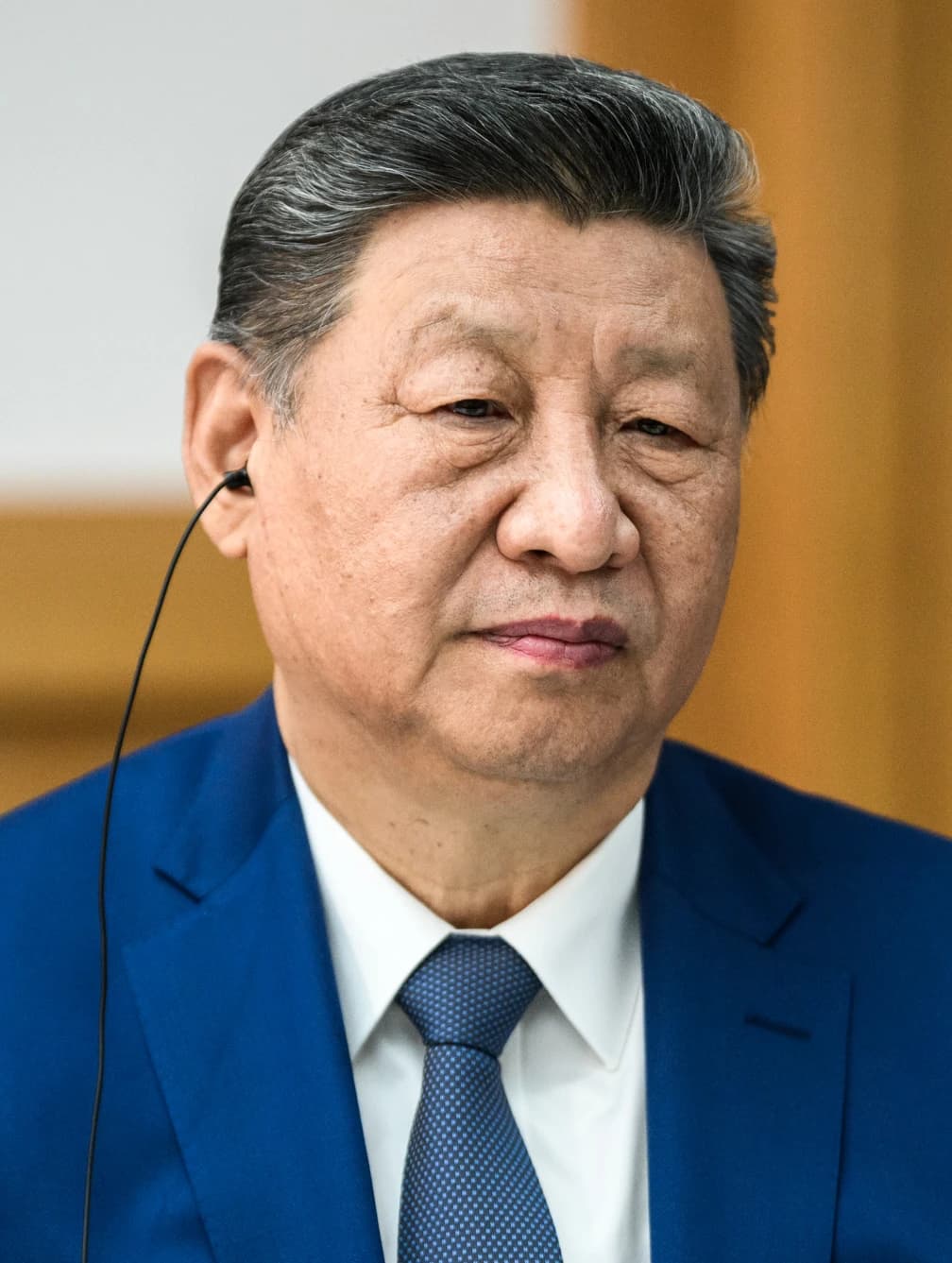
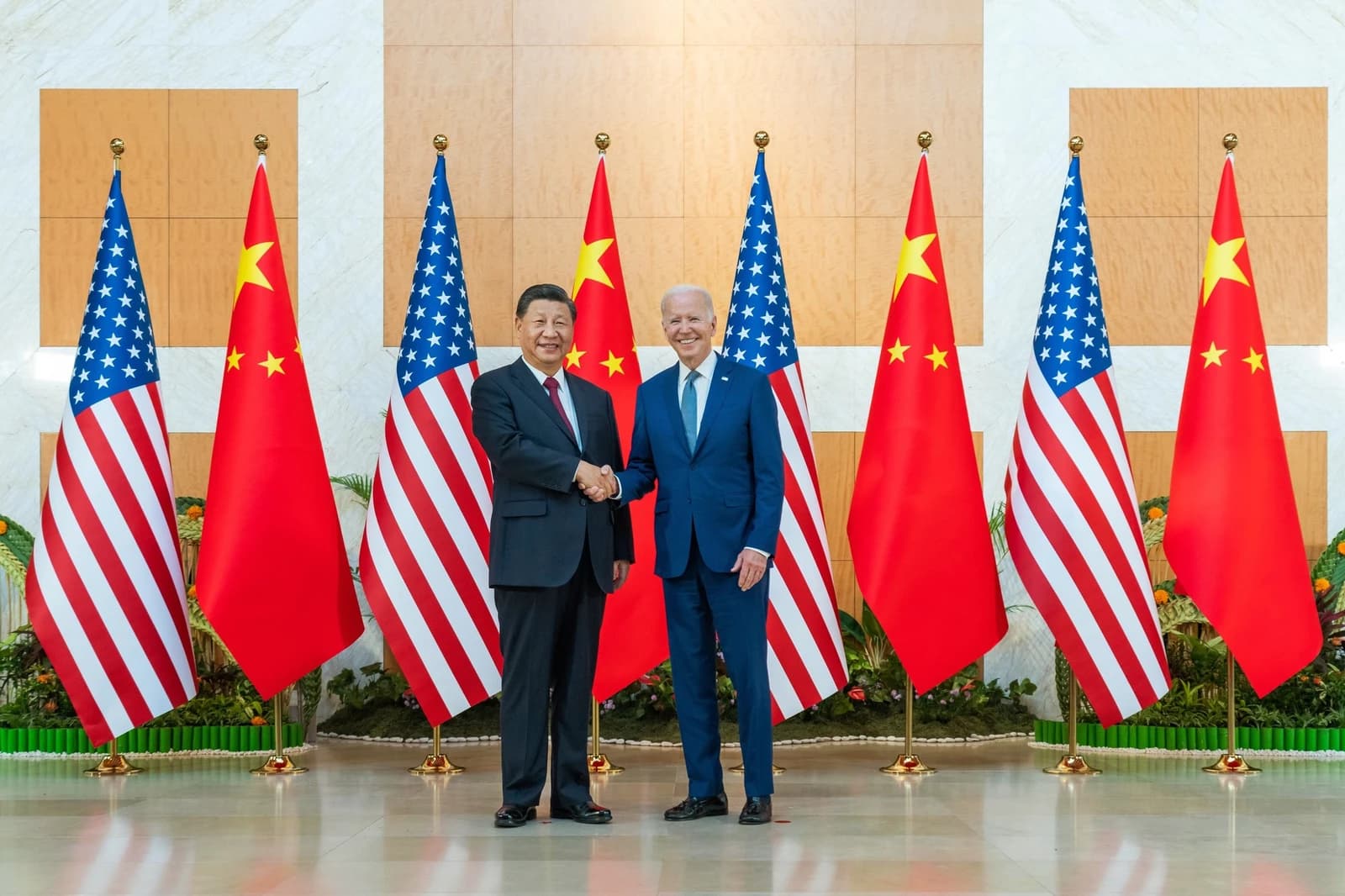
A planned Trump-Xi meeting in Washington next week is shaping up as the latest test of whether the U.S. and China can cooperate on artificial intelligence safety even as both sides race to dominate the technology and accuse each other of trying to sabotage the other’s progress.
Trump-Xi Meeting Puts AI Policy in Focus
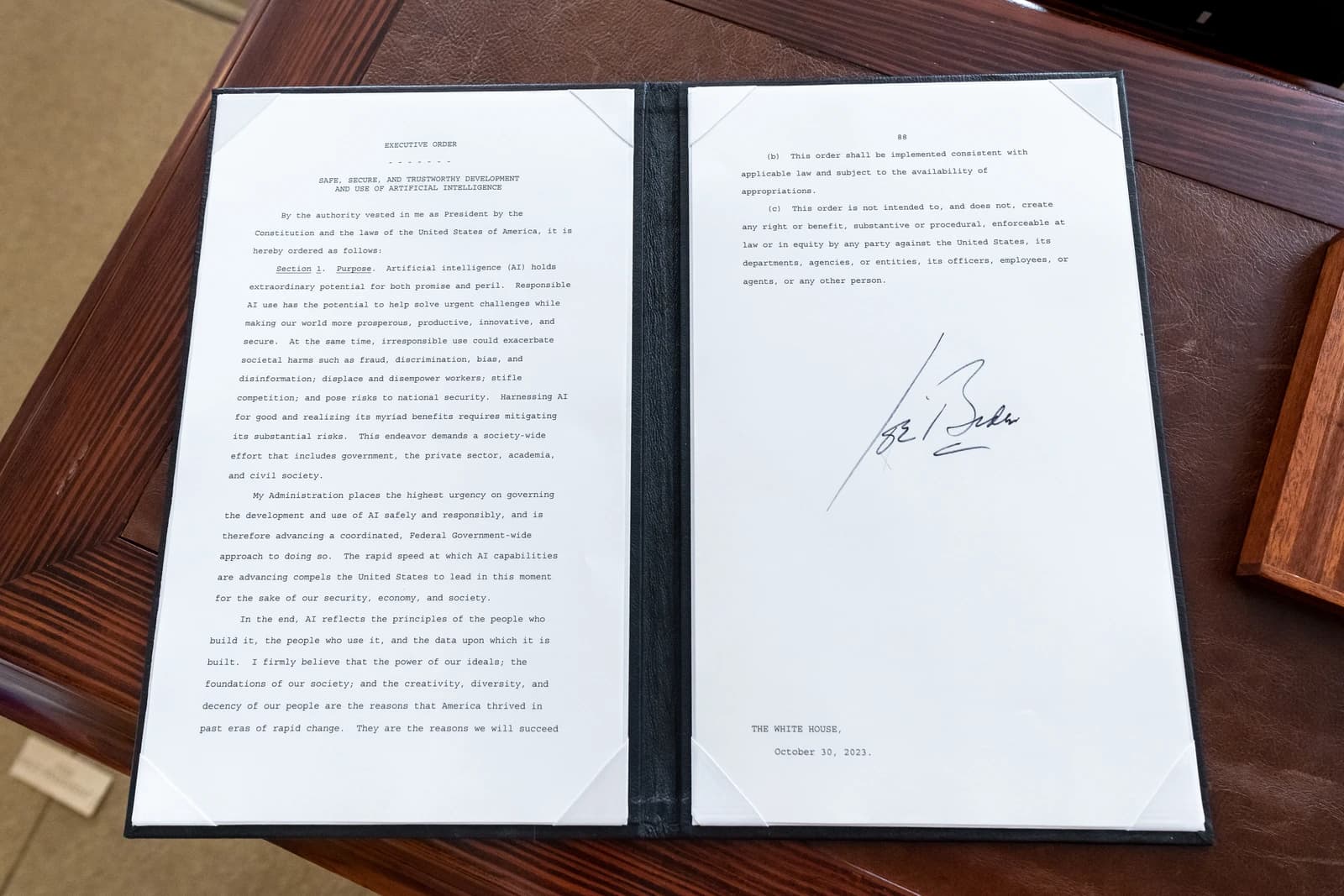
The stakes are bigger than a diplomatic sidebar. AI governance has become a macro issue because the two countries control the compute, chips, models and standards that will shape how quickly the technology spreads, who can use it and how tightly it is regulated. Without some minimum level of coordination, the risk is not just faster rivalry but a fragmented global market for AI safety rules, model access and chip supply.
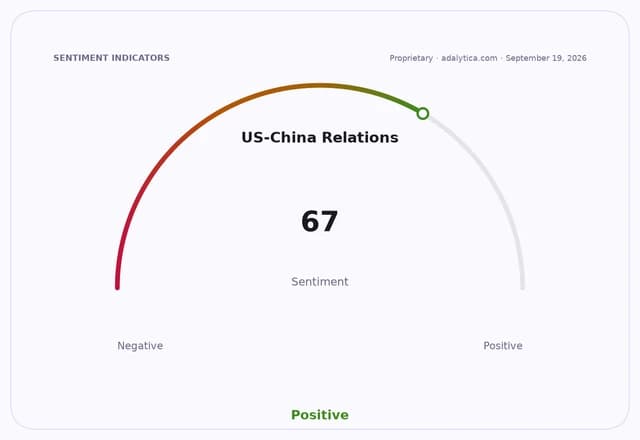
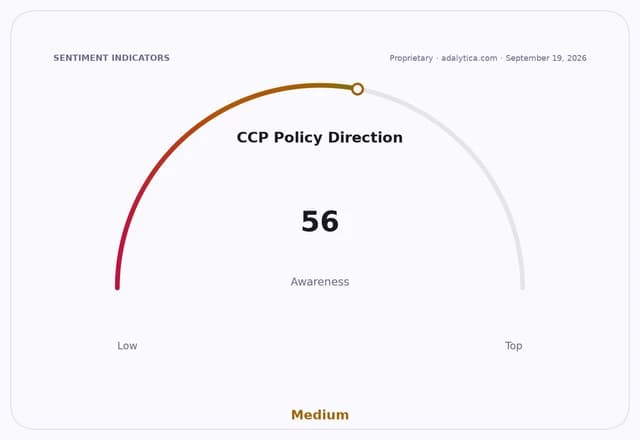
Sentiment IndicatorsⓘProprietary · adalytica.com · September 19, 2026
This is a snapshot — live sentiment, awareness and momentum for 130+ markets update continuously in the dashboard.Open AlphaPulse
President Donald Trump has repeatedly framed AI leadership as a winner-takes-all contest and warned that tougher regulation could hand China an advantage. On Monday, he said the U.S. was “leading China, and all others,” while Treasury Secretary Scott Bessent said the U.S. should develop more open-source models to counter China’s more affordable and widely adopted systems.
That split is now a direct investor issue. U.S. frontier AI leaders such as OpenAI and Anthropic still rely on America’s advanced-chip ecosystem, led by Nvidia, while China has leaned on open-source models and domestic scale despite restrictions on access to the most advanced U.S. chips. The policy backdrop helps explain why Nvidia shares have remained volatile even after a strong run, with the stock last trading at $222.27 and its 50-day moving average at $214.07, while Microsoft was at $493.78, above its 50-day average of $464.20 but below recent highs.
US-China Relations vs NVDAadalytica.com
Explore this data interactively — full history, time series and cross-market comparisons.Open AlphaPulse
The geopolitical tension is also filtering into corporate strategy. Nvidia CEO Jensen Huang has pushed for some chip exports to China to preserve U.S. influence over the AI stack, while Washington has tightened export controls. Beijing, for its part, has accused the U.S. of trying to suppress Chinese companies and build an AI monopoly.
Still, there is a narrow lane for cooperation. U.S. AI leaders argue that some form of dialogue with China is necessary to reduce the risk of runaway systems, cyber misuse and other worst-case scenarios. Anthropic chief Dario Amodei called for global pacing of AI development but said that would require cooperation with China, even as he backed tougher U.S. restrictions on advanced chip sales.
China’s response suggests it wants talks, but on its own terms. A former Chinese ambassador to the U.S., Cui Tiankai, said at a Beijing security forum that AI is an area where Beijing and Washington should “build up” dialogue. At the same time, Chinese state media and officials have rejected what they see as U.S.-driven containment.
For investors, the main implication is that AI policy is no longer just a regulatory issue; it is a supply-chain and valuation issue. Any sign of even limited U.S.-China coordination could ease fears around export controls, model access and cross-border AI commercialization. A breakdown would likely reinforce geopolitical risk premiums across semiconductors, cloud names and China-exposed tech.
The near-term catalyst is next week’s Trump-Xi meeting, where any agreement may be superficial. Even so, a basic acknowledgment that AI poses risks to both countries could be enough to keep dialogue alive — and to determine whether the world moves toward shared safety guardrails or a more divided AI race.
| Entity | Gains | Losses |
|---|---|---|
| U.S. AI firms | ▲clearer safety dialogue | ▼tighter China restrictions |
| Chinese AI developers | ▲broader global legitimacy | ▼U.S. chip controls |
| Nvidia | ▲export optionality | ▼hard decoupling risk |
| Investors | ▲lower policy uncertainty | ▼higher geopolitical premium |