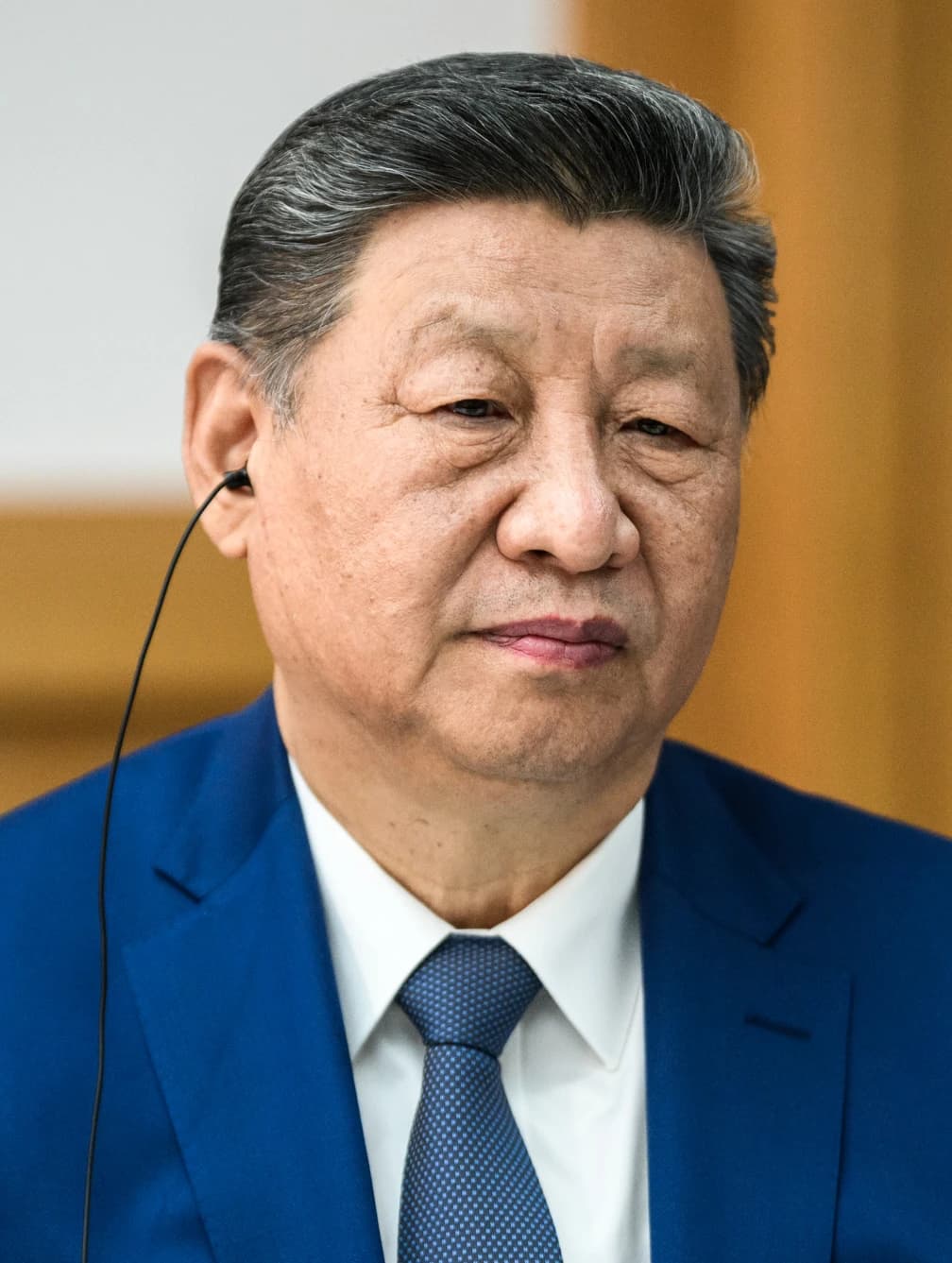
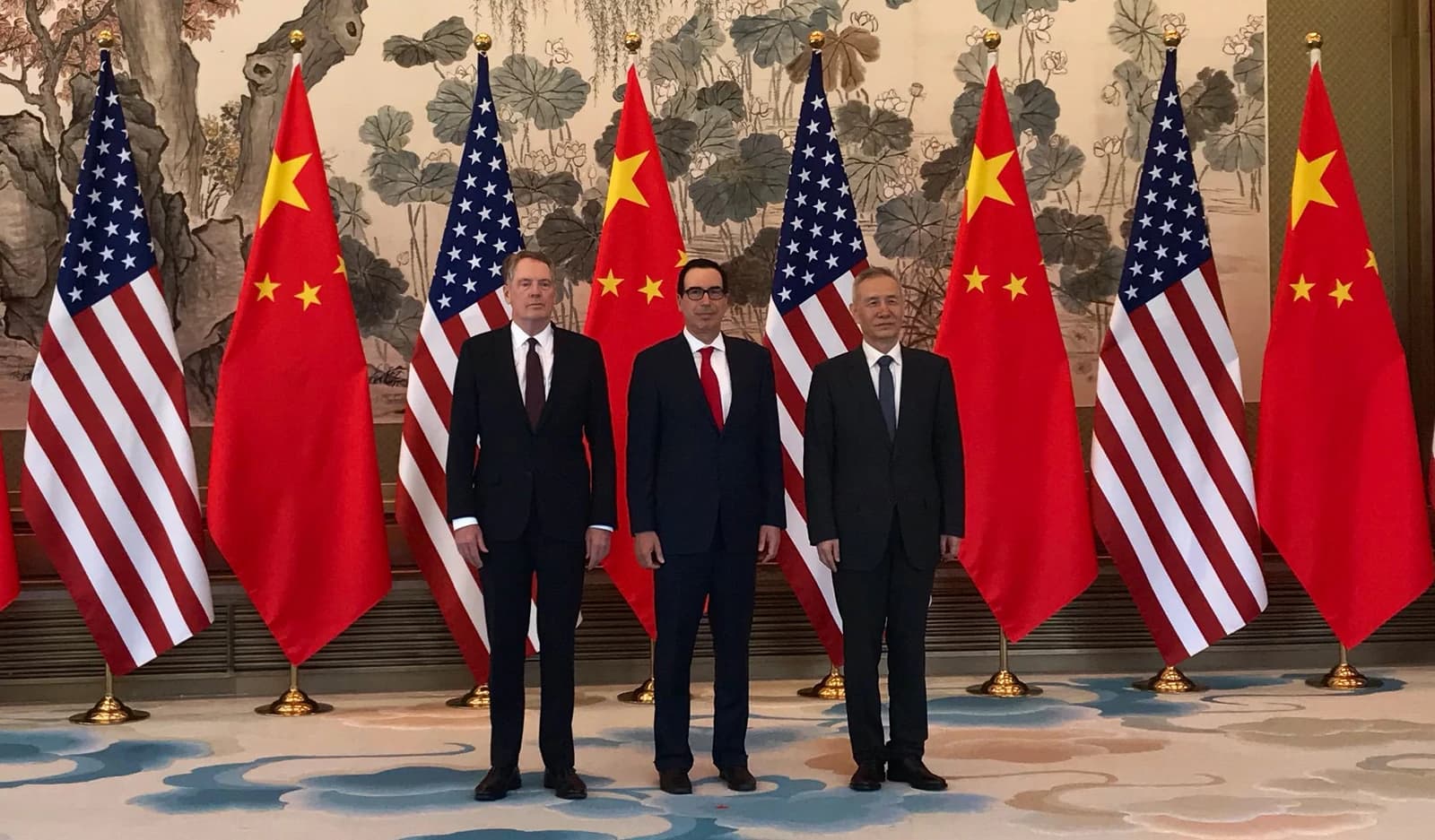
The biggest market story in Xi Jinping’s visit to the U.S. this week is not the diplomacy itself, but the chance that Washington and Beijing can keep trade, technology and energy channels open enough to calm a market that has been living with too much geopolitical risk.
Xi Visit May Lift China Stocks and Chipmakers
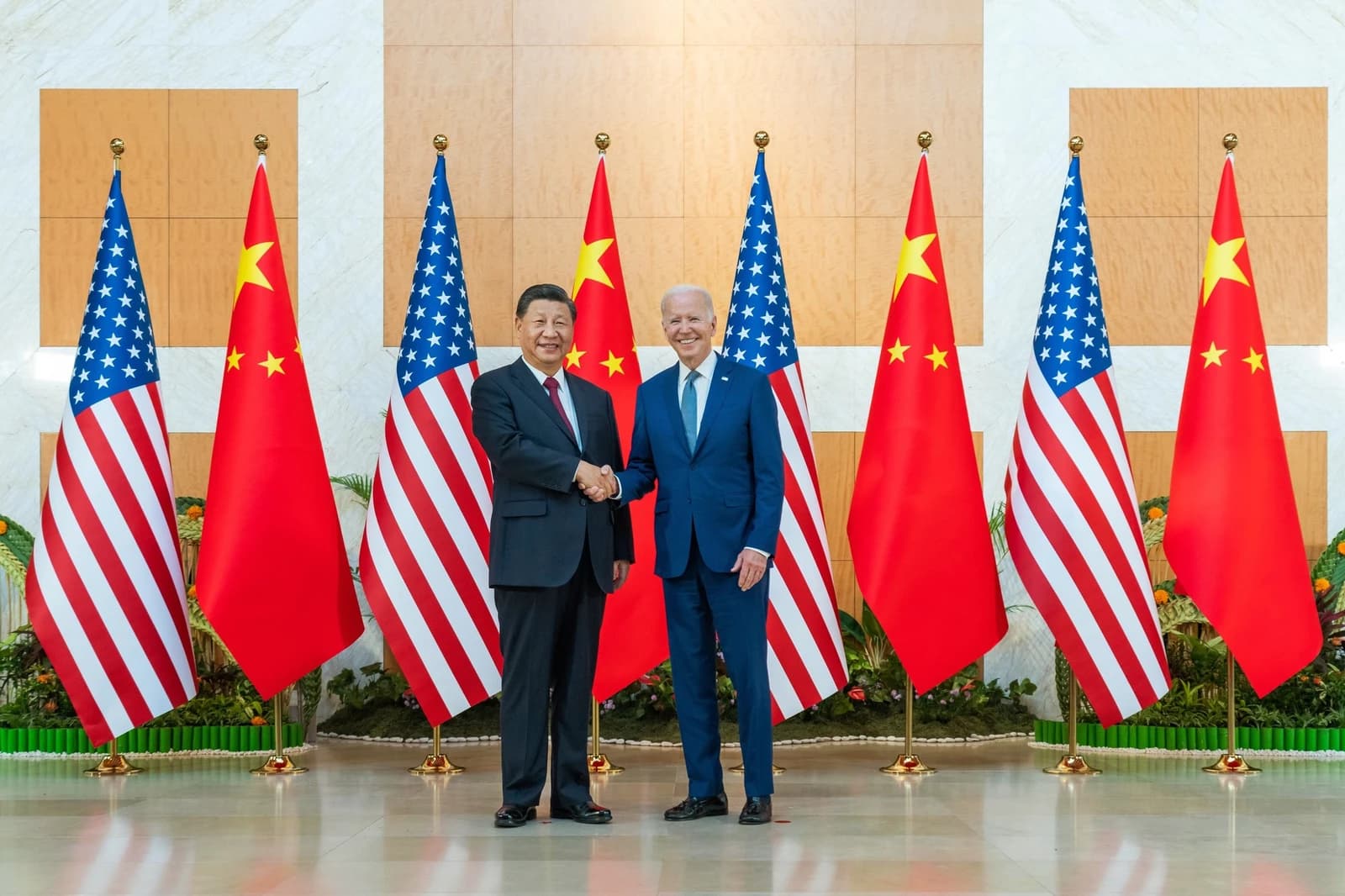
That matters because investors do not need a grand bargain to feel better; they need fewer surprises. When the world’s two largest economies are talking about tariffs, artificial intelligence and security, every hint of cooperation can ripple through chips, industrials, energy and the broader appetite for risk. The result is showing up already in markets tied to China and global growth.
Shares of the iShares China Large-Cap ETF, FXI, have been under pressure, sliding to $34.24 on Sept. 24 from $35.88 earlier this month and still trading below both its 50-day and 200-day moving averages. That says the market remains cautious, but it also leaves room for relief if the summit produces even modest progress. The broader emerging-markets ETF EEM has held up better, ending at $67.25, with its 50-day moving average above its 200-day average — a sign that investors are still willing to take selective risk in China-linked and developing-market assets.
The clearest economic stakes sit in semiconductors, supply chains and energy. U.S. companies from Nvidia to Qualcomm, Micron and Applied Materials have all warned that tariffs, export rules and trade barriers can hit demand, costs and margins. For investors, that means the tone of the summit could matter as much as any specific announcement. A more constructive U.S.-China backdrop would support the parts of the market most sensitive to cross-border trade, especially chipmakers, equipment suppliers and multinationals with heavy China exposure.
US-China Relations vs FXIadalytica.com
Explore this data interactively — full history, time series and cross-market comparisons.Open AlphaPulse
Energy is another important channel. U.S. oil prices, tracked by the USO fund, have been volatile, but the ETF still closed at $153.09 on Sept. 24, far above its 200-day average. Any thaw in U.S.-China ties that improves global growth expectations could help keep oil demand resilient, while a sharp deterioration would do the opposite. In other words, this visit is about more than headline diplomacy — it is about whether the world economy gets a little more certainty.
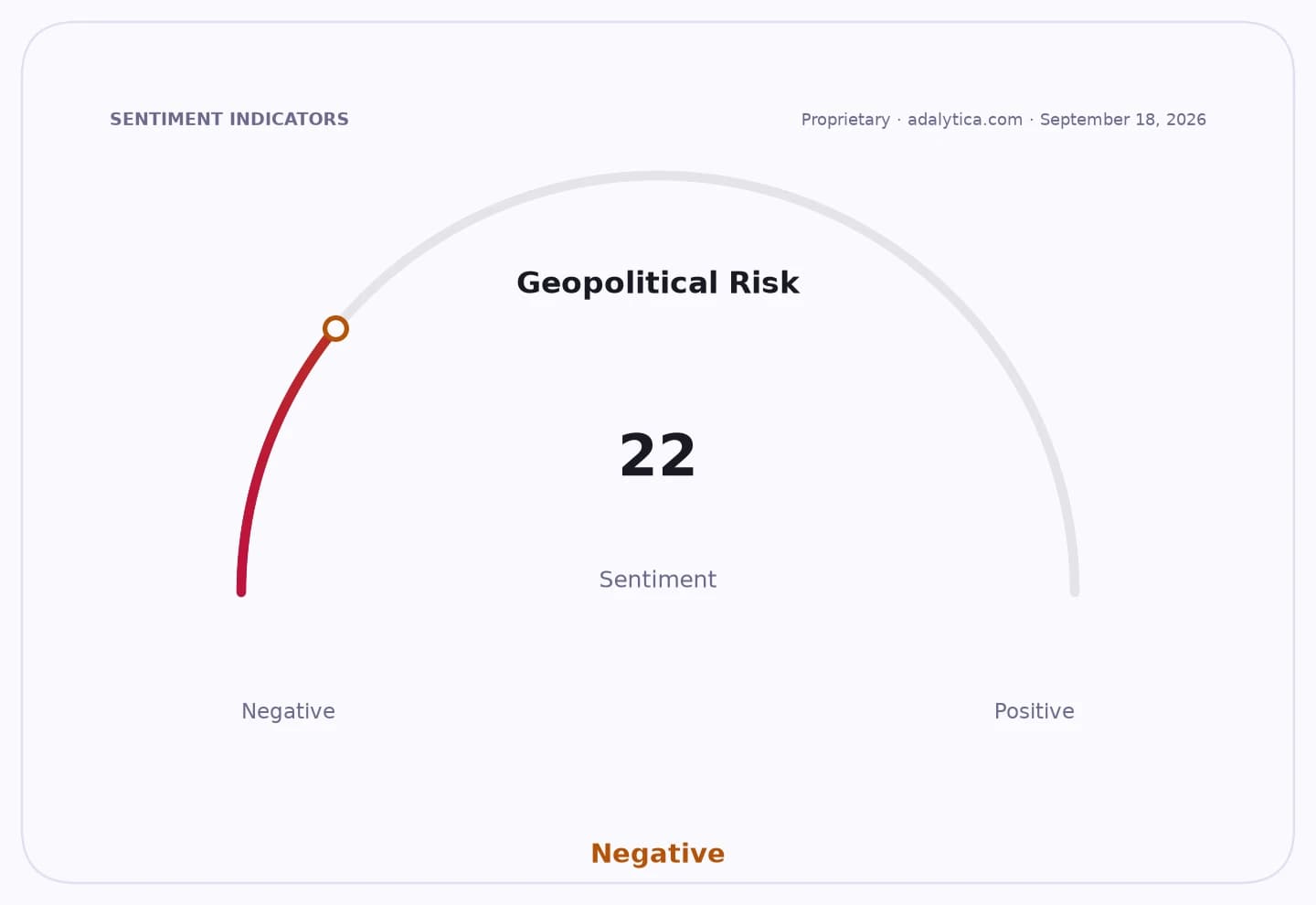
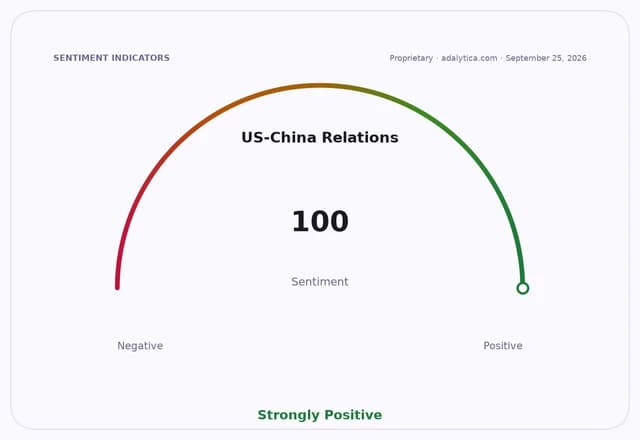
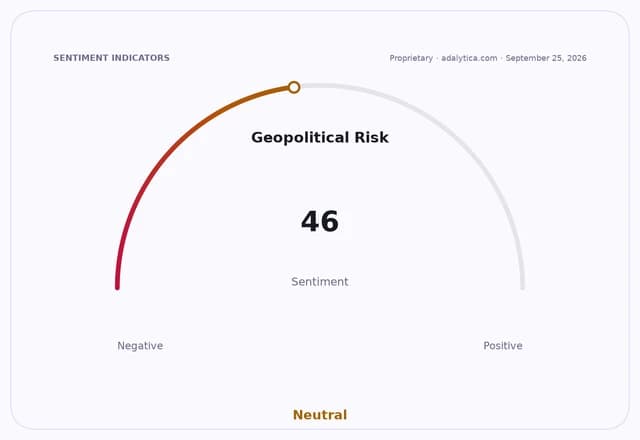
That uncertainty has become a market in itself. Adalytica’s U.S.-China relations sentiment gauge is at 100, labeled “Extreme Greed,” after a sharp seven-day jump, which captures how quickly investors have moved to price in a friendlier outcome. At the same time, U.S. consumer sentiment remains weak and global stability readings are only neutral, underscoring that markets are hungry for any credible sign that the world’s biggest geopolitical tension can be managed, not escalated.
For long-term investors, the right takeaway is not to chase every summit headline, but to watch which sectors benefit if the rhetoric turns into practical cooperation. Chips, global manufacturers and energy-linked assets could all respond quickly to even limited progress. If the talks merely reduce the odds of a new trade shock, that alone would be a meaningful win for portfolios.
| Entity | Gains | Losses |
|---|---|---|
| Chipmakers and suppliers | ▲Fewer export shocks | ▼Policy uncertainty |
| U.S. and Chinese consumers | ▲Lower import costs | ▼Higher tariff risk |
| China ETFs and EM funds | ▲Relief rally potential | ▼Trade escalation |
| Oil and global industrials | ▲Better growth outlook | ▼Slower trade flows |