Middle powers are moving to defend the rules-based order just as Washington’s tariff-heavy, transaction-first approach is pushing allies and emerging economies to look for new coalitions — a shift that matters as much for capital allocation as for diplomacy.
Middle powers launch Partners for Multilateralism
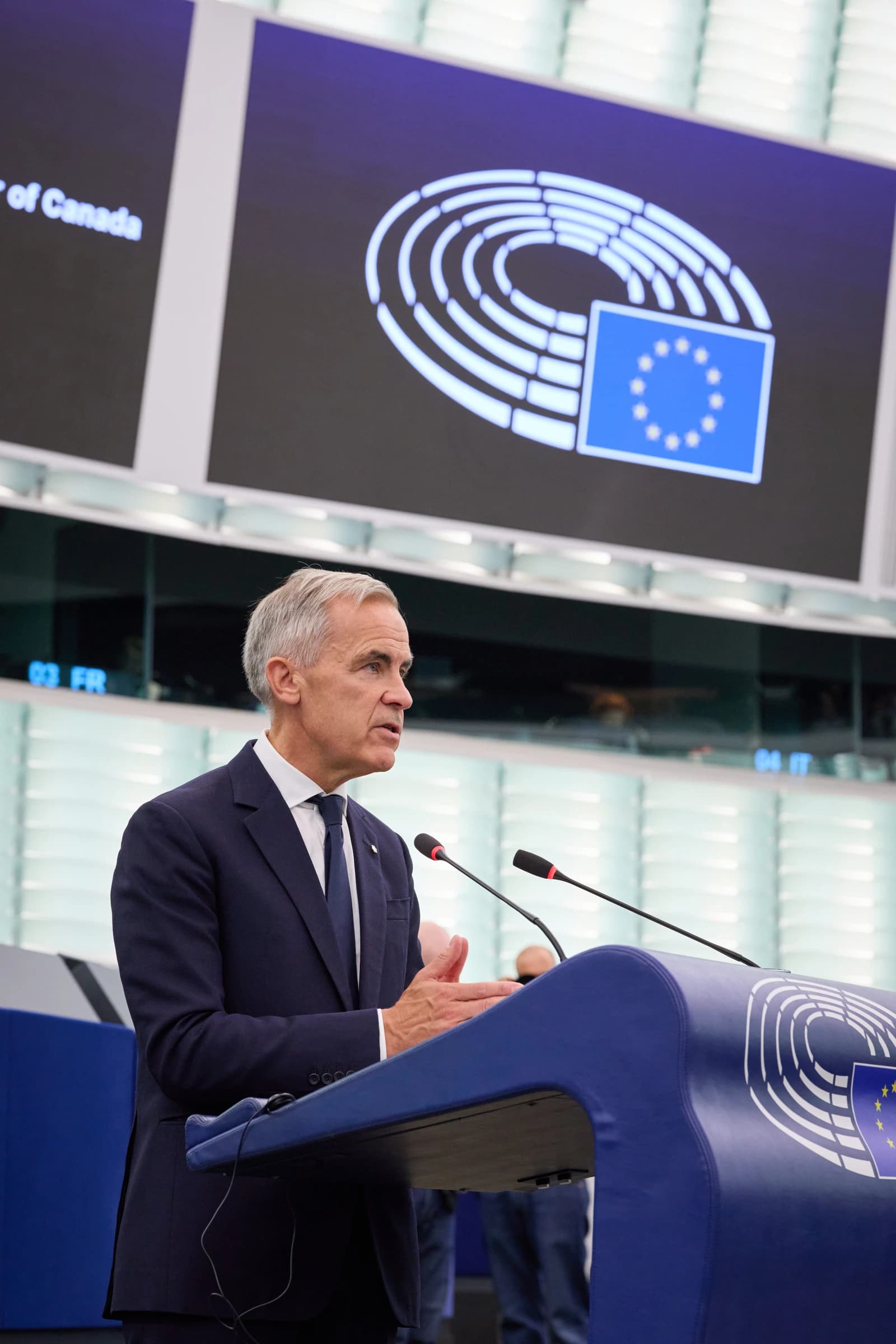
Canada, Brazil, Kenya and the European Union used the eve of the UN General Assembly to unveil “Partners for Multilateralism,” a flexible new diplomatic network aimed at keeping international cooperation alive when the biggest powers are increasingly unwilling to do so. For investors, that matters because the emerging geopolitical map is no longer being written only in Washington, Beijing and Moscow; it is being shaped by countries that trade, build infrastructure, buy commodities and set regulatory standards across the global economy.
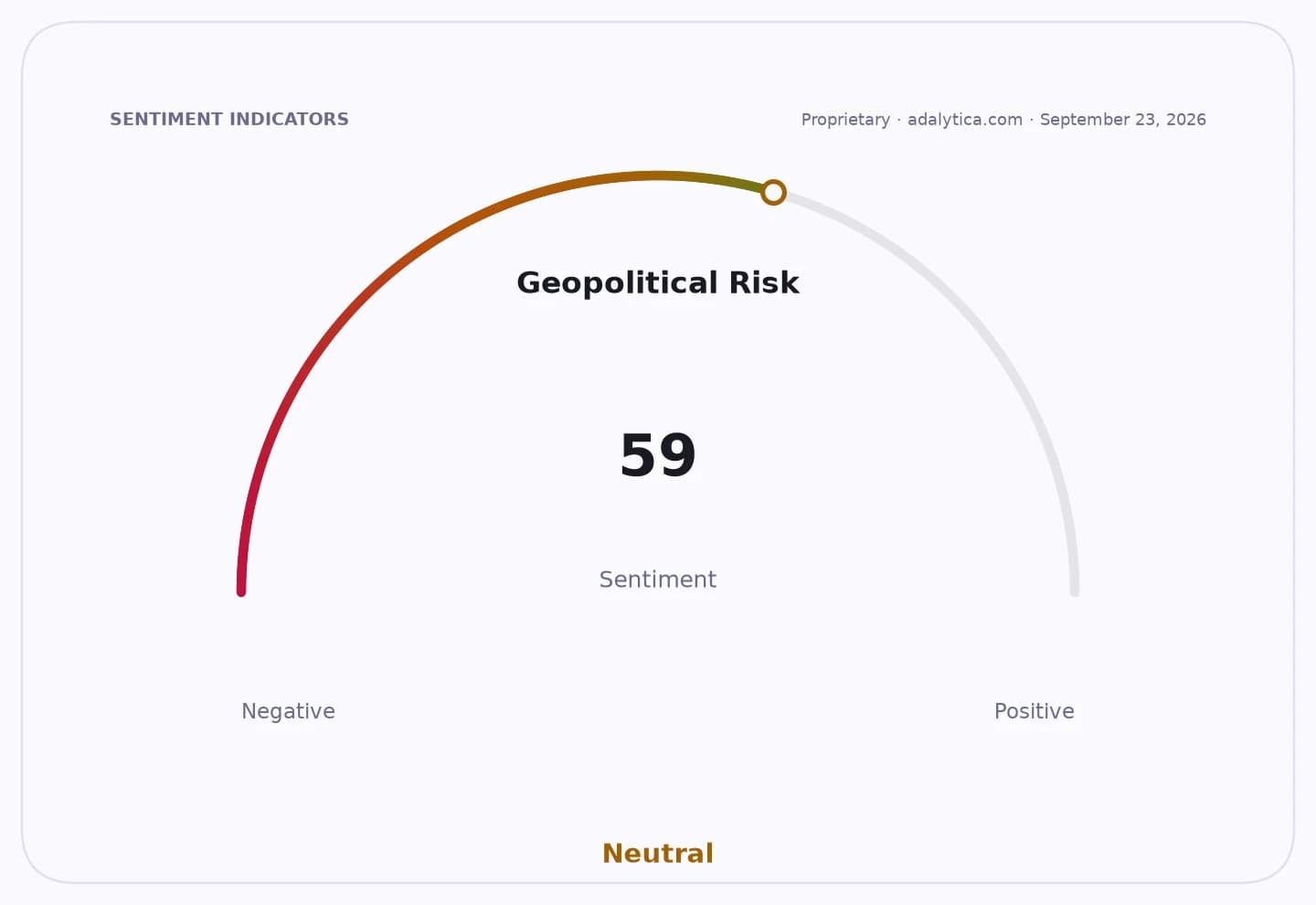
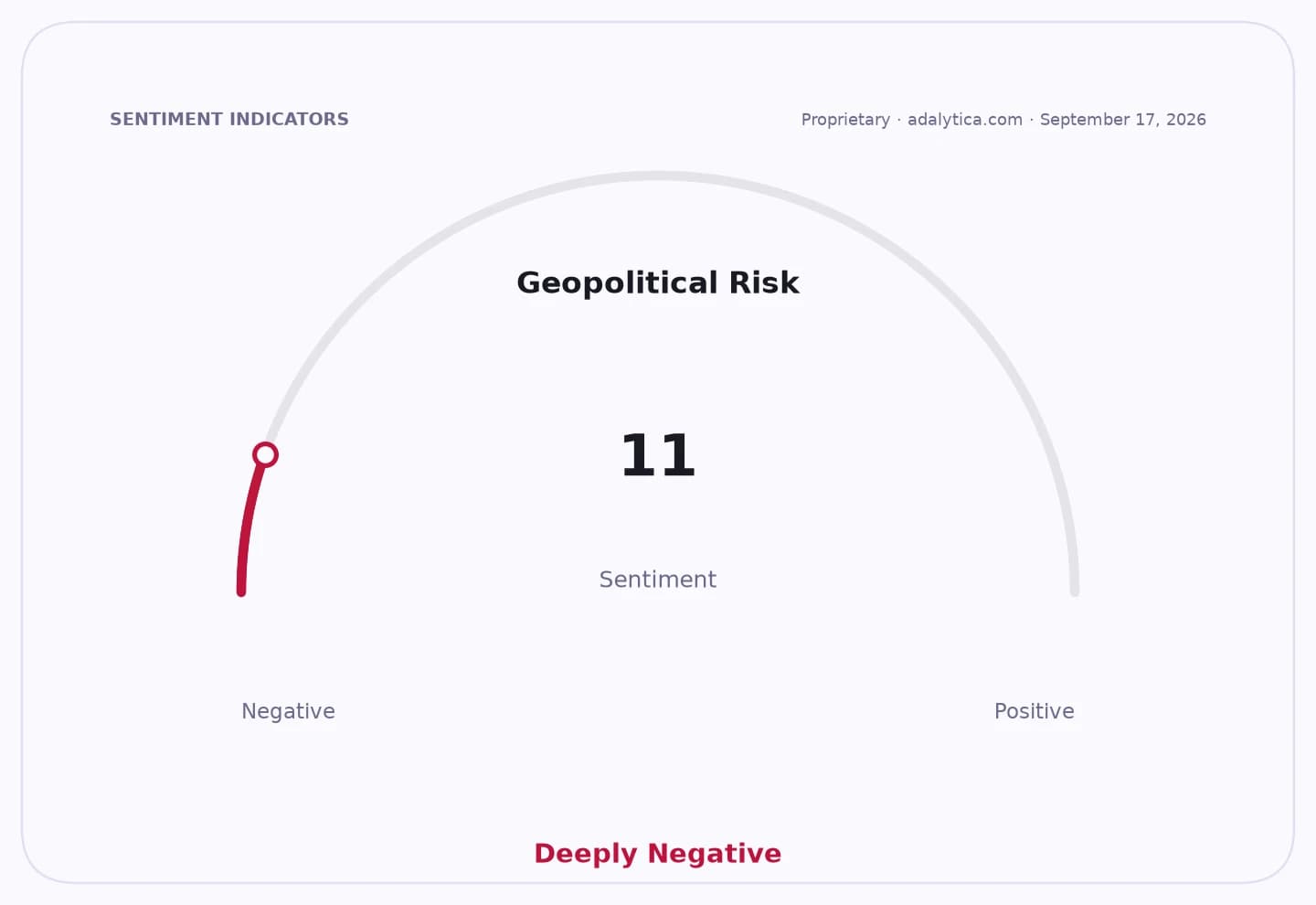
Sentiment IndicatorsⓘProprietary · adalytica.com · September 25, 2026
This is a snapshot — live sentiment, awareness and momentum for 130+ markets update continuously in the dashboard.Open AlphaPulse
The timing is the message. The initiative lands as Donald Trump’s administration leans into tariffs, skepticism of multilateral institutions and a harder line on allies, including a fresh threat of “very serious tariffs” on Europe if the EU moves ahead with a Canada associate-membership proposal. That raises the odds of more policy volatility in cross-border trade, more fragmentation in supply chains and more pressure on companies that depend on predictable rules for everything from autos and industrials to cloud infrastructure and semiconductors.
The new grouping, which its founders are calling P4M, is not trying to replace the UN. It is trying to create a practical workaround for a system increasingly paralyzed by veto politics and fractured consensus. That is economically important because stalled multilateralism slows responses to the issues that now hit markets directly: climate shocks, AI governance, shipping routes, food security and the resilience of supply chains. The leaders are betting that a looser, regional-to-global network can still create enough coordination to matter.
There is also a market read-through that should not be missed. When global institutions weaken, premium valuations tend to migrate toward assets tied to self-help themes: defense, energy security, critical minerals, grid spending, logistics and AI infrastructure. At the same time, investors get a higher discount rate on the rest of the world because policy risk rises and trade flows become more politicized. That is one reason country exposure is back in focus, not just sector exposure.
The price action is already hinting at that tension. China-focused FXI is down to about $34.01, well below its 50-day moving average of $35.21 and its 200-day average of $36.18, while its RSI near 31 points to oversold conditions rather than a clean recovery. Canada’s EWC has held around $59.53, but it too sits below its 50-day average of $60.73 and has a weak RSI reading near 26.9, showing investors are still demanding a discount for policy uncertainty and trade exposure. Brazil’s EWZ at $36.93 is slightly above its 50-day average of $36.22 and 200-day average of $36.02, suggesting the market is more willing to pay for commodity leverage and domestic resilience there, even after recent volatility.
Our thesis is that the market underestimates the investment implications of this middle-power alignment. If the big powers keep treating trade, security and technology as bargaining chips, the countries most willing to cooperate across blocs become the new toll roads of the global economy. That favors exporters of food, minerals, energy and industrial inputs, but also companies building the physical and digital infrastructure that allows fragmented economies to keep functioning.
Adalytica’s Global Stability Sentiment snapshot underscores the point: awareness remains in “extreme fear” even as sentiment has rebounded to neutral, a sign that investors are still pricing instability as a background condition rather than a transient headline risk. In practice, that means portfolio managers should keep leaning into the beneficiaries of a more divided world, while treating broad international exposure with more caution.
The actionable takeaway is simple: buy the picks-and-shovels of geopolitical fragmentation — defense, energy infrastructure, critical materials and selective country ETFs such as EWZ — and stay wary of markets most exposed to tariff shocks and institutional breakdown. The new middle-power bloc is not just a diplomatic story; it is a reminder that the next durable trade may be in resilience itself.
| Entity | Gains | Losses |
|---|---|---|
| Middle-power states | ▲More leverage in global forums | ▼Less dependence on superpowers |
| Defense and resilience equities | ▲Higher spending tailwind | ▼Lower urgency if tensions ease |
| Commodity exporters like Brazil | ▲Demand for strategic inputs | ▼Trade disruption risk |
| Tariff-exposed markets like Canada/EU | ▲New coalition for cooperation | ▼Policy uncertainty and tariff risk |