Geopolitics is no longer a distant policy backdrop — it is now a boardroom risk that can move currencies, disrupt industrial output and force companies to rethink where and how they operate.
Geopolitics, FX Volatility, and Industrial Risk
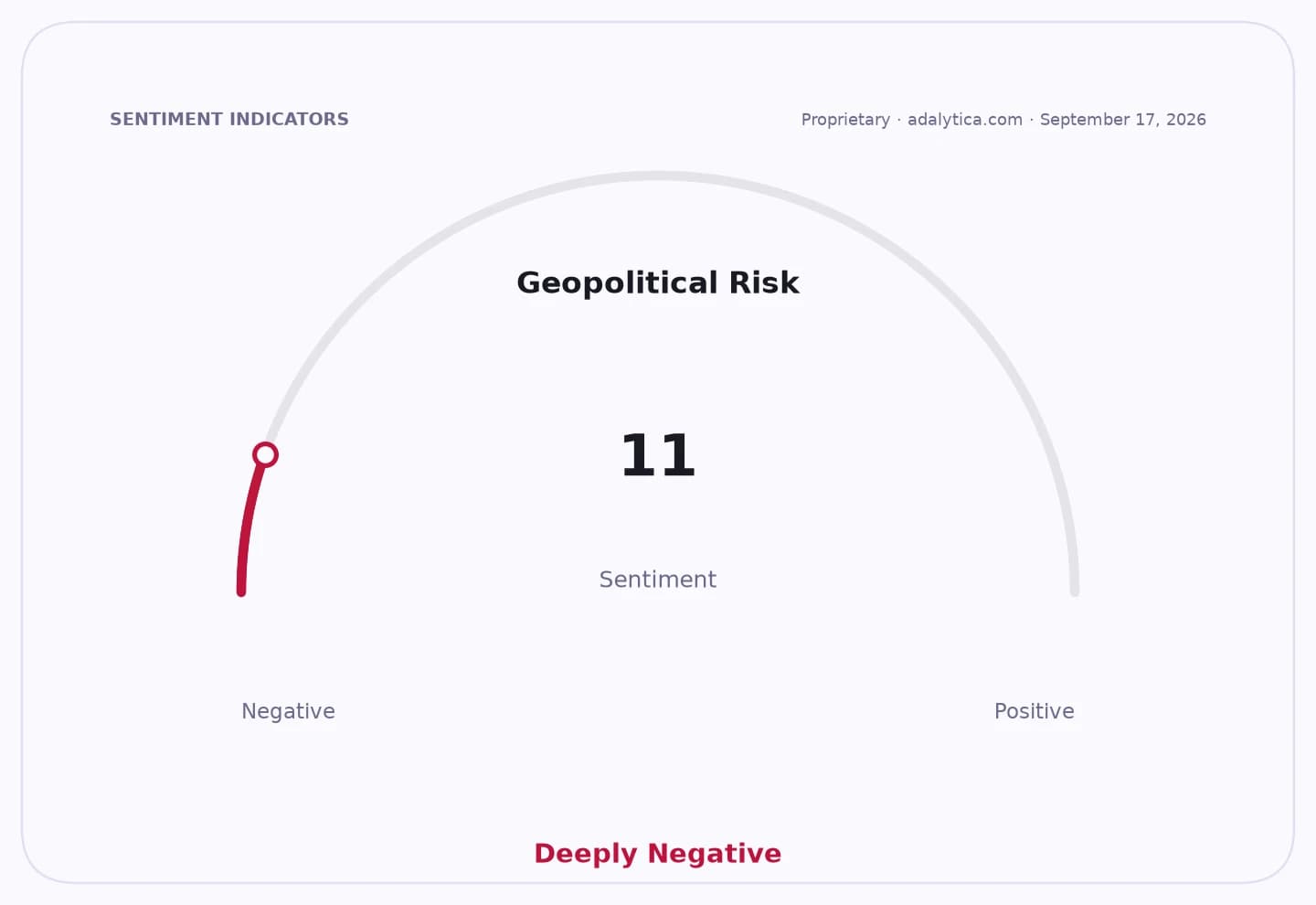
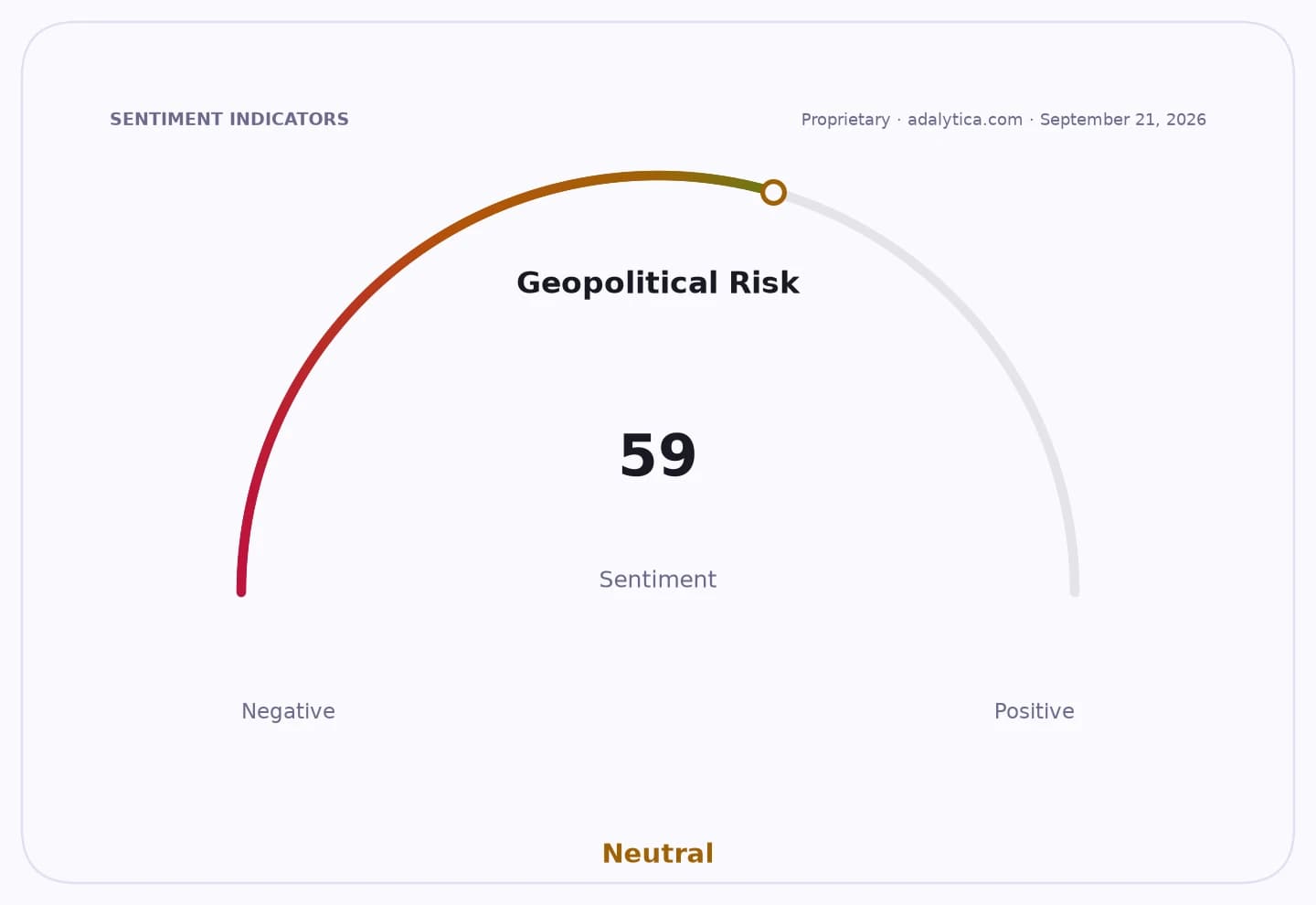
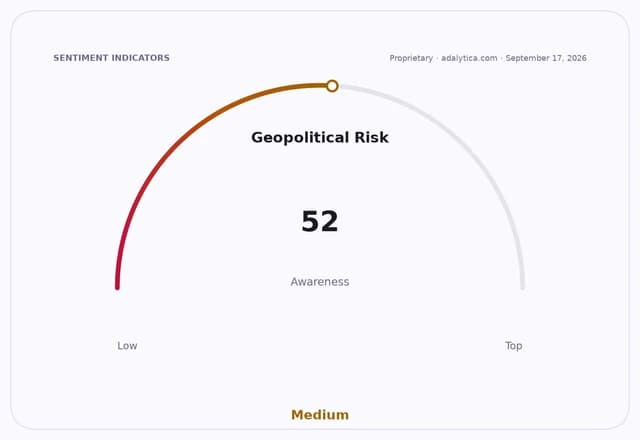
That shift is showing up in the numbers. Adalytica’s Global Stability Sentiment has collapsed to 11, deep in “Extreme Fear,” after falling 37 points over the past week, while FX volatility signals have jumped sharply, with awareness reading 81 and sentiment rebounding to 37 after a violent drop earlier this month. For investors, that combination matters because when political and operating risks rise together, capital gets more selective, hedging costs climb and companies with fragile supply chains, exposed workforces or heavy cross-border revenue mix tend to underperform.
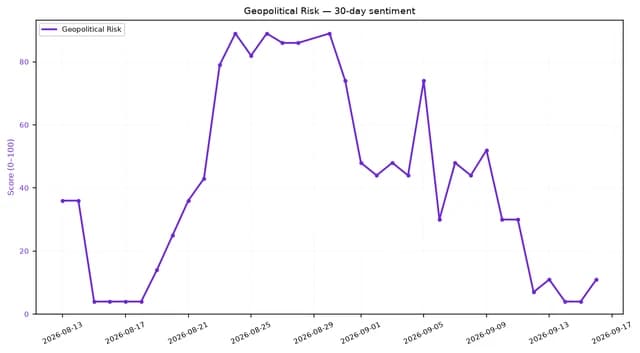
The immediate implication is that geopolitics is becoming a cash-flow issue, not just a headline risk. When companies are asked to run special assessments of working conditions and manage new workplace safety indicators, they are being pushed toward more compliance spending, more preventive investment and potentially slower execution. That is especially relevant in industrial settings, where the stoppage at Ilva’s blast furnace has put 10,000 workers at risk and underscored how quickly operational stress can spill into labor, health and production problems.
The market should also pay attention to what rising FX volatility usually means for multinationals. Currency swings can distort earnings, complicate procurement and force companies to hold more liquidity or hedge more aggressively. In a world of shaky stability readings and higher volatility awareness, firms with pricing power, local production and diversified exposure look far better placed than those dependent on a single geography or imported inputs.
This is where the investable opportunity lies. The market underestimates the second-order winners from geopolitical stress: industrial safety providers, risk-management software, compliance platforms, medical screening and preventive-health services, and companies that shorten supply chains or localize production. The losers are easier to spot too — asset-heavy manufacturers with concentrated labor risk, exporters exposed to currency turbulence and businesses that treat safety and resilience as overhead rather than strategy.
Amit Tondon’s framing is right: geopolitics is now a management issue that belongs in every earnings call and capital-allocation decision. The next phase of the market will reward companies that can prove resilience, not just growth. Investors should favor the picks-and-shovels of risk mitigation and the toll roads of a more cautious global economy, because when fear rises this quickly, preparation becomes a competitive advantage.
| Entity | Gains | Losses |
|---|---|---|
| Safety and compliance providers | ▲Higher demand | ▼— |
| Localized manufacturers | ▲Supply-chain resilience | ▼Import dependence |
| FX hedgers and treasury desks | ▲More volatility volume | ▼Unhedged multinationals |
| Industrial firms with labor exposure | ▲— | ▼Higher operating risk |