Meta Platforms and Alphabet are back in investors’ favor because their AI spending is increasingly being matched by products, distribution and profits that can actually move the needle.
Meta and Alphabet AI spending gains support

That matters far beyond two mega-cap stocks. The market has spent much of the past year asking which companies can turn artificial intelligence from a story into a durable earnings engine. Meta’s new AI assistant Muse topping the U.S. App Store is the latest sign that consumer-facing AI tools can still generate excitement, while Alphabet’s deal with Georgia Power to uprate nuclear units adds to the much larger theme: the AI race is forcing hyperscale companies to secure more compute, more energy and more infrastructure. For long-term investors, that combination is exactly what a secular winner looks like — product momentum on one side and the physical capacity to scale it on the other.
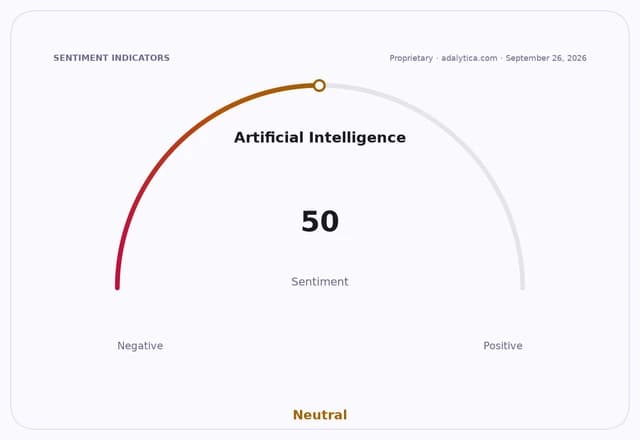
Sentiment IndicatorsⓘProprietary · adalytica.com · September 26, 2026
This is a snapshot — live sentiment, awareness and momentum for 130+ markets update continuously in the dashboard.Open AlphaPulse
Meta’s shares have reflected that optimism. After a powerful run that has pushed the stock well above its 50-day moving average, the recent surge has kept the shares in technically extended territory, with the RSI still elevated. That usually tells you enthusiasm is strong, but it also tells you the market is pricing in continued execution. Investors are no longer buying Meta just for social media ads; they are buying the company’s ability to keep using AI to deepen engagement, improve ad targeting and defend its platform moat.
Alphabet’s story is similar, but with a different angle. The Georgia Power partnership to boost nuclear capacity underscores a simple reality: AI infrastructure is not virtual. Data centers need round-the-clock power, and firms that can secure it early may enjoy an advantage over rivals that are forced to chase electricity after demand has already surged. Alphabet’s broad cloud, search and YouTube franchises still throw off enormous cash flow, which gives it room to keep investing without abandoning shareholder discipline. For investors who think in years, not quarters, that is the kind of financial strength that helps compound returns through multiple cycles.
The contrast with some of the other names in the market is instructive. Lockheed Martin’s $1.2 billion missile contract is a reminder that government spending remains a dependable support for defense contractors, but it is a different kind of growth story — steadier, less explosive and more tied to procurement cycles than product adoption. Paramount Skydance’s settlement with California and other states clears one obstacle for its Warner Bros. Discovery bid, but it also highlights how much of the media industry remains in consolidation mode rather than creating new growth engines. And OpenAI’s push for U.S.-led AI technical standards reinforces the stakes: whoever shapes the rules may help define which companies can scale fastest and safest.
For investors, the key takeaway is that the AI trade is maturing. The market is beginning to reward companies that combine brand, distribution, cash generation and the ability to secure the energy and infrastructure needed to grow. Meta and Alphabet still face the usual risks — regulation, competition and the possibility that AI monetization takes longer than bulls expect — but their latest moves suggest the bigger picture remains intact.
If you are building a long-term portfolio, this is the kind of leadership investors want to see: businesses with real earnings power, durable moats and multiple ways to compound capital. Meta and Alphabet remain worth watching closely, and for patient investors, still look like names to hold for the long run.
| Entity | Gains | Losses |
|---|---|---|
| Meta Platforms | ▲AI product momentum | ▼Short sellers |
| Alphabet | ▲Power capacity for AI growth | ▼Utilities with less scale |
| OpenAI | ▲Policy relevance | ▼Rival AI platforms |
| Paramount Skydance | ▲Deal progress | ▼Remaining bidders/counterparties |