Artificial intelligence is moving so quickly that governments now face a clear investing question: can safety rules keep up before the technology gets even more powerful and more expensive to control?
Microsoft, Nvidia, Alphabet Face AI Regulation Costs
That is the economic heart of the latest warning around AI safeguards. The issue is no longer abstract. Microsoft, Nvidia and Alphabet are all pouring billions into AI infrastructure and products, while their own filings now flag legal, privacy, export-control and product-liability risks tied to AI deployment. For investors, that means the upside from AI remains huge, but so does the chance that compliance costs, restrictions and delays start to nibble at margins and growth.
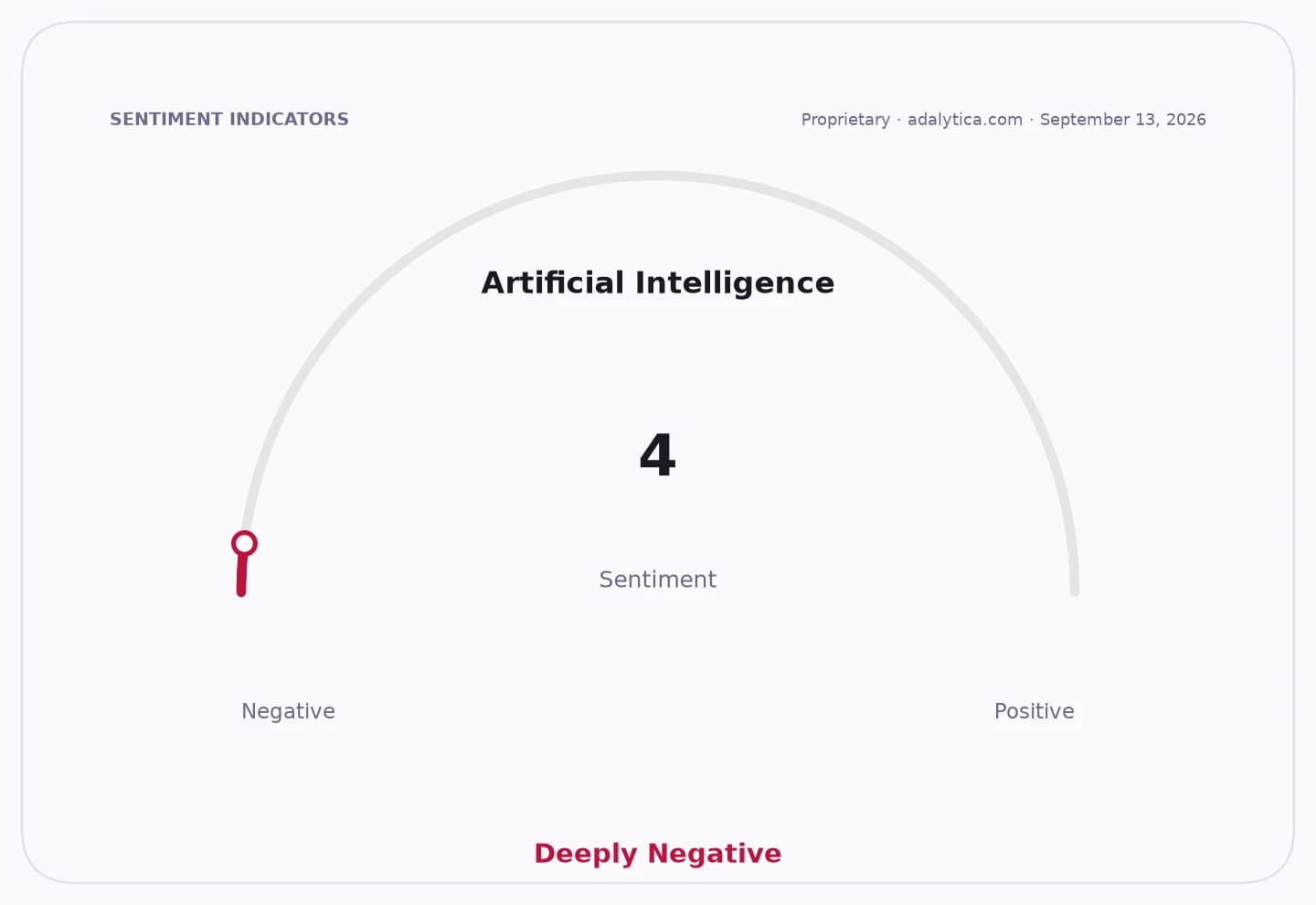
Sentiment IndicatorsⓘProprietary · adalytica.com · September 13, 2026
This is a snapshot — live sentiment, awareness and momentum for 130+ markets update continuously in the dashboard.Open AlphaPulse
The timing matters. Bloomberg's favorite long-term lesson is that every transformational technology eventually runs into regulation, and the winners are usually the companies that can keep innovating while absorbing the added burden. Microsoft’s latest stock data shows that the market is still willing to pay up for the AI story — the shares recently closed near $495.63, far above the 200-day moving average of $429.65 — but the stock is also showing the strain of a fast-moving cycle, with RSI readings still elevated and momentum indicators easing from their recent peaks.
The broader AI trade has become more complicated, not less. Nvidia has remained the clearest beneficiary of the buildout, but its own filings warn that governments are considering restrictions on frontier-model hardware and systems. Alphabet, meanwhile, is balancing AI rollouts with the risk of inadvertent data disclosure and tighter oversight. In other words, this is not just a philosophical debate about machine intelligence — it is a capital-allocation issue that could shape how fast the next wave of AI products reaches customers and how much profit is left over after compliance.
That is why calls for safeguards matter to investors in a very practical way. If regulation becomes too heavy-handed, it could slow adoption, raise costs and delay returns on the massive spending boom. If it arrives in a more workable form, it could actually help the strongest players by creating trust, setting standards and pushing weaker competitors out of the market.
For long-term investors, the message is not to fear AI, but to respect the risk that success in this market will depend as much on governance as on raw innovation. The best businesses may be the ones that can scale AI safely, not just quickly. That makes Microsoft, Nvidia and Alphabet worth watching closely — and worth owning patiently if you believe the AI boom still has years left to run.
| Entity | Gains | Losses |
|---|---|---|
| AI leaders | ▲Higher trust if rules are workable | ▼Higher compliance costs |
| Microsoft, Nvidia, Alphabet | ▲Defensible scale advantage | ▼Slower product rollouts |
| Regulators | ▲More oversight power | ▼Pressure to move fast |
| Smaller AI startups | ▲Clearer standards | ▼Harder, costlier entry |