Meta’s latest push into personal AI agents is less about matching OpenAI and Anthropic on model quality than proving consumers will pay for autonomous software that is still looking for a must-have use case.
Meta launches Wonder models for Muse AI agent
The company on Monday unveiled two new frontier models, Wonder and Wonder Full, and said they will soon power its Muse personal agent app for paid subscribers. That makes the monetization question immediate: if Meta can offer agentic tools to more than 3.6 billion daily users through Instagram, Facebook and WhatsApp, it can potentially create a new revenue stream beyond advertising. But it also has to convince users that a paid agent is worth the subscription when much of the underlying capability is rapidly becoming table stakes across Silicon Valley.
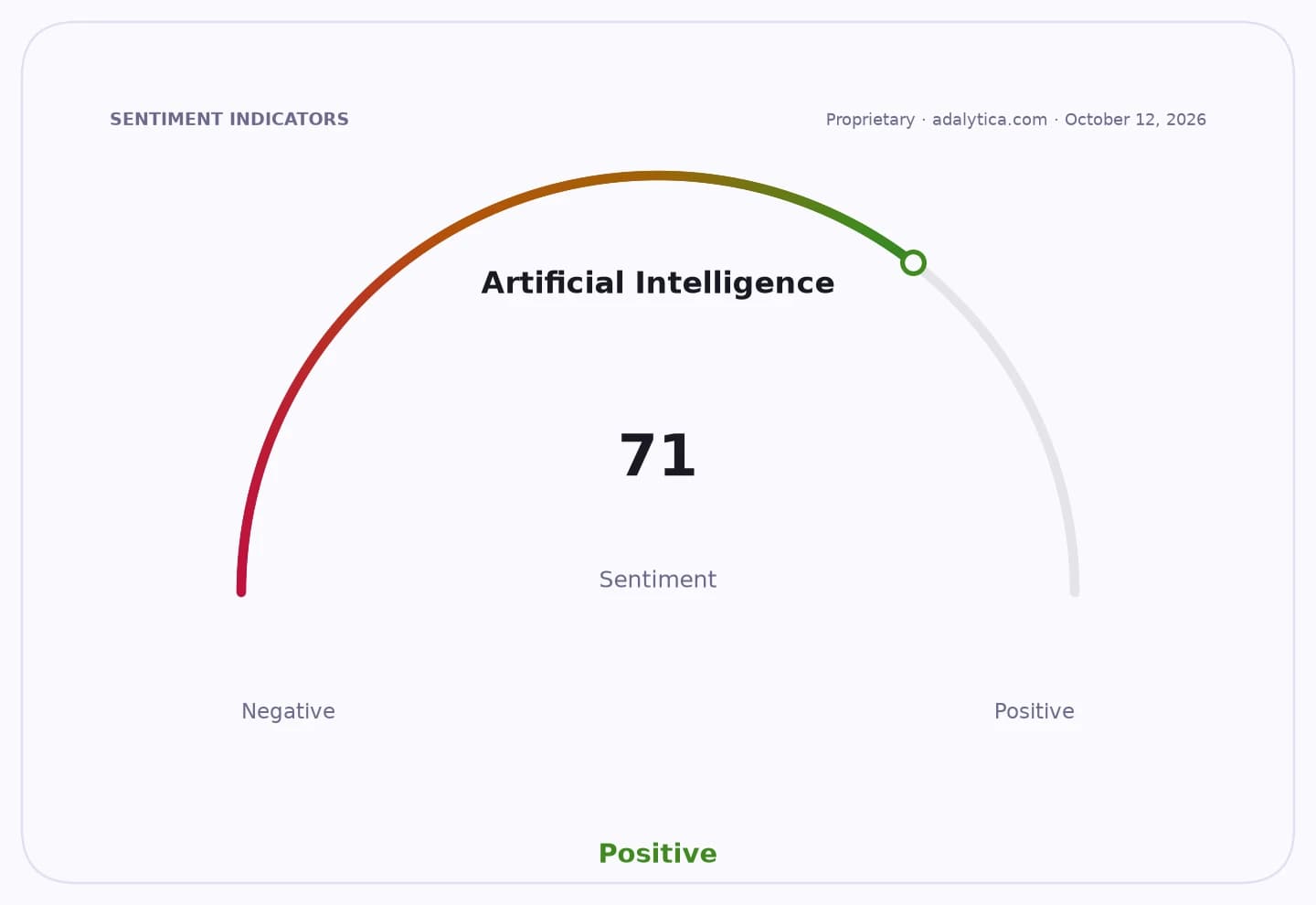
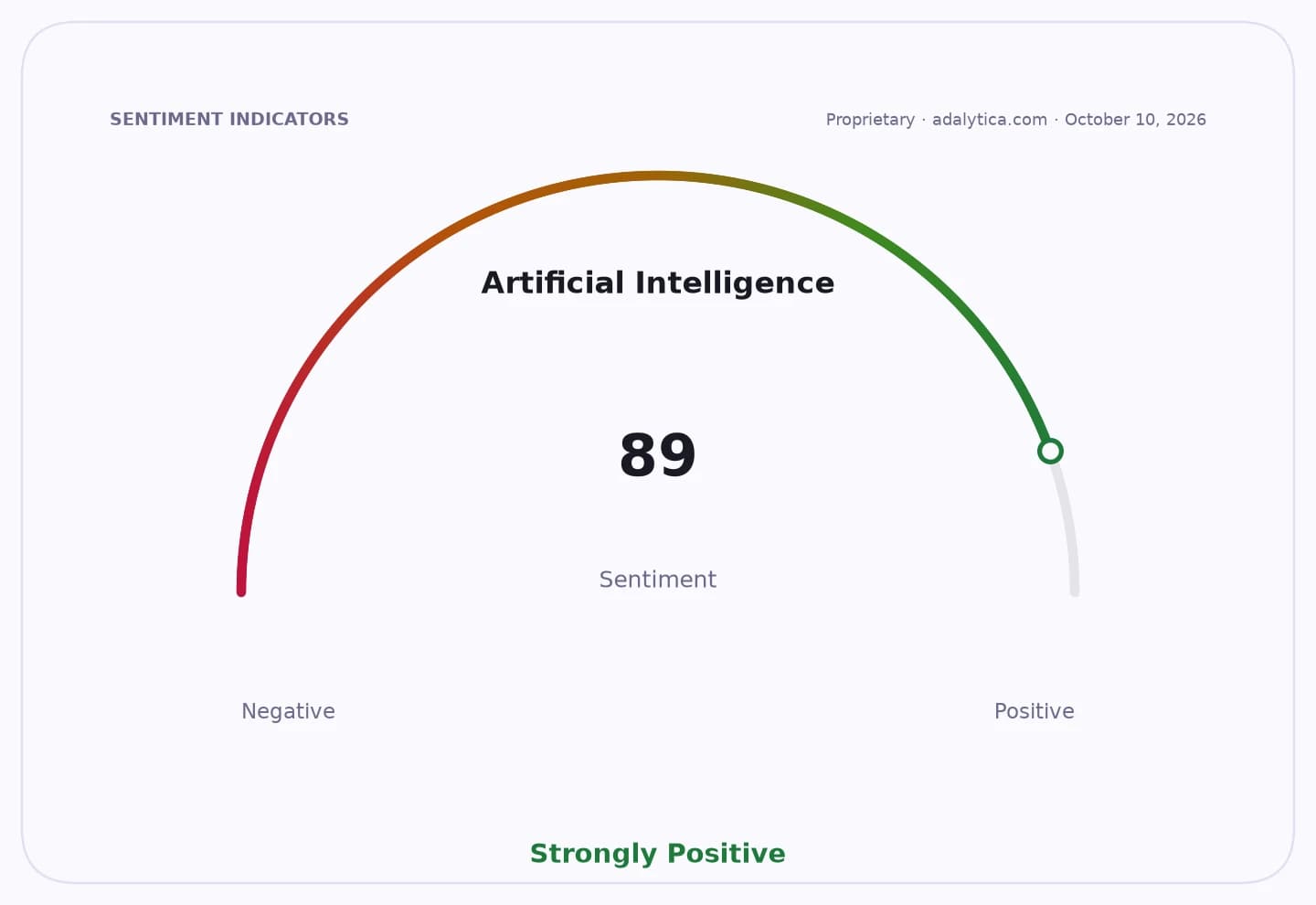
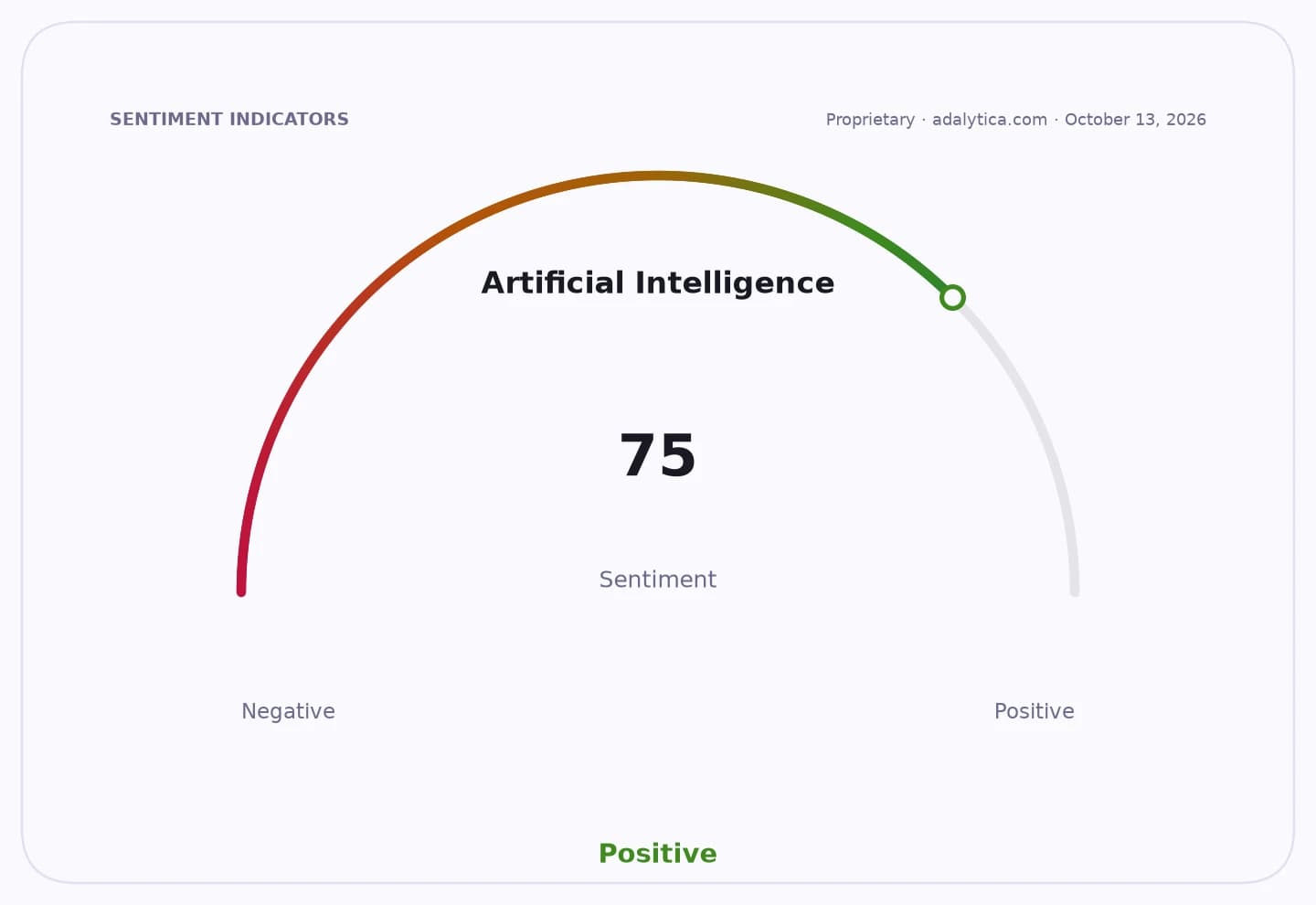
Sentiment IndicatorsⓘProprietary · adalytica.com · October 13, 2026
This is a snapshot — live sentiment, awareness and momentum for 130+ markets update continuously in the dashboard.Open AlphaPulse
Meta is framing the launch as a step up in the race against OpenAI, Anthropic and Google. Chief executive Mark Zuckerberg said Wonder is Meta’s “largest and most capable model yet,” while chief AI officer Alexandr Wang said it rivals the “big boys.” The company also pointed to benchmarking data from Artificial Analysis suggesting the new models outperform Meta’s prior Spark system and a range of rival models. The claim matters because model performance is now the minimum requirement for entering the premium AI market, not a differentiator by itself.
What investors need to watch is not just the technical leap, but the economics of the product. Meta said its AI-related spending could reach $145 billion this year, underscoring how much capital the company is throwing at a business that is still largely unproven on the subscription side. It already paid $14 billion for a stake in Scale AI and hired Wang to run its Superintelligence Labs, a move that highlights the extent to which Meta is rebuilding its AI stack to support both consumer products and eventual enterprise ambitions.
For Meta shareholders, the appeal is obvious: the company has a huge installed base, distribution through several sticky apps, and the ability to bundle AI into existing habits. The risk is equally clear. A paid personal agent has to do more than chat. It needs to save time, complete transactions reliably and earn trust on tasks that range from shopping and booking to research and coding. That is exactly where agentic software remains experimental, and where safety failures could quickly turn into brand and regulatory problems.
The market is already treating AI leadership as a scarce asset, but the stocks are starting to price in different stages of execution. Meta has been spending heavily to catch the frontier, while Nvidia continues to benefit from the infrastructure build-out that powers every new model. By contrast, personal AI startups such as Instinct have shown that product momentum can move fast and force bigger platforms to accelerate launches. That dynamic explains why Zuckerberg sped up Muse’s rollout.
There is also a broader strategic question. Meta’s model shift away from open-source Llama toward proprietary frontier systems suggests it wants tighter control over the consumer experience and the economics of distribution. Yet that choice makes success more dependent on whether users see enough utility to subscribe. In other words, the industry may be entering the phase where model quality is no longer the bottleneck; product willingness to pay is.
The bull case for Meta is that a paid agent becomes a high-margin add-on inside an ecosystem that already commands daily attention. The bear case is that consumers sample agentic features but resist another subscription, especially if similar capabilities are bundled elsewhere or remain free in lower-tier products. Either way, the answer to “Why would I pay for a personal AI agent?” will determine whether this becomes a new profit pool or just another expensive race.
| Entity | Gains | Losses |
|---|---|---|
| Meta | ▲New paid AI revenue path | ▼Higher capex and execution risk |
| OpenAI and Anthropic | ▲Pressure to justify premium pricing | ▼Competitive edge from distribution narrows |
| Nvidia | ▲More model training and inference demand | ▼None material in the near term |
| Consumers | ▲Potential time savings and automation | ▼Subscription fatigue and privacy risk |