OpenAI has crossed $10 billion in annual recurring revenue, a milestone that underscores how quickly the ChatGPT maker is turning consumer and enterprise demand into a major AI software franchise.
OpenAI Annual Recurring Revenue Tops $10 Billion

The company said the figure covers revenue from consumer products, ChatGPT business services and API usage, but excludes licensing revenue from Microsoft and some large one-off deals. That means the core business has doubled from about $5.5 billion in recurring revenue a year earlier, even as OpenAI has remained deeply unprofitable.
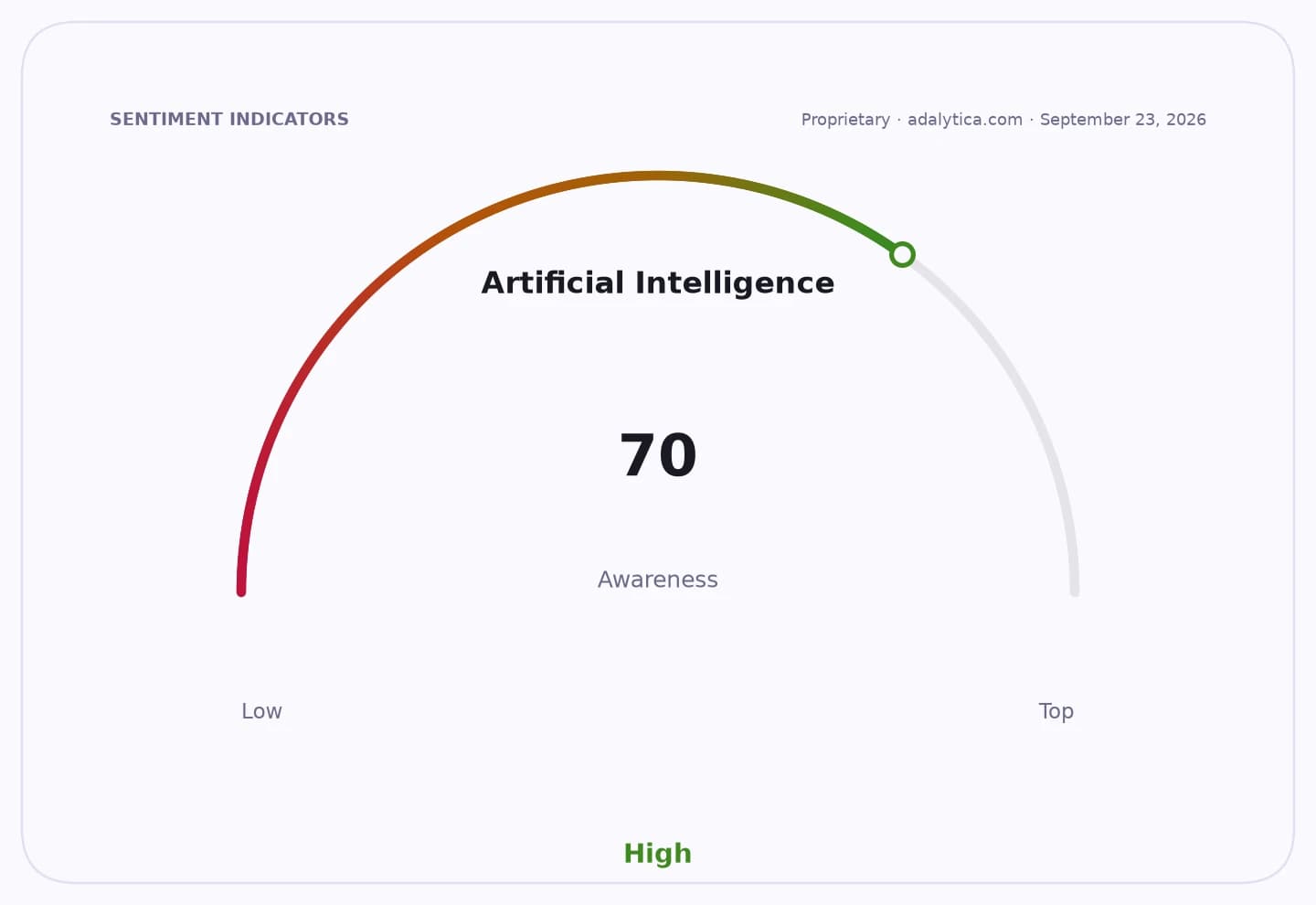
Sentiment IndicatorsⓘProprietary · adalytica.com · September 16, 2026
This is a snapshot — live sentiment, awareness and momentum for 130+ markets update continuously in the dashboard.Open AlphaPulse
The scale of those losses is part of what makes the number matter. OpenAI reportedly lost about $5 billion over the same period, highlighting how expensive it is to build and run frontier AI models, pay for compute and keep pace with rivals in a market where spending is still outrunning profits.
For investors, the pace of growth reinforces the case that AI demand is real and widening beyond consumer adoption into enterprise workflows. OpenAI said it had 500 million weekly active users and more than 3 million business customers by the end of March, up from 2 million in February, evidence that companies are increasingly paying for AI tools rather than just experimenting with them.
The milestone also feeds into the broader trade around AI infrastructure and the firms supplying it. Microsoft, OpenAI’s biggest backer, and chip leader Nvidia stand to benefit from continued model training and inference demand, while cloud and software peers face the same margin pressure as they pour capital into AI capacity.
OpenAI’s longer-term ambition remains far larger: The Information has reported a goal of $125 billion in annual revenue by 2029. The startup raised a record $40 billion in March 2025, and the market is already valuing it at roughly 30 times ARR, a sign investors are still pricing in explosive growth rather than near-term profitability.
The next catalyst is whether OpenAI can keep converting usage into paid revenue fast enough to justify that valuation while narrowing losses. Any slowdown in enterprise adoption, tighter access to capital or a shift in AI pricing could reset expectations across the sector.
| Entity | Gains | Losses |
|---|---|---|
| OpenAI | ▲Faster ARR growth | ▼Persistent cash burn |
| Microsoft | ▲More AI demand | ▼Higher infrastructure costs |
| Nvidia | ▲More compute orders | ▼Margin risk from supply strain |
| AI rivals | ▲Sector validation | ▼Pressure to match spending |