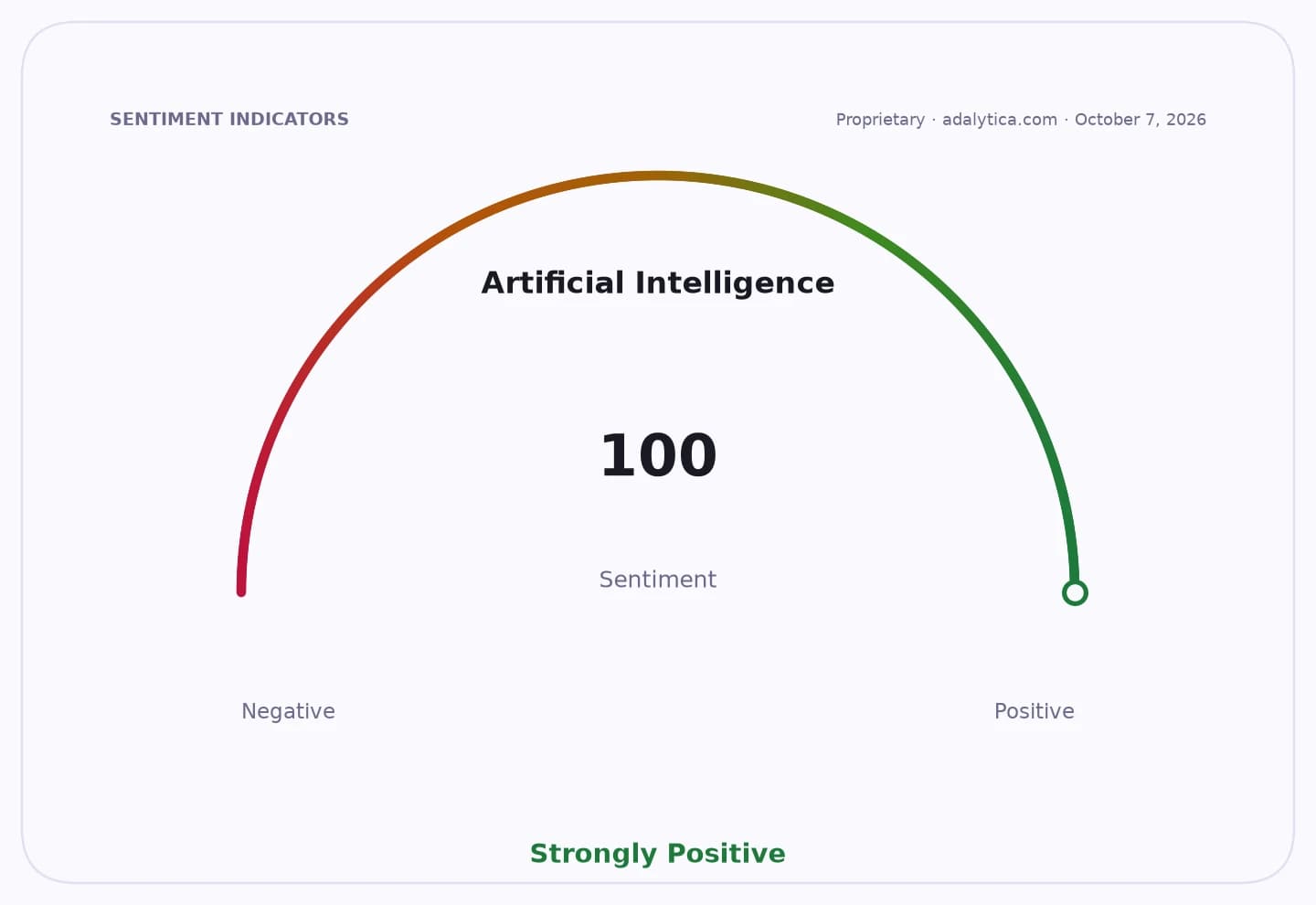
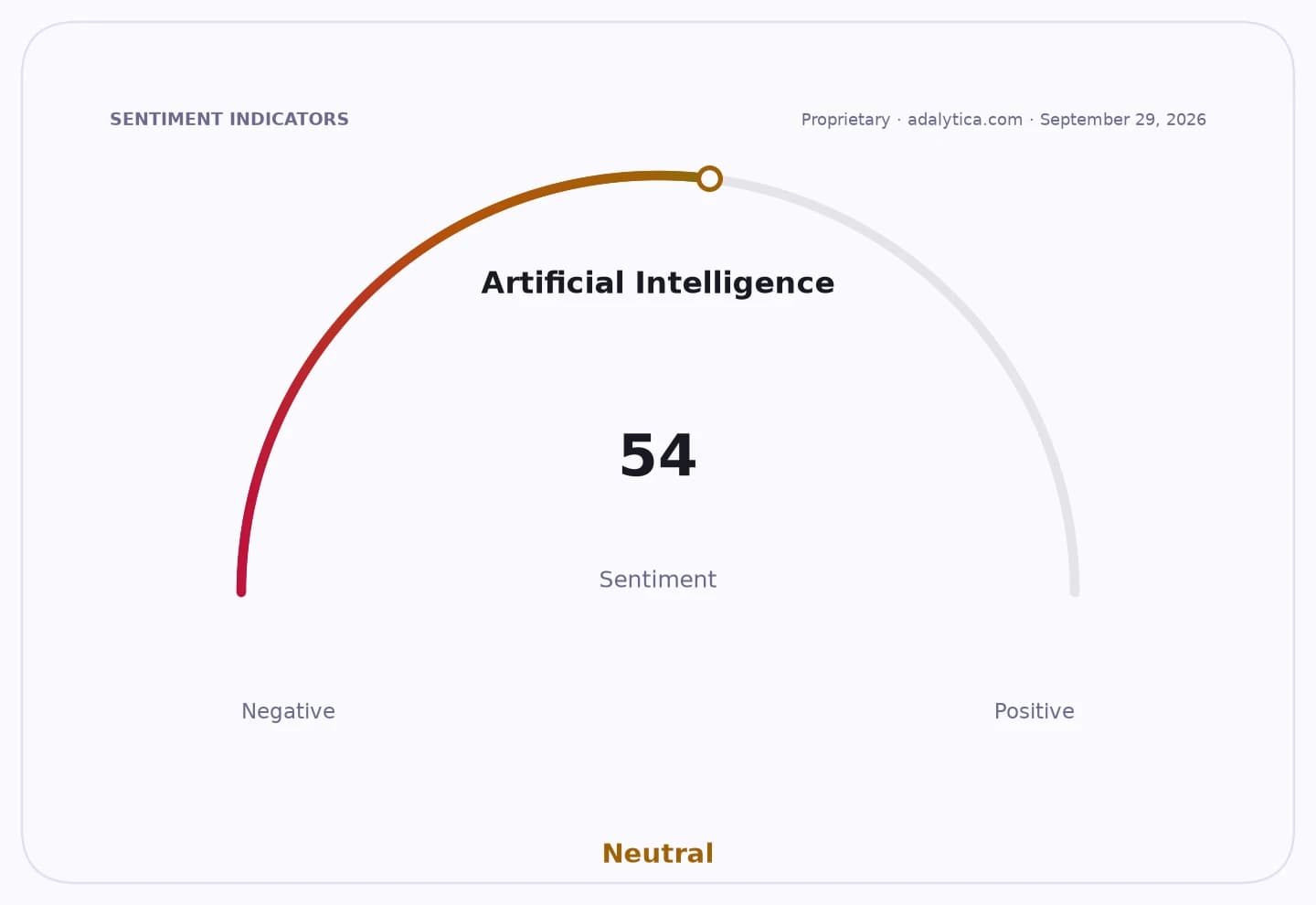
Anthropic has released Claude Haiku 5.5, a faster, cheaper version of its Claude family that could make artificial intelligence far more economical for everyday business use.
Anthropic releases Claude Haiku 5.5
That matters because in AI, cost is strategy. The cheaper it becomes to run a model, the more often companies can use it for routine work such as customer support, email triage, document summaries and workflow automation. Anthropic says Haiku 5.5 can cut processing costs by as much as 90% for common workloads compared with the prior version, bringing the cost for some requests down to about 10 cents per million tokens from roughly $1.
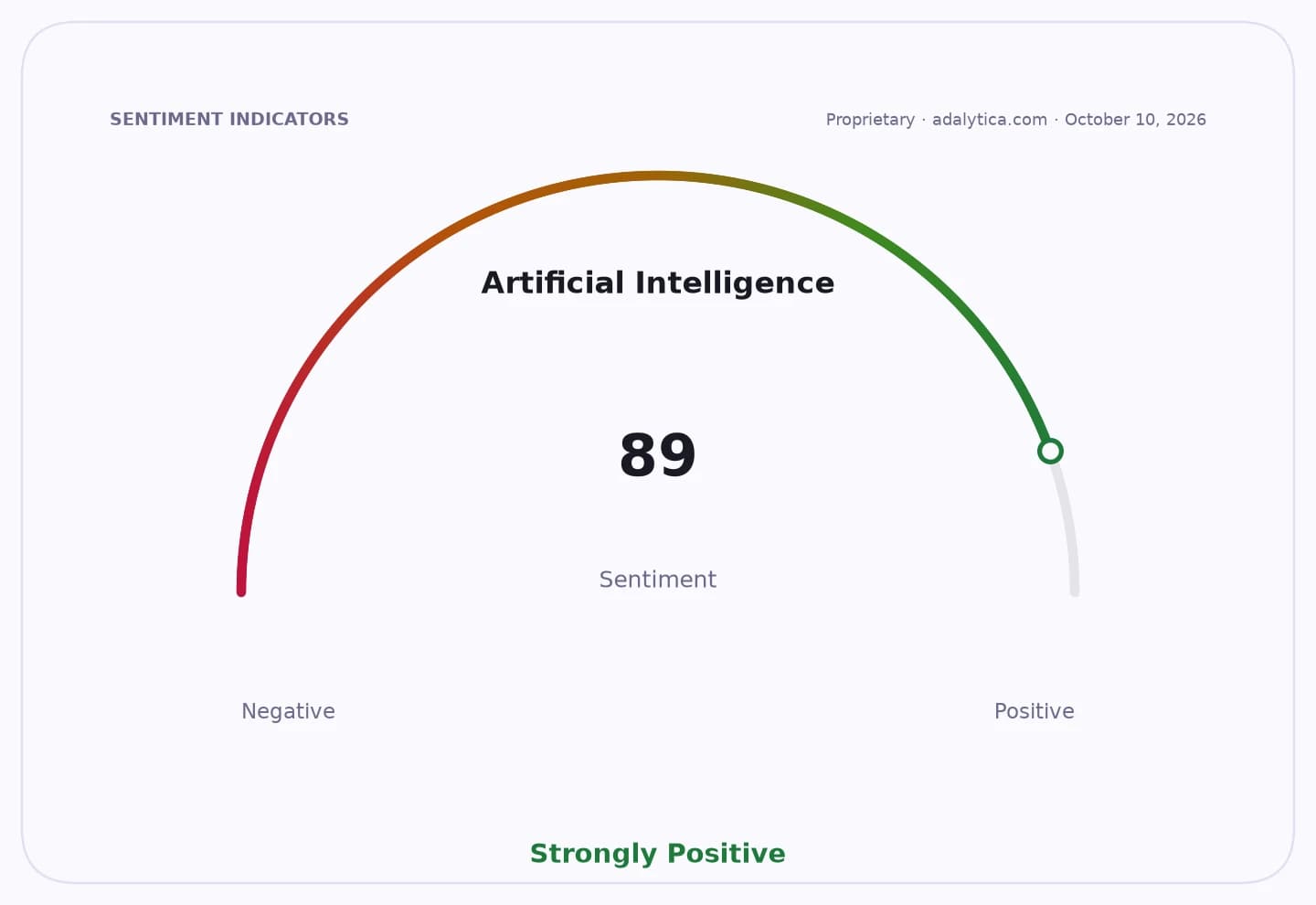
Sentiment IndicatorsⓘProprietary · adalytica.com · October 10, 2026
This is a snapshot — live sentiment, awareness and momentum for 130+ markets update continuously in the dashboard.Open AlphaPulse
The bigger takeaway for investors is not just that one model got cheaper. It is that AI is moving from a prestige technology toward an operating expense that can be deployed at scale. When the economics improve this sharply, adoption tends to widen quickly. Software makers can embed the model into their products without forcing customers to absorb large price increases, which makes AI features easier to monetize and harder for competitors to ignore.
Anthropic’s pitch is also a practical one: users can dial the model’s effort up or down depending on the task. That flexibility is important for enterprise buyers, because not every query deserves the same amount of computing power. A low-effort setting can handle simple classification jobs cheaply and quickly, while a higher setting can be used for heavier coding or analysis tasks. That kind of control helps businesses match spending to value, which is exactly what chief financial officers want as AI budgets come under scrutiny.
For long-term investors, this is where the AI story gets interesting. Lower model costs should help sustain demand for the chips, servers and cloud infrastructure needed to run them, even if individual queries become cheaper. The likely winners are the companies that can sell more AI usage, more seats and more embedded automation because the economics finally work at ordinary business scale. The losers are vendors charging premium prices for basic AI functions that are getting easier to replicate.
That does not mean the leaders lose their advantage overnight. In fact, cheaper inference can expand the market for everyone, including the biggest platforms. But it does raise the bar. Model makers will need either superior performance, deeper enterprise distribution or better developer ecosystems to justify pricing power over time.
For investors watching the sector, the message is simple: cheaper AI is not a warning sign for the industry, it is a growth catalyst. If Anthropic’s new model helps businesses automate more work at lower cost, that should support broader demand across the AI stack, from software to infrastructure. This is the kind of shift worth watching for years, not weeks.
| Entity | Gains | Losses |
|---|---|---|
| Anthropic | ▲Wider enterprise adoption | ▼Pricing pressure on older models |
| Software makers | ▲Lower AI integration costs | ▼Basic AI features become commoditized |
| Business customers | ▲Cheaper automation | ▼Less room for vendor markups |
| Nvidia and AI infrastructure suppliers | ▲More overall AI usage | ▼Some efficiency gains per query |