Anthropic has released Claude Opus 5.5, a new flagship AI model the company says is faster and cheaper to run, sharpening competition in a market where performance gains are increasingly being measured against the cost of inference.
Anthropic Claude Opus 5.5 launches
That matters because the economics of AI are now as important as model quality. Every improvement in speed and efficiency can lower the amount enterprises spend to deploy AI at scale, while also raising the pressure on rivals such as OpenAI, Google and Microsoft to match the pace of product upgrades without inflating costs.
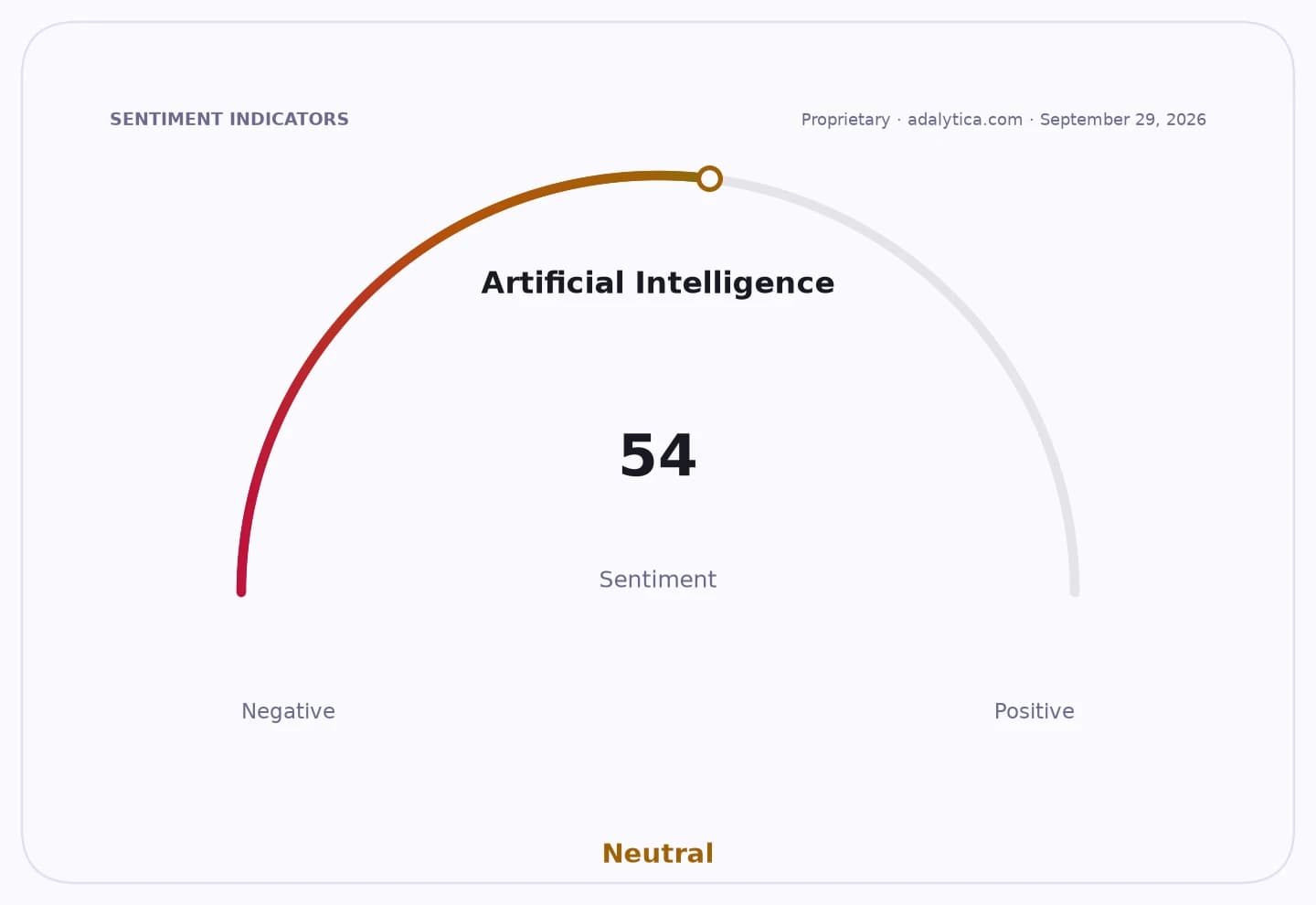
Sentiment IndicatorsⓘProprietary · adalytica.com · September 29, 2026
This is a snapshot — live sentiment, awareness and momentum for 130+ markets update continuously in the dashboard.Open AlphaPulse
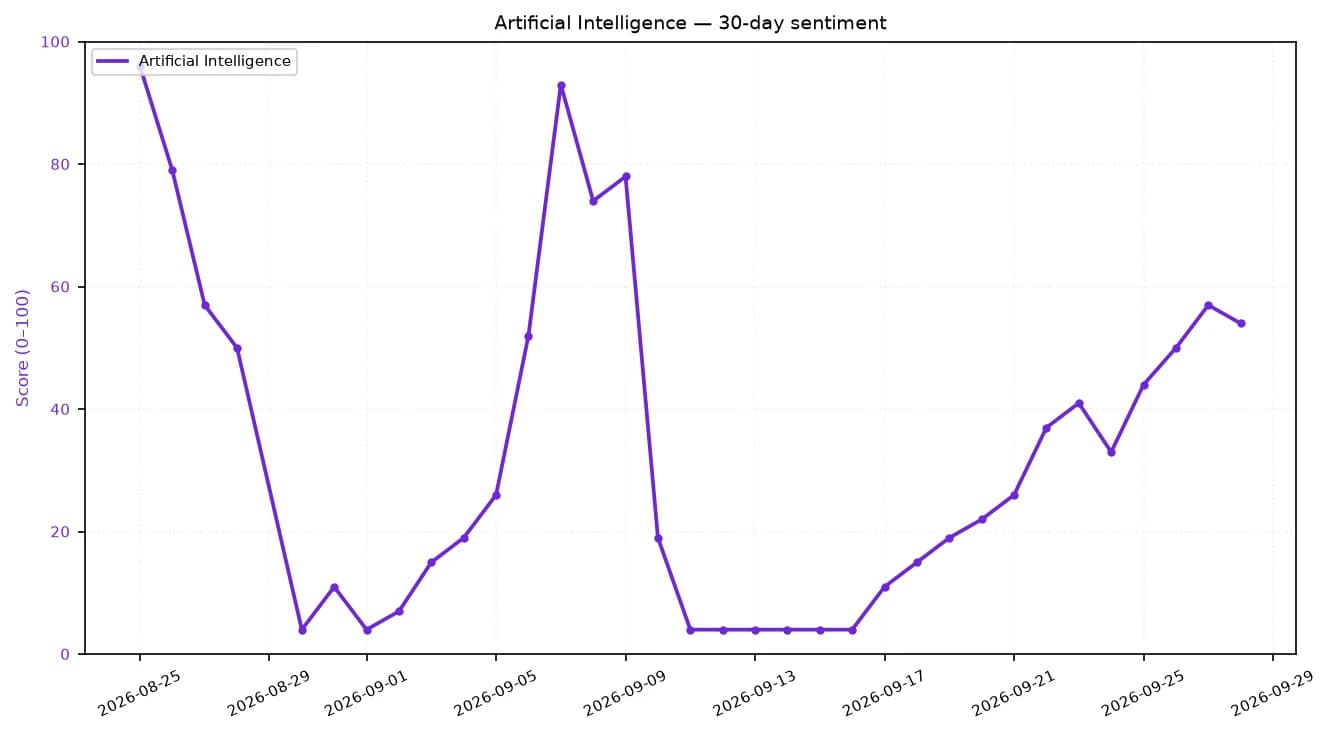
The move comes as the broader AI trade remains a key driver of investor sentiment across the technology sector. In the context of heightened demand for AI infrastructure, cheaper and faster model execution can help support adoption by businesses that want better output without expanding their compute budgets as aggressively.
For investors, the release underscores a central market question: whether the next phase of AI monetization will come from raw model capability or from efficiency gains that make deployment more profitable. If Anthropic can show that Claude Opus 5.5 delivers stronger performance at lower operating cost, that could support enterprise uptake and improve the case for AI software vendors competing on margins as much as on features.
The development also fits a broader pattern in the sector, where major players are pushing toward models that are not just more capable but more economical to serve. That shift has implications for cloud demand, chip usage and pricing power across the AI stack, including Nvidia, whose shares have remained sensitive to expectations for sustained AI spending.
Anthropic did not provide broader financial details in the supplied material, but the competitive message is clear: in AI, speed and cost are becoming the new battleground. The next catalyst will be whether customers and developers adopt Claude Opus 5.5 quickly enough to force a fresh round of pricing and product responses from the rest of the industry.
| Entity | Gains | Losses |
|---|---|---|
| Anthropic | ▲Stronger product positioning | ▼Rival pressure to match |
| Enterprise customers | ▲Lower AI deployment costs | ▼Less pricing flexibility |
| OpenAI, Google, Microsoft | ▲— | ▼Competitive share pressure |
| Nvidia and AI infrastructure suppliers | ▲Potentially steadier AI demand | ▼Margin-compression risks if efficiency slows spend |