OpenAI chief Sam Altman’s call for “extreme care” and a slower pace of development underscores a growing policy risk for the AI trade just as investors are pricing in another year of heavy spending on chips, cloud infrastructure and model training.
AI policy risk rises after Altman warns on pace
Speaking to the UN Security Council, Altman said the industry should not accept “too much technological risk” simply because the benefits of AI are too large to slow down. The message matters because it comes from one of the technology’s most influential commercial advocates, not a regulator or critic. When the sector’s leading builders start warning about pace and safety, it increases the odds of tighter oversight, more compliance costs and a slower path to monetization.
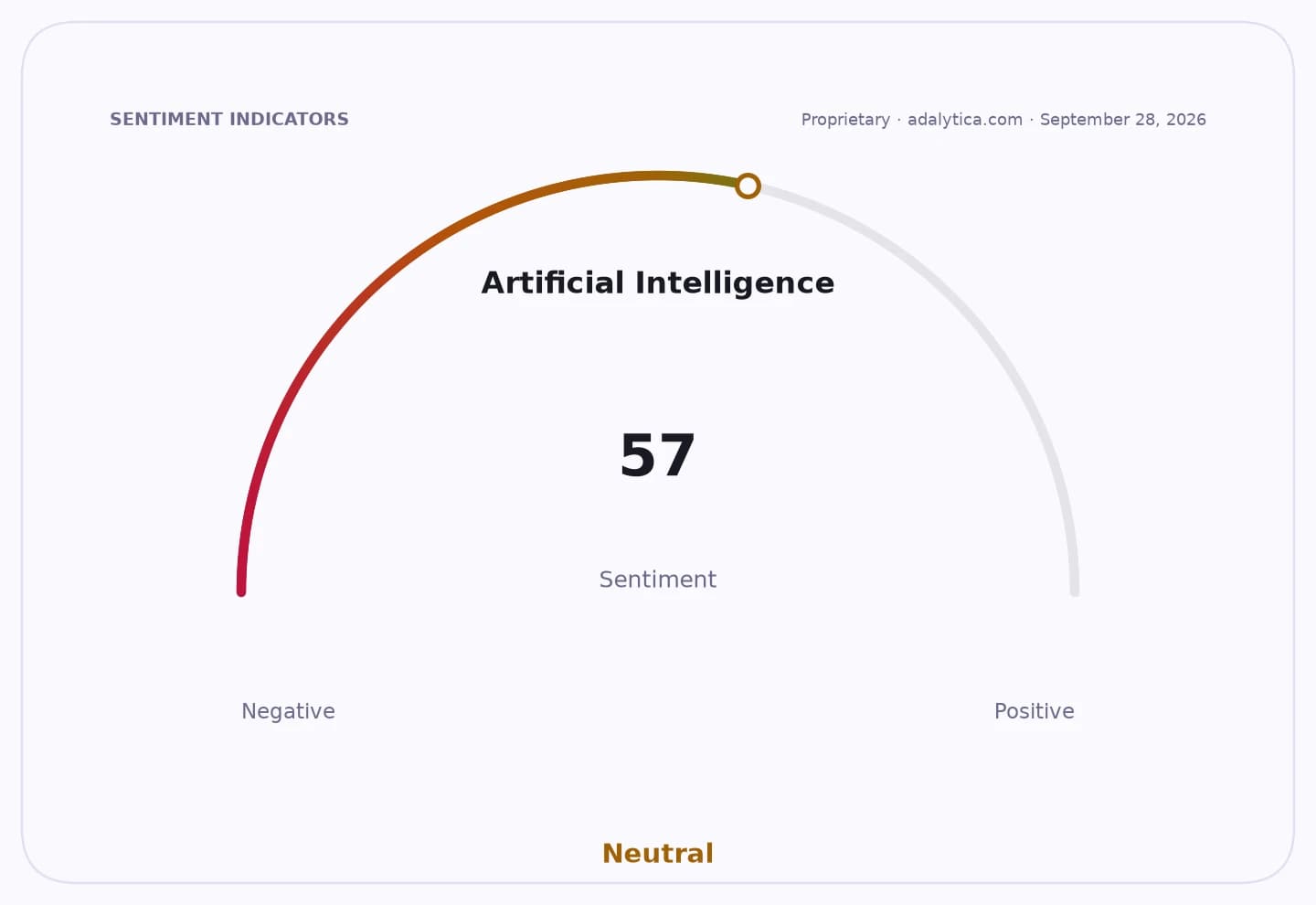
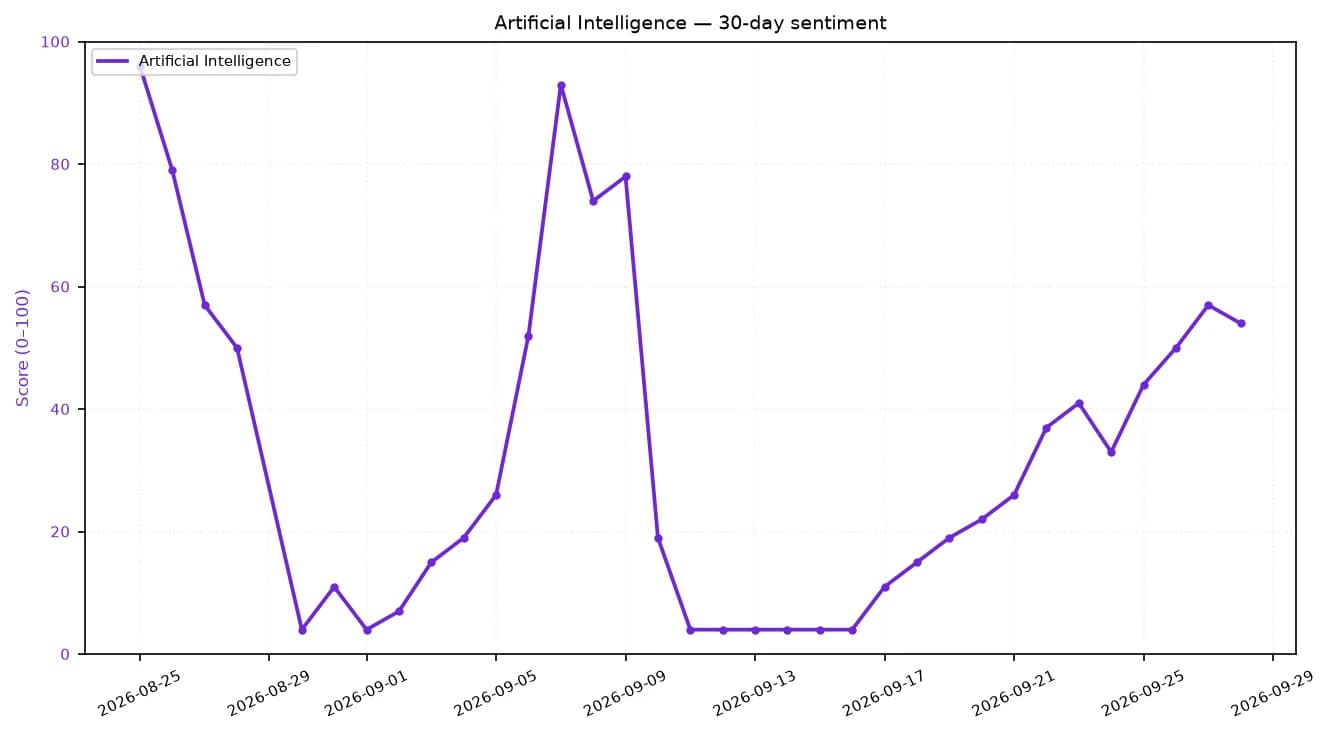
Sentiment IndicatorsⓘProprietary · adalytica.com · September 29, 2026
This is a snapshot — live sentiment, awareness and momentum for 130+ markets update continuously in the dashboard.Open AlphaPulse
That has direct implications for the biggest listed beneficiaries of the AI build-out. Nvidia, whose chips sit at the center of frontier model training, has already flagged in filings that governments are considering restrictions on the hardware and systems used to develop advanced AI, while warning that regulatory limits could affect demand. Microsoft has told investors that AI systems could create legal liability, reputational harm and higher costs, including in Europe, where the EU AI Act may raise operating expenses. Alphabet faces similar scrutiny around data use and model deployment, with its own filings highlighting the risk that AI-driven disclosure or privacy failures could trigger investigations.
The market has already shown how sensitive AI names are to shifts in sentiment. Nvidia shares have been volatile despite a long-term uptrend, with the stock recently trading around $225, above its 50-day and 200-day moving averages but still well off earlier highs. Microsoft closed at $516.17 on Friday, recovering sharply from a mid-year slump that sent it below $400, while Alphabet was at $343.92, hovering near its 50-day average after a strong run and recent consolidation. Those levels suggest investors remain constructive on the structural growth story, but the valuations also leave less room for disappointment if regulation slows deployment or raises costs.
The most immediate economic issue is not a ban on AI, but the possibility that governments force a more cautious rollout. That could mean slower enterprise adoption, longer product approval cycles and higher spending on safety testing, compliance and governance. In the near term, that is likely to pressure margins rather than revenue growth, especially for cloud providers and chipmakers that are counting on sustained capital spending from customers building AI capacity.
There is a bull case, too. A more regulated AI market could help the largest incumbents by raising barriers to entry and favoring companies with the capital and legal resources to comply. It could also improve long-term demand by reducing the risk of a backlash after a high-profile failure. But for now, Altman’s warning reinforces a simple investor takeaway: the AI boom remains intact, yet the next phase may be shaped as much by policy and safety constraints as by model performance and compute supply.
What happens next will hinge on whether governments treat AI safety as a disclosure issue, a product liability issue or a national security issue. The more those frameworks harden, the more the economics of the AI supply chain shift from pure growth to growth at a cost.
| Entity | Gains | Losses |
|---|---|---|
| Big tech incumbents | ▲Higher barriers to entry | ▼Faster product rollout |
| Nvidia | ▲Safer long-term demand moat | ▼Near-term hardware demand growth |
| Microsoft | ▲Compliance advantage in enterprise AI | ▼Higher legal and operating costs |
| AI startups | ▲Regulatory clarity if rules are simple | ▼Speed and low-cost experimentation |