OpenAI and Anthropic are pushing the AI debate away from pure competition and toward a far more important question: who gets to set the rules before powerful models are used to pressure countries, companies or people.
Nvidia, Microsoft and Alphabet Face AI Regulation
That matters because the economic prize in artificial intelligence is still enormous, but so is the risk that unchecked deployment triggers regulation, trade barriers and public backlash that could slow adoption. When the leaders of two of the industry’s most influential developers tell the UN Security Council that advanced AI should not be used to impose on the world, they are effectively arguing that the next phase of AI growth depends as much on governance as on model performance.
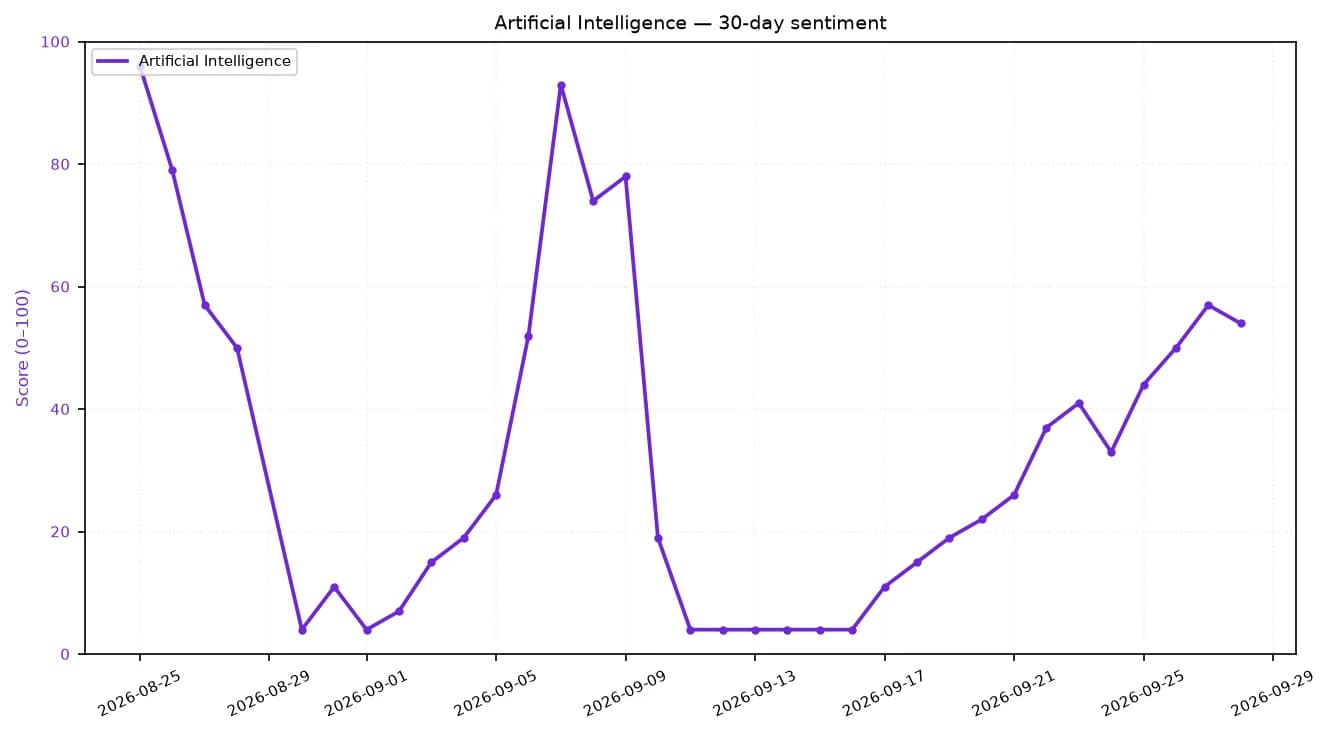
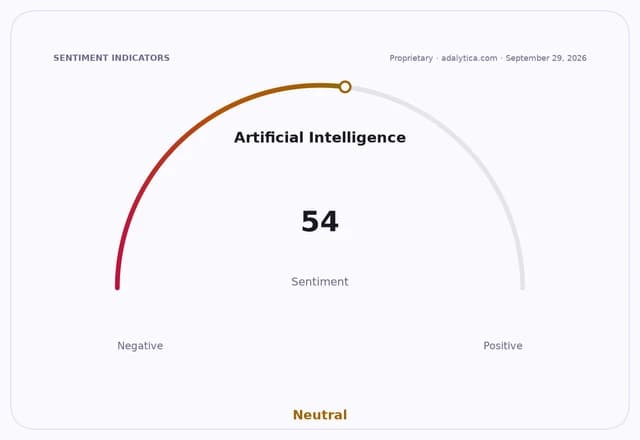
Sentiment IndicatorsⓘProprietary · adalytica.com · September 29, 2026
This is a snapshot — live sentiment, awareness and momentum for 130+ markets update continuously in the dashboard.Open AlphaPulse
Sam Altman of OpenAI said AI should be developed for humans and shaped through democratic processes and government participation. Dario Amodei of Anthropic warned that the biggest dangers are misuse and systems advancing faster than the ability to control them. Yoshua Bengio, co-chair of the UN’s independent AI science panel, added that the idea of an unavoidable “race” in AI is a choice, not a destiny.
For investors, that is not just philosophical language. It is a reminder that AI winners will increasingly be judged on trust, compliance and cross-border access, not only on chips, cloud spend and model quality. Nvidia, Microsoft and Alphabet all sit inside that ecosystem, and each faces a world where lawmakers and regulators are becoming more willing to intervene if they believe frontier AI is moving too fast or being deployed recklessly.
The market has been happy to treat AI as a growth engine, and in many ways it is one. Nvidia shares were recently trading around $228.86, above both their 50-day and 200-day moving averages, while Microsoft was near $509.22 and Alphabet around $342.75. But the policy overhang is now part of the valuation story too. Microsoft’s earnings sentiment tracked by Adalytica.com has fallen into “Extreme Fear,” while Nvidia’s has been neutral, showing how quickly investor mood can shift when the regulatory backdrop changes.
The bigger takeaway is that AI is moving from a technical arms race into a governance test. Governments are already debating restrictions, the UN is pressing for global standards, and companies are warning that no single firm can manage these risks alone. That makes the next leg of AI investing less about chasing hype and more about backing companies with durable moats, strong balance sheets and the discipline to navigate a more regulated world.
For long-term investors, this is not a reason to avoid AI. It is a reason to stay selective, think in years rather than quarters, and favor the firms most likely to turn powerful technology into durable cash flow without tripping over the rules. In other words: worth watching closely, but with governance now firmly part of the investment case.
| Entity | Gains | Losses |
|---|---|---|
| OpenAI, Anthropic | ▲Credibility on safety | ▼Less freedom to move fast |
| Governments, UN | ▲More leverage on standards | ▼Pressure to coordinate quickly |
| Nvidia, Microsoft, Alphabet | ▲Long-term trust if compliant | ▼Higher regulatory costs |
| AI speculators | ▲Narrative clarity | ▼Hype premium at risk |