Bill Ackman’s Pershing Square Capital Management exited Alphabet in the second quarter while adding four new holdings, a repositioning that underlines a broader shift among large-cap managers toward companies with more direct AI monetisation and stronger balance-sheet visibility.
Pershing Square exits Alphabet, adds four holdings
The move matters because Pershing Square is a concentrated, high-conviction portfolio, so changes can reveal where one of Wall Street’s best-known stock pickers sees the clearest risk-reward trade-off. Ackman’s hedge fund reported about $19.47 billion of assets at the end of June, and its latest 13F showed four new positions alongside a full liquidation of Alphabet, the only major tech name to be removed from the book.
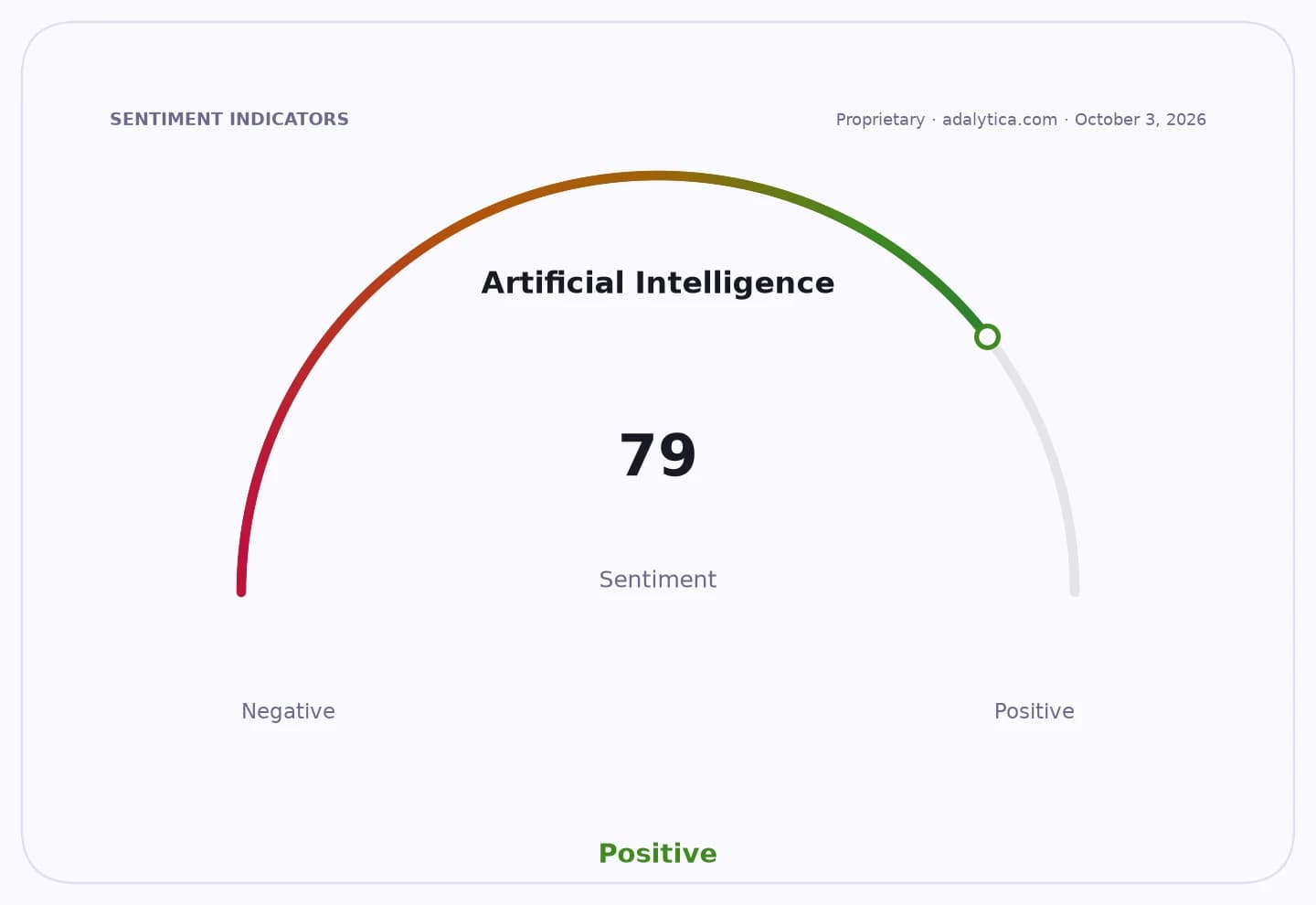
Sentiment IndicatorsⓘProprietary · adalytica.com · October 4, 2026
This is a snapshot — live sentiment, awareness and momentum for 130+ markets update continuously in the dashboard.Open AlphaPulse
The new holdings are not identified in the filing excerpt, but the market backdrop makes the message clear: investors continue to reward AI-linked megacap franchises that combine growth, pricing power and massive capital returns, while becoming more selective on platforms whose upside depends on a longer commercialization cycle. Alphabet remains one of the deepest cash generators in the market, but it has also faced a more uneven investor debate around search durability, AI capex intensity and how quickly new products translate into incremental earnings.
That tension is visible in the shares. Alphabet finished Oct. 2 at $343.50, roughly flat to modestly higher over recent sessions and just above its 50-day moving average, with momentum indicators cooling from earlier overbought levels. Microsoft ended at $517.53, holding near its highs and above both the 50-day and 200-day moving averages, a sign that investors still trust the company’s AI and cloud narrative even as spending stays heavy. Amazon closed at $251.52, also above its 200-day average, reflecting continued conviction in its retail recovery and AWS franchise despite bouts of volatility.
For Pershing Square, the rotation suggests a preference for businesses where earnings power is easier to underwrite in the near term. Microsoft and Amazon offer clearer paths for AI-related revenue to show up in cloud, software and infrastructure spending, while Alphabet’s payoff may be more dependent on search product transitions and the pace at which ad growth can coexist with generative AI disruption. The bull case for Alphabet is that it remains one of the market’s strongest cash machines, with multiple growth engines and a still-dominant advertising franchise. The bear case is that investors may continue to demand a higher discount until AI investment, regulatory pressure and product cannibalization risks look more manageable.
The filing also lands at a time when broader markets are still pricing elevated policy uncertainty, with the 10-year Treasury yield near 5.24% to 5.29% and the Fed funds rate around 3.75%, conditions that tend to punish distant earnings more than near-term cash flow. That environment favors companies with durable margins and visible capital returns, which helps explain why megacap tech names remain central to many institutional portfolios even as stock selection within the group becomes more selective.
For investors, the key takeaway is not just that Ackman sold Alphabet, but that one of the market’s most closely watched allocators is leaning further into names where AI spending can be tied more directly to revenue and free cash flow. The next question is whether Alphabet can convince the market that its own AI investments will defend, rather than dilute, its earnings power over the next several quarters.
| Entity | Gains | Losses |
|---|---|---|
| Microsoft | ▲AI and cloud leadership narrative | ▼Little near-term downside from rotation |
| Amazon | ▲AWS and infrastructure demand | ▼Higher scrutiny on AI capex returns |
| Alphabet | ▲Cash remains strong, if investors re-rate it later | ▼Portfolio support from a high-profile buyer |
| Pershing Square | ▲More visible near-term earnings exposure | ▼Exposure to Alphabet uncertainty |