Alphabet’s in-house TPU chips are turning into a real business, and that matters because it gives Google a second growth engine just as investors are trying to gauge whether the AI boom belongs only to NVIDIA.
Alphabet TPU Chip Sales May Reach $104B by 2028
Piper Sandler’s latest note is the clearest sign yet that Wall Street may be underestimating how quickly Alphabet can monetize its chip technology. Analyst Thomas Champion lifted his price target on Alphabet to $400 from $395 and kept an overweight rating, arguing that the company’s external TPU business could generate about $104 billion in hardware revenue by 2028. That is not a side project. It would make TPU one of the most important profit pools inside Alphabet, and a meaningful challenge to NVIDIA’s dominance in data-center AI accelerators.
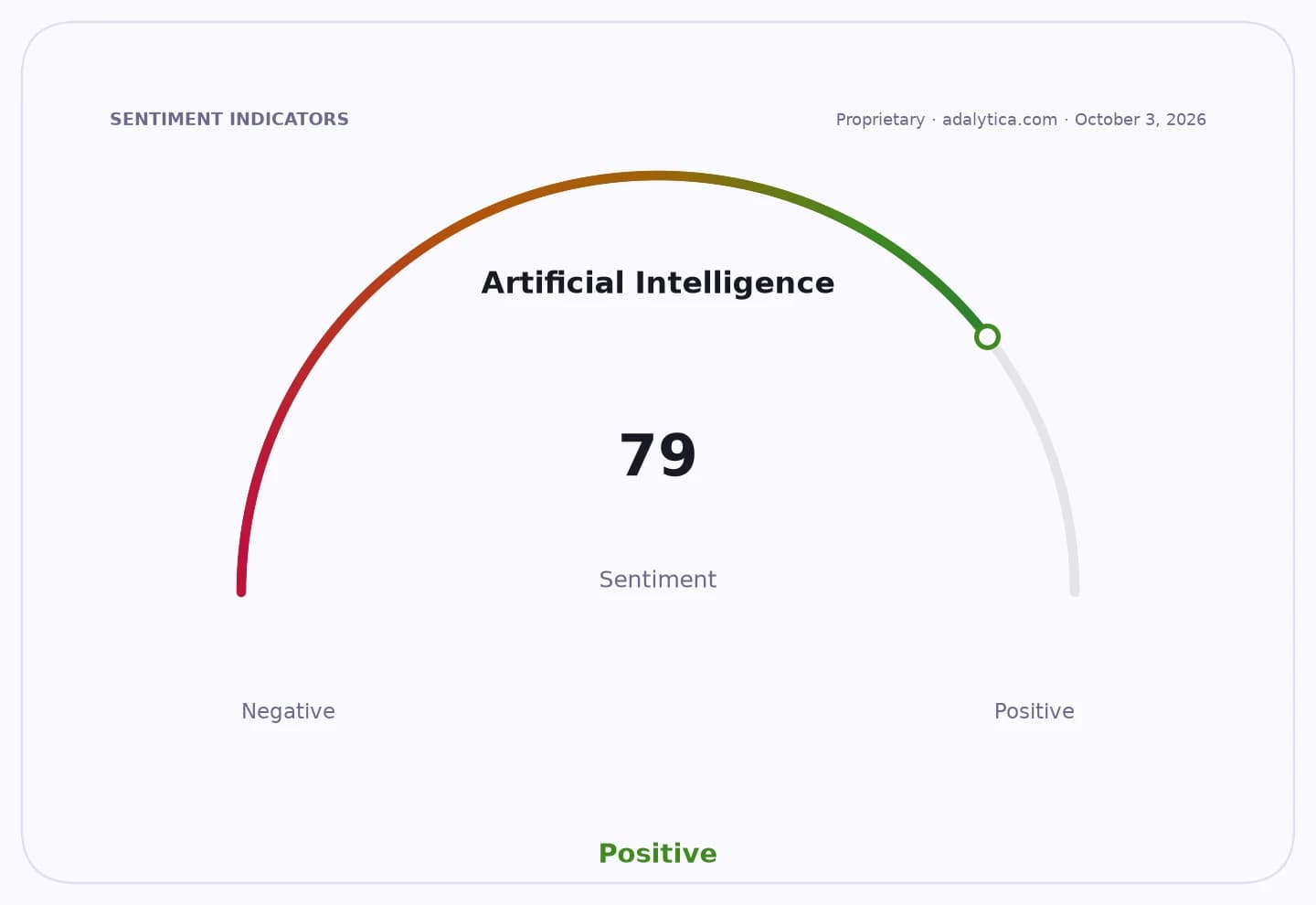
Sentiment IndicatorsⓘProprietary · adalytica.com · October 3, 2026
This is a snapshot — live sentiment, awareness and momentum for 130+ markets update continuously in the dashboard.Open AlphaPulse
The big reason investors should care is margin mix. Alphabet is no longer just selling cloud services and ads; it is beginning to sell the hardware layer underneath AI workloads as well. Piper Sandler now assumes TPU revenue rises from roughly $8 billion this year to $51 billion next year, with capacity climbing to 3 gigawatts by the end of 2027 and 6 gigawatts by the end of 2028. If even a portion of that buildout lands, it would deepen Alphabet’s moat with cloud customers and give the company more control over the economics of AI infrastructure.
There is already evidence this is becoming more than a theoretical model. Alphabet disclosed in its second quarter that it had started booking revenue from TPU system sales shipped to customer data centers. Google Cloud revenue jumped 82% to $24.8 billion in the quarter, showing that the broader cloud franchise is already scaling fast enough to absorb and support more hardware ambition. Finance chief Anat Ashkenazi also said much of the revenue from existing TPU agreements will not be realized until 2027, which suggests the commercial ramp is still early.
That timing matters for investors because it means the market may still be valuing Alphabet mostly as an advertising and cloud company, not as a chip platform company. Piper Sandler’s new target implies about 17% upside from the stock’s recent close near $340, and it is not alone. TipRanks data show 11 of 12 analysts rate the shares a buy or better, with a consensus target above $430. The stock may wobble in the near term, but the long-term setup looks more interesting: Alphabet is using AI to strengthen search, cloud and custom silicon at the same time.
NVIDIA investors should not dismiss the threat, even if the company still dominates the AI chip market by a wide margin. Broadcom has already talked about outsized TPU-related demand from Anthropic, and Champion suggested his estimates may even be conservative if those capacity plans hold. In other words, Alphabet does not need to beat NVIDIA outright to matter. It only needs to carve out a profitable share of one of the fastest-growing markets in tech.
For long-term investors, the takeaway is simple: Alphabet is building a second act inside AI, and TPU may prove to be one of the most valuable pieces of that story. The next quarterly report should give investors a better read on how fast the chip business is scaling, but the bigger message is already clear — Alphabet looks like a company that could compound for years if its silicon strategy keeps gaining traction. Worth watching closely, and worth keeping on the buy list.
| Entity | Gains | Losses |
|---|---|---|
| Alphabet | ▲New AI hardware revenue stream | ▼Reliance on ads alone |
| NVIDIA | ▲Overall AI demand growth | ▼Share of data-center accelerator spending |
| Cloud customers | ▲More chip choice, tighter integration | ▼Less bargaining leverage with a single vendor |
| Long-term Alphabet shareholders | ▲Higher growth and margin potential | ▼Short-term noise from execution risk |