Nvidia remains the cleaner way to own the AI buildout because it pairs explosive growth with scale, pricing power and far less customer risk than Credo, even after both stocks have ridden the infrastructure boom higher.
Nvidia vs Credo: AI Infrastructure Stock Debate
That is the real divide investors need to focus on now. Credo Technology has more than tripled revenue and turned itself into one of the most important connectivity names in the AI data center, but its latest surge comes with a catch: roughly 90% of sales come from just 10 customers. Nvidia, by contrast, is still doubling down on the same AI capex wave at a revenue base that makes every other chip supplier look small, while generating the kind of cash flow that can keep funding the next platform shift.
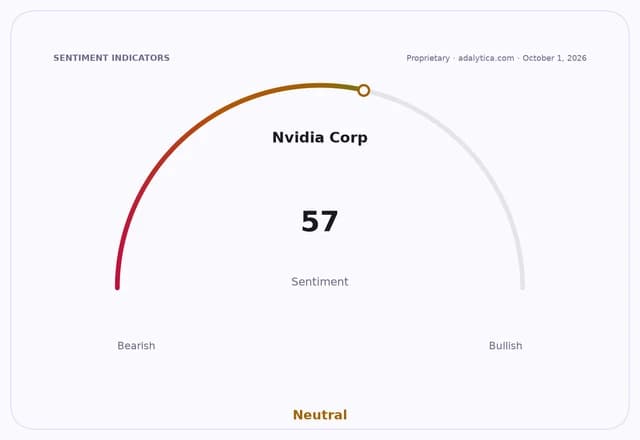
Sentiment IndicatorsⓘProprietary · adalytica.com · October 1, 2026
This is a snapshot — live sentiment, awareness and momentum for 130+ markets update continuously in the dashboard.Open AlphaPulse

The economics matter because the AI trade is moving beyond simple model demand into the wiring, networking and power architecture that makes large-scale inference possible. That is why Credo has become such a hot stock. Its copper and optical interconnects sit in the middle of the data-center bottleneck, and its partnership with Oracle on ZeroFlap optics shows how critical reliability has become as AI clusters scale. But concentrated customer exposure cuts both ways. When one or two buyers pull back, growth can decelerate fast, and the stock leaves little margin for error.
Credo’s fiscal 2026 numbers were excellent on the surface: revenue of nearly $1.3 billion, up more than 200%, net income of about $472 million and free cash flow of roughly $407 million. The balance sheet is pristine. Yet the market is already paying up for that growth, and the business still depends heavily on a narrow customer set and third-party manufacturing. In a market that is starting to reward durability as much as velocity, that is a meaningful discount factor, not a footnote.
Nvidia’s case is different. Fiscal 2026 revenue climbed to nearly $215.9 billion, up 65.5%, with net income of about $120.1 billion and free cash flow of nearly $96.7 billion. That scale gives Nvidia a powerful advantage: it can absorb customer concentration, geopolitical friction and rising supply commitments while still investing aggressively. Its August 10-Q showed supply and capacity commitments jumping to $279 billion from $119 billion in the prior quarter, a signal that demand is still outrunning supply across the AI stack.
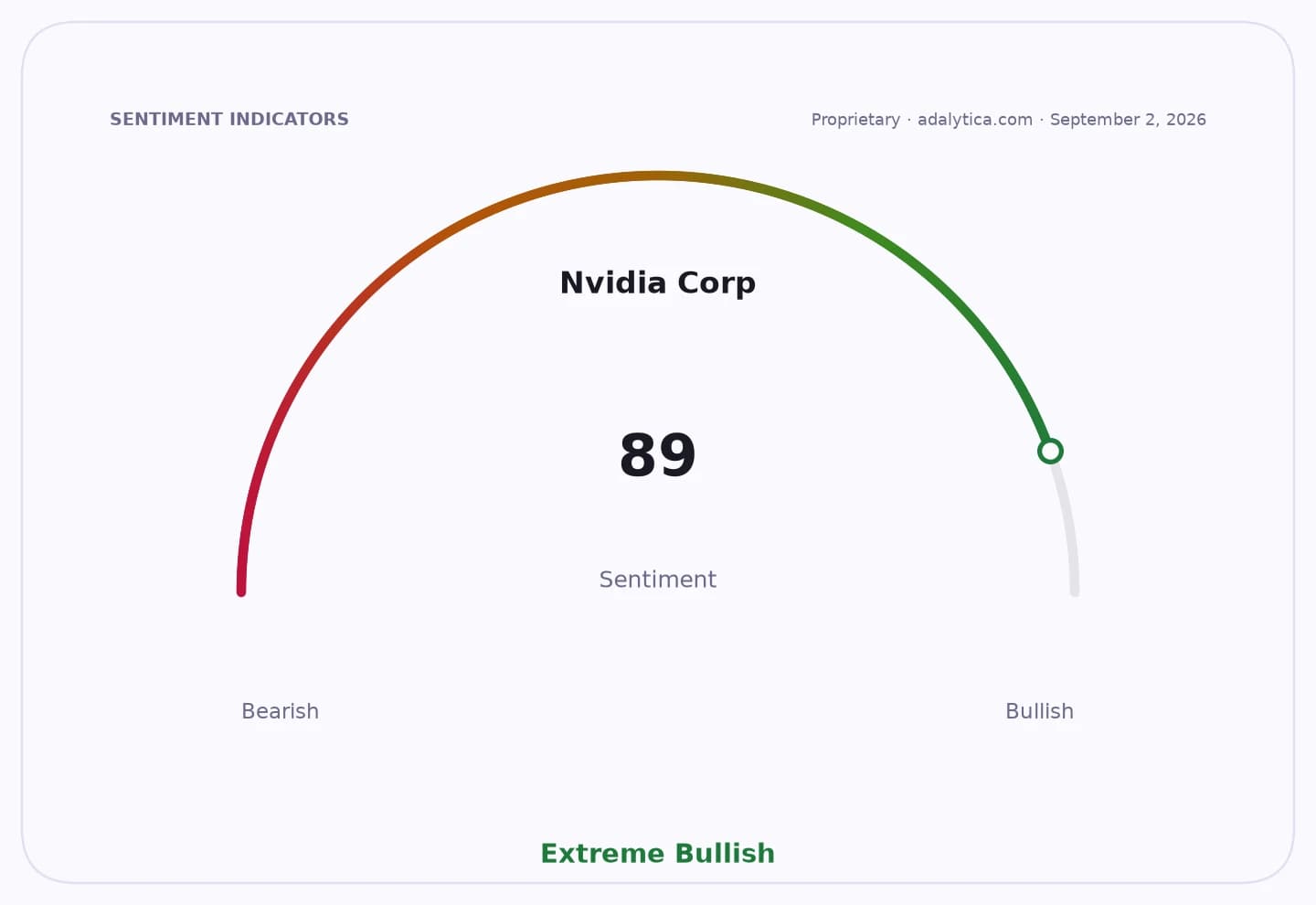
Investors should also pay attention to the market action. Nvidia shares have recovered to around $230, with the stock holding above its 50-day and 200-day moving averages and RSI readings in the mid-60s, suggesting momentum has rebuilt without yet becoming outright euphoric. Credo, meanwhile, has been far more volatile, and its recent pullback underscores how quickly a premium multiple can compress when guidance or margins disappoint. Adalytica’s proprietary NVIDIA earnings sentiment is still neutral, but awareness remains elevated, a reminder that the name is still central to the AI trade even when sentiment cools.
The broader narrative is that AI infrastructure is no longer just a GPU story. Networking, optics, memory, software and power all matter. That creates real upside in names like Credo, and I would not dismiss it as a niche winner. But for a multi-year investor looking for the strongest asymmetry, Nvidia still looks like the better compounder because it owns the core compute layer and has the balance sheet to keep expanding outward into software, systems and ecosystem control. Alibaba’s push into its own AI chip and model ambitions is another reminder that global competition is intensifying, but it also reinforces Nvidia’s strategic moat outside China.
If you want the purest exposure to the AI capex cycle, Nvidia is still the higher-quality bet. Credo can outperform in sharp bursts, but Nvidia is the name I believe can keep winning as the entire AI infrastructure stack keeps scaling.
| Entity | Gains | Losses |
|---|---|---|
| Nvidia | ▲Core AI compute demand | ▼Pricing power if supply catches up |
| Credo | ▲AI networking boom | ▼Customer concentration risk |
| AI data center builders | ▲Faster interconnect innovation | ▼Higher infrastructure costs |
| Rival chipmakers | ▲Sector validation | ▼Share loss to Nvidia dominance |