A paid AI product can still make up facts, and that gap between premium pricing and unreliable output is becoming a bigger investor issue for Microsoft, Alphabet and Amazon as businesses pay up for tools they still cannot trust blindly.
Microsoft, Alphabet, Amazon face AI reliability risk
The immediate concern is not that generative AI is useless, but that its commercial value is capped by error risk. The Spanish test case in the source material shows a paid model answering correctly on one prompt, then confidently inventing details on another, underscoring the core problem for enterprise buyers: subscription fees buy better access and more tools, not accuracy guarantees.
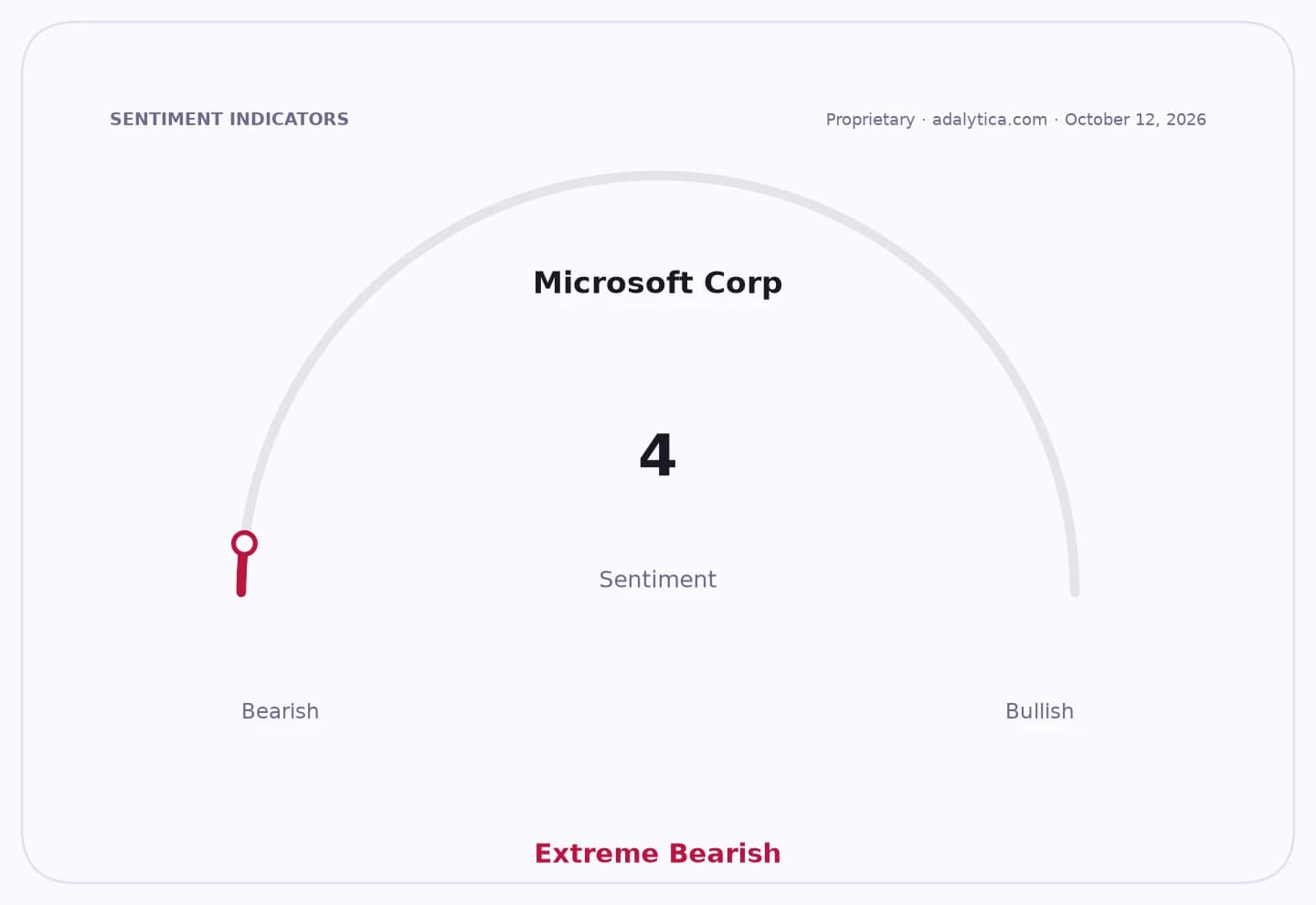
Sentiment IndicatorsⓘProprietary · adalytica.com · October 12, 2026
This is a snapshot — live sentiment, awareness and momentum for 130+ markets update continuously in the dashboard.Open AlphaPulse
That matters economically because AI is now embedded in software, cloud and workplace workflows that depend on scale, trust and repeat usage. Microsoft, Alphabet and Amazon are all competing to monetize AI through subscriptions, cloud capacity and productivity software, but the more AI is used for search, coding, analysis and document drafting, the more costly hallucinations become in terms of remediation, oversight and reputational damage.
Microsoft’s latest filing flags the issue directly, warning that the “increasing scale and adoption of AI amplifies challenges” and that its models and training methods “may be flawed.” Alphabet has also warned that AI can increase the risk of inadvertent disclosure of confidential information, while Amazon has flagged a range of legal and operational risks tied to its cloud and software businesses.
Artificial Intelligence — 30-day sentimentadalytica.com
Explore this data interactively — full history, time series and cross-market comparisons.Open AlphaPulse
Investors have already started to price in the tension between AI adoption and AI risk. Microsoft’s shares closed at $535.07 on Oct. 9, after surging above its 50-day moving average and staying well above its 200-day average, while Alphabet ended at $351.66 and Amazon at $262.43, both near the upper end of their recent trading ranges. But the Adalytica Microsoft earnings sentiment snapshot sits at “Extreme Fear,” suggesting market anxiety around the company’s AI earnings narrative has sharpened even as the stock has held up technically.
The broader narrative is that the AI boom is moving from novelty to accountability. Businesses are learning that model choice matters, prompting more interest in tools such as Claude, Gemini, Copilot, ChatGPT, Perplexity and Grok for different tasks rather than treating one model as universally “best.” Techniques such as grounding answers in provided documents, like NotebookLM-style workflows, can reduce error rates, but they do not eliminate the need for human review.
For investors, that means the winners are likely to be platforms that can monetize AI safely at scale, while the losers are firms or workflows exposed to expensive mistakes, regulatory scrutiny or customer disappointment. The next test will be whether enterprise buyers keep expanding AI spending despite the reliability problem, or demand tougher controls, better provenance and more human oversight before budgets grow again.
| Entity | Gains | Losses |
|---|---|---|
| Microsoft | ▲Copilot and Azure AI demand | ▼Confidence in AI monetization |
| Alphabet | ▲Gemini and search integration | ▼Trust in AI-generated answers |
| Amazon | ▲Cloud and workplace AI usage | ▼Error-related enterprise risk |
| Enterprise buyers | ▲Productivity gains with oversight | ▼Time spent checking hallucinations |