Brazil’s workers are using artificial intelligence more aggressively than their peers in the U.S., Japan and India, and that is more than a feel-good technology statistic — it’s a clue about where the next wave of productivity gains may emerge.
Brazil AI adoption outpaces U.S., Japan and India
According to Microsoft’s Work Trend Index 2026, 27% of Brazilian AI users already qualify as “frontier professionals,” meaning they are using the technology for complex, multi-step tasks rather than simply asking chatbots for quick answers. That compares with 16% across the 10 countries Microsoft studied. For investors, the message is clear: AI adoption is no longer just a Silicon Valley story. It is spreading fastest where workers are willing to redesign how work gets done.
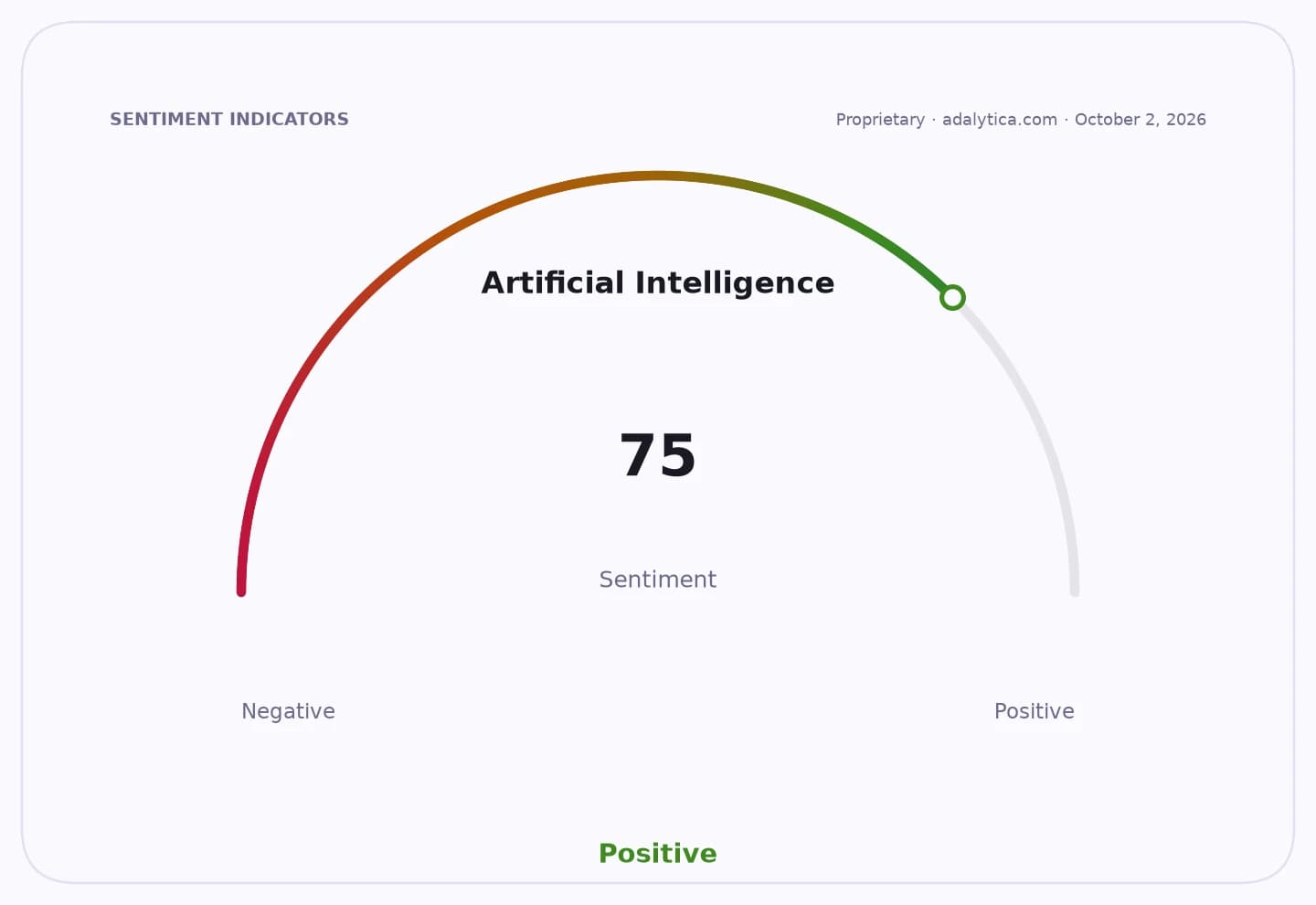
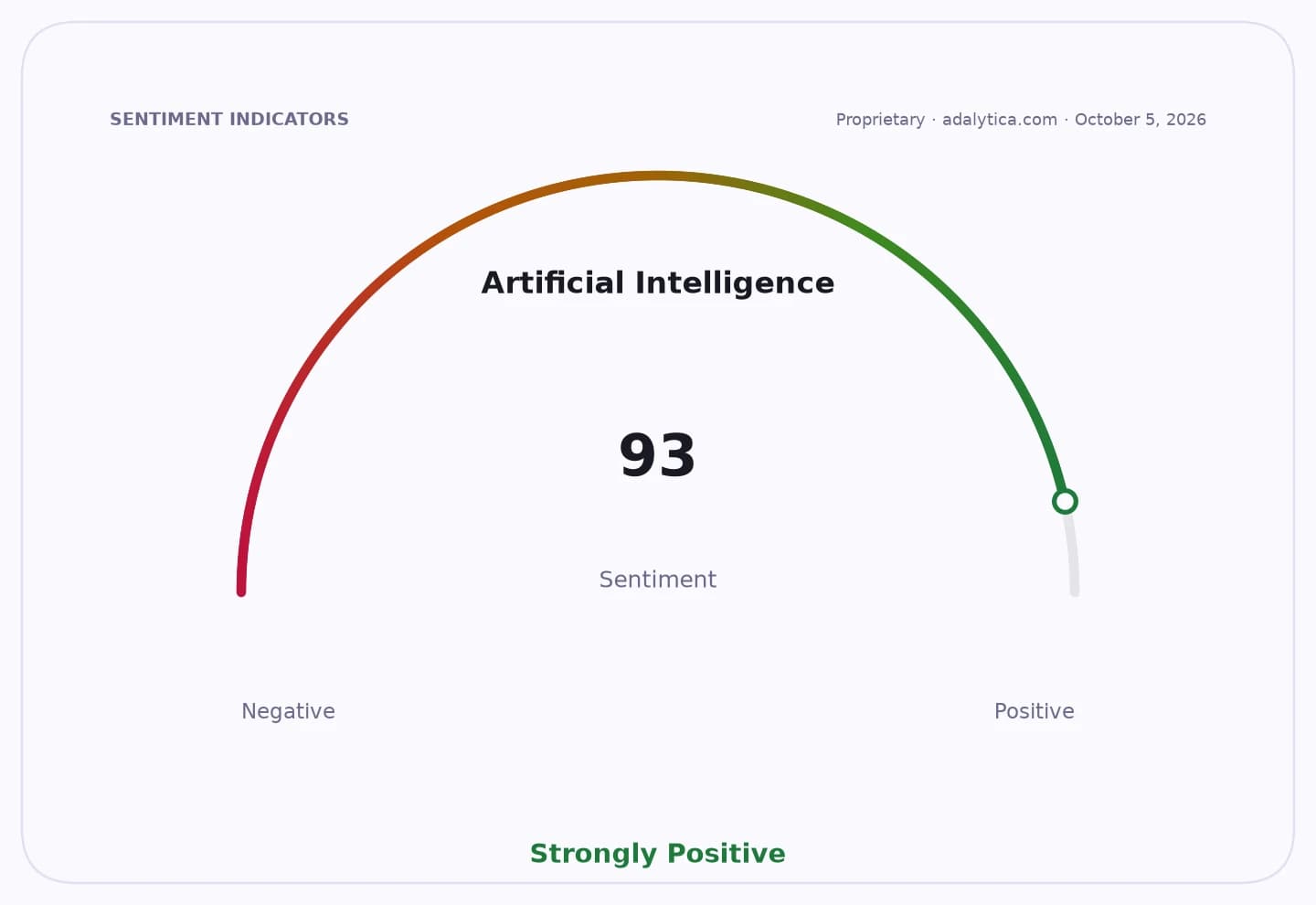
Sentiment IndicatorsⓘProprietary · adalytica.com · October 9, 2026
This is a snapshot — live sentiment, awareness and momentum for 130+ markets update continuously in the dashboard.Open AlphaPulse
That matters economically because productivity is the real payoff from AI. When employees use agents and AI tools to handle operational work, they can spend more time on analysis, judgment and decision-making. In a country like Brazil, where efficiency gains can help offset structural frictions, that could translate into more competitive companies, leaner processes and better margins over time. For long-term investors, those are the kinds of changes that compound.
The report also shows that workers are moving faster than employers. Microsoft says organizational factors such as culture, manager support and internal policies account for 67% of AI’s perceived impact, versus 32% for individual behavior and mindset. That gap matters because it can slow down the economic benefits. A talented workforce is only part of the equation; companies also need workflows, governance and training that let AI produce measurable output. Only 19% of surveyed users sit in the so-called frontier where both the worker and the company are ready.
There is a second, equally important takeaway: AI is already changing the type of work being done, not just the speed. Among users surveyed, 58% said they are producing work they could not do a year ago, and that figure rises to 72% in Brazil. Microsoft also said nearly half of Copilot conversations involve cognitive tasks such as analysis, problem-solving and evaluating alternatives. That suggests AI is moving up the value chain and becoming a tool for knowledge workers, not just automation of repetitive chores.
For investors, the implication is that the winners may be the companies that can turn AI from a novelty into an operating model. Microsoft, of course, benefits from rising use of its own software and Copilot ecosystem. But the broader opportunity spans cloud, enterprise software, consulting, cybersecurity and workflow automation. The companies that help customers redesign processes around AI — rather than just sell them another app — are the ones most likely to see durable demand.
Microsoft’s stock has also shown how closely investor psychology remains tied to the AI trade. The shares were recently trading around $522, well above the 50-day moving average, even as momentum indicators such as RSI cooled from overbought levels. That’s a reminder that AI enthusiasm can move ahead of fundamentals in the short run. But the longer-term story is still anchored in real business adoption, and this report suggests that adoption is deepening outside the usual tech hubs.
There are risks, of course. Adoption can stall if companies fail to retrain workers, update controls or invest in the right infrastructure. Productivity gains may also take longer to show up in national data than in corporate case studies. And investor expectations for AI remain high, which means execution will matter more than slogans.
Still, the most important insight here is simple: Brazil’s strong showing is evidence that advanced AI use is spreading into mainstream business practice, and that should keep the long-term AI investment case intact. For investors building portfolios for the next three to five years, the right approach is not to chase the latest headline, but to own the platforms and enablers that help businesses turn AI adoption into lasting earnings growth.
| Entity | Gains | Losses |
|---|---|---|
| Brazilian workers | ▲Higher productivity | ▼Routine tasks |
| Microsoft | ▲Copilot usage | ▼Slow enterprise adoption |
| AI enablers | ▲More demand | ▼Legacy workflows |
| Companies that delay AI | ▲Short-term stability | ▼Future efficiency gains |