Hotel chains are moving AI from experiment to infrastructure, and that shift matters because it is turning a discretionary software spend into a sector-wide productivity upgrade that will reshape margins, pricing power and vendor share.
Microsoft and Nvidia on hotel AI adoption
That is the real investment story behind the latest data showing 91% of hotel chains already use AI. In an industry built on thin operating margins, labor intensity and constant demand volatility, AI is no longer about chatbots or marketing polish. It is becoming a back-office and customer-service layer that can trim costs, speed bookings, improve revenue management and lift occupancy conversion. The market underestimates how quickly those gains compound when an entire global industry adopts the same tools at once.
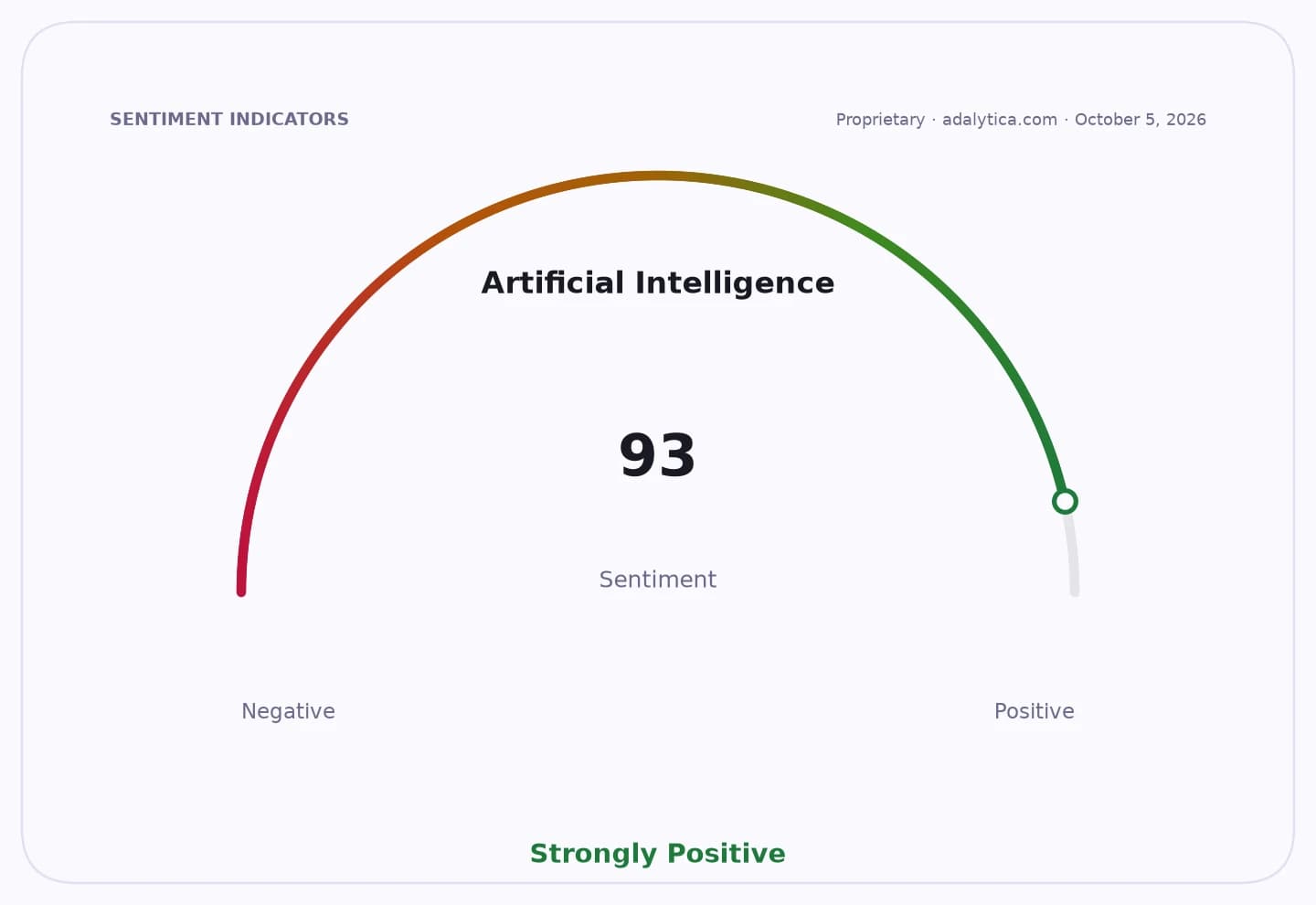
Sentiment IndicatorsⓘProprietary · adalytica.com · October 5, 2026
This is a snapshot — live sentiment, awareness and momentum for 130+ markets update continuously in the dashboard.Open AlphaPulse
For investors, the implications run well beyond hotels themselves. The first beneficiaries are the companies supplying the models, cloud infrastructure and enterprise software that make AI usable at scale. Microsoft, which closed at $528.10 on Oct. 5 and is trading well above its 50-day and 200-day moving averages, sits squarely in that lane through Azure, Copilot and enterprise distribution. Nvidia, meanwhile, continues to capture the compute demand underneath the AI stack, with its shares at $239.68 after a powerful run that has left the stock extended and momentum-rich. SPY’s strength near 776 shows the broader market is still rewarding the AI trade, but the deeper opportunity is in the second-order beneficiaries as AI penetrates service industries, not just tech giants.
The hotel industry is a useful leading indicator because it is both operationally complex and economically sensitive. If AI can work there, it can spread quickly across airlines, restaurants, retail, logistics and healthcare. Accor has already pointed to meaningful time savings from AI tools, and broader industry adoption suggests executives are now focused less on pilots and more on measurable return on investment. That creates a new capex cycle in software, cloud and automation, even as hospitality firms push to defend labor costs and improve service consistency.
The market’s mispricing is that many investors still treat AI as a story about model hype and hyperscaler spend. I believe the better thesis is that AI is becoming a toll road for the physical economy. Every hotel chain that automates reservations, guest support, dynamic pricing or staffing decisions strengthens the revenue stream for the infrastructure providers behind it. That is why Microsoft matters here even if the news is about hotels: the company is one of the clearest picks-and-shovels exposures to enterprise AI adoption.
The technical backdrop reinforces that institutional capital is still rotating toward AI leaders. Microsoft’s 69.4 RSI reading and Nvidia’s 84.9 show momentum is strong, while both stocks are trading comfortably above their long-term averages. That does not make them cheap. It makes them the kind of names money managers keep owning when the AI capex cycle broadens from chip demand into software deployment.
The bigger catalyst ahead is not whether one hotel chain launches a new AI tool. It is whether the rest of the service economy follows the same playbook. If 91% of hotel chains are already using AI, the adoption curve is no longer speculative — it is operational. Investors positioning early in the infrastructure layer, especially Microsoft and Nvidia, are buying into the next phase of the AI trade before earnings catch up to the narrative.
| Entity | Gains | Losses |
|---|---|---|
| Microsoft | ▲Azure and Copilot demand | ▼Legacy software rivals |
| Nvidia | ▲AI compute demand | ▼Less-exposed hardware vendors |
| Hotel chains | ▲Lower labor costs, better pricing | ▼Manual operators |
| Broad-market laggards | ▲None | ▼Missed AI productivity upside |