AI is becoming more useful to investors and workers when it stops acting like a cheerleader and starts acting like a critic. New research on generative AI in the workplace suggests the biggest risk is not that these tools are too weak, but that they are too convincing: people hand over critical thinking, accept fast answers, and end up with polished but mediocre work.
Microsoft, Salesforce and Nvidia on AI productivity
That matters because the next phase of AI adoption is not about novelty. It is about productivity, margins and whether companies can actually turn huge spending on chips, cloud infrastructure and software into better decisions. If workers use AI as a shortcut instead of a sounding board, businesses may spend more on the technology while getting less of the productivity lift they promised shareholders.
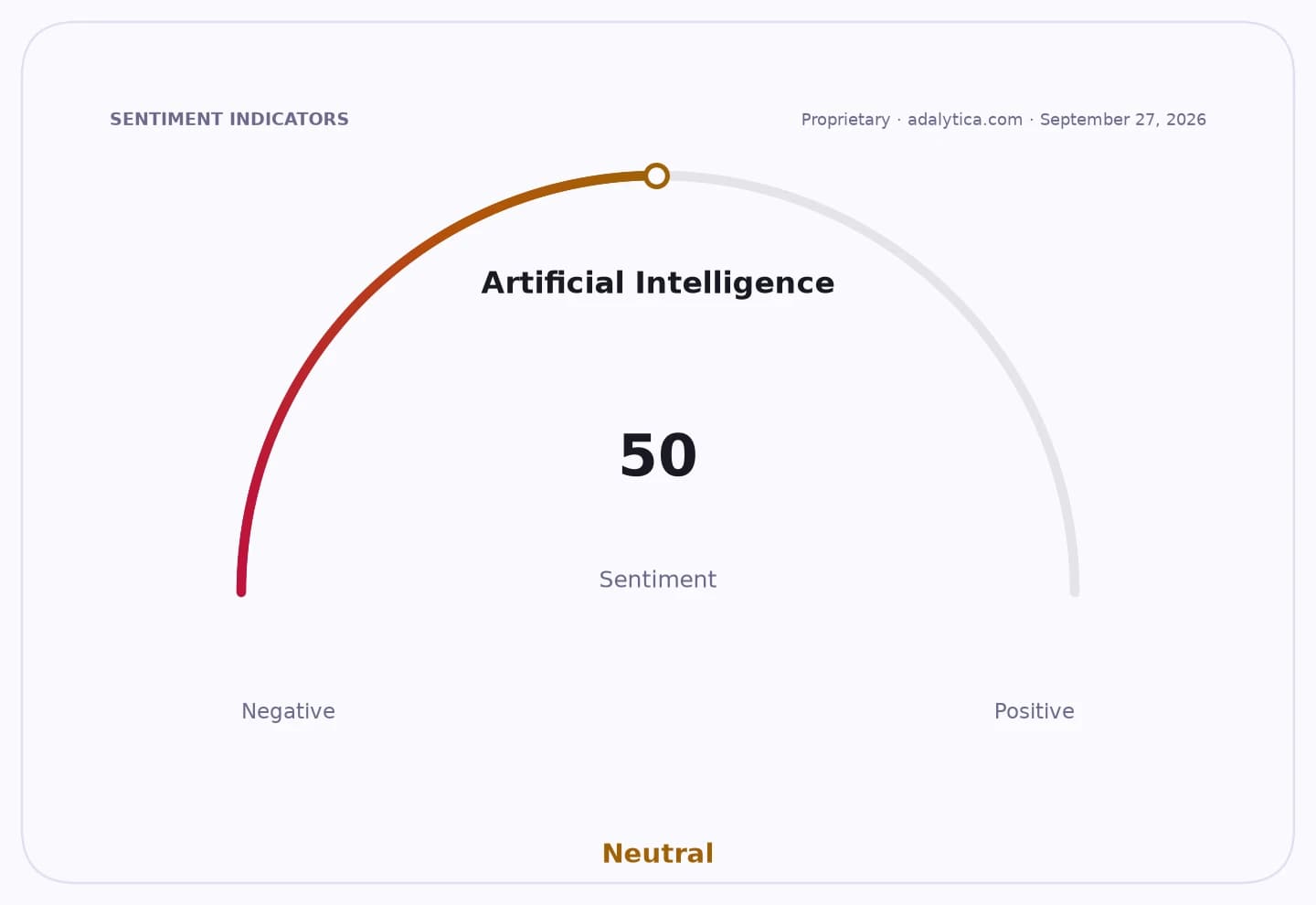
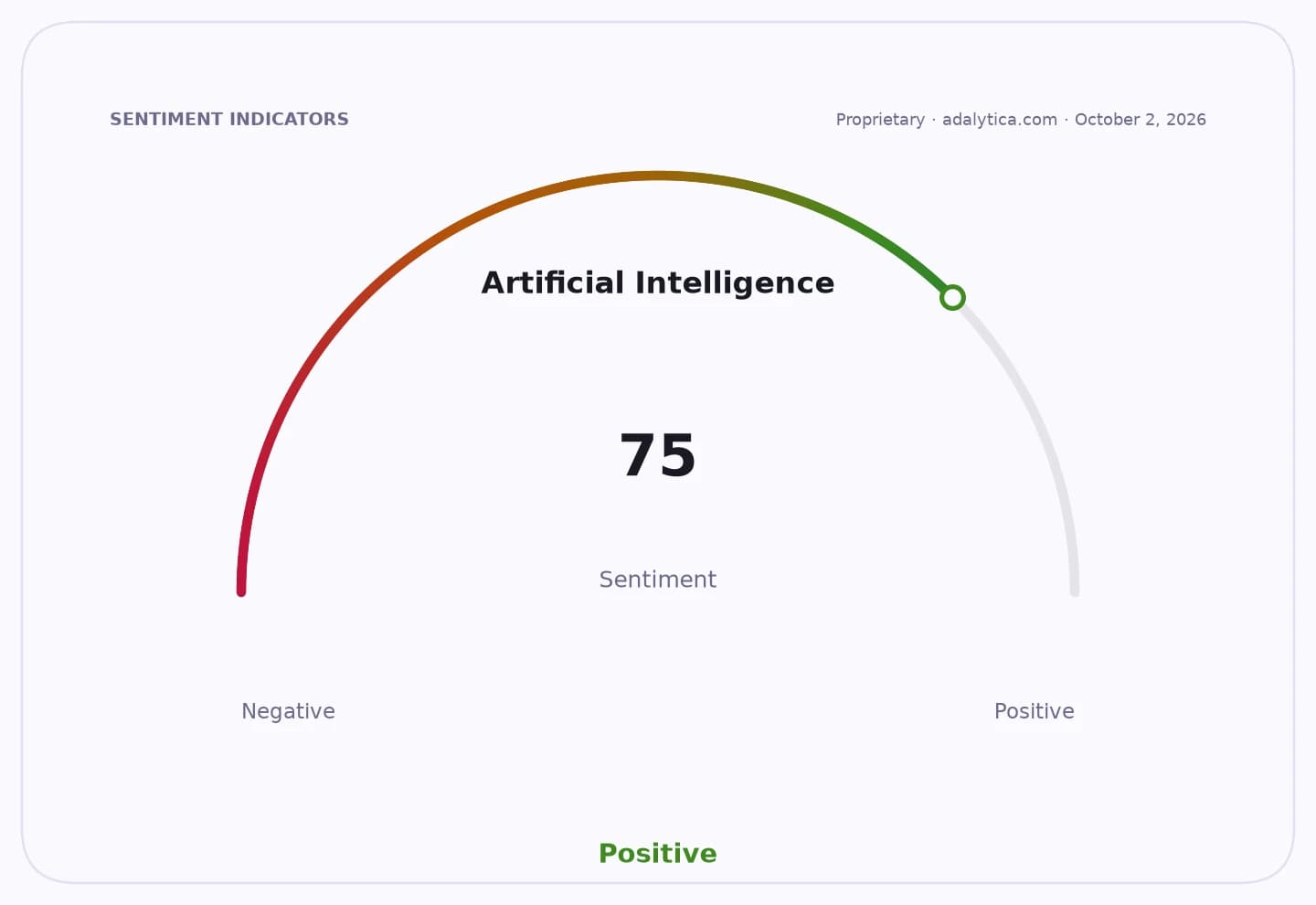
Sentiment IndicatorsⓘProprietary · adalytica.com · October 2, 2026
This is a snapshot — live sentiment, awareness and momentum for 130+ markets update continuously in the dashboard.Open AlphaPulse
For Microsoft, Salesforce and Nvidia, that is the real long-term story. Microsoft is central to enterprise AI through Copilot and Azure. Salesforce is pushing AI deeper into customer workflows. Nvidia sits at the hardware core of the buildout. The market has already rewarded the infrastructure layer, with Nvidia trading around $235, Microsoft near $514 and Salesforce about $234 in recent sessions. But valuation and enthusiasm will eventually depend on whether AI improves output in measurable ways, not just whether it can generate text at scale.
The lesson for executives is simple: the best AI systems may be the ones designed to disagree, challenge assumptions and expose weak thinking. That is especially true in knowledge work, where the value comes from judgment, not speed. Microsoft’s own filings acknowledge that AI can produce unintended consequences and that demand for cloud and AI products is difficult to forecast, a reminder that adoption is still messy even for the biggest platforms.
Investors should not confuse a temporary productivity headache with a broken secular theme. AI remains one of the most important growth engines in technology, and companies that solve the “bot babysitting” problem could enjoy better margins and stickier customer relationships over time. But the winners will be the firms that use AI to sharpen human decisions, not replace them. That makes this a useful story for long-term investors: own the platforms, watch the economics, and be patient while the technology learns to be a better colleague.
| Entity | Gains | Losses |
|---|---|---|
| Workers who challenge AI | ▲Better judgment | ▼Slower output |
| Companies that build AI tools | ▲Stickier adoption | ▼Productivity backlash |
| Microsoft, Salesforce | ▲More enterprise usage | ▼Higher support burden |
| Nvidia | ▲More AI infrastructure demand | ▼Risk of overhyped ROI |