French lawmakers moved to give millions of employees temporary access to as much as 10,000 euros of company-linked savings, a politically sensitive step that could provide a short-term boost to household spending but also risks diverting cash away from longer-term investment in corporate France.
France lawmakers back employee savings withdrawals

The National Assembly approved the measure in first reading by 95 votes to 34, restoring the core of a bill that had been pared back in committee. The proposal would allow workers to withdraw, for one year after enactment, money from profit-sharing and incentive schemes paid into employee savings plans before Jan. 1, 2026, provided the funds are used to buy goods or services. Lawmakers raised the ceiling from 5,000 euros in the Senate version to 10,000 euros net of social contributions, while preserving the tax advantages attached to the plans.
Sentiment Indicators
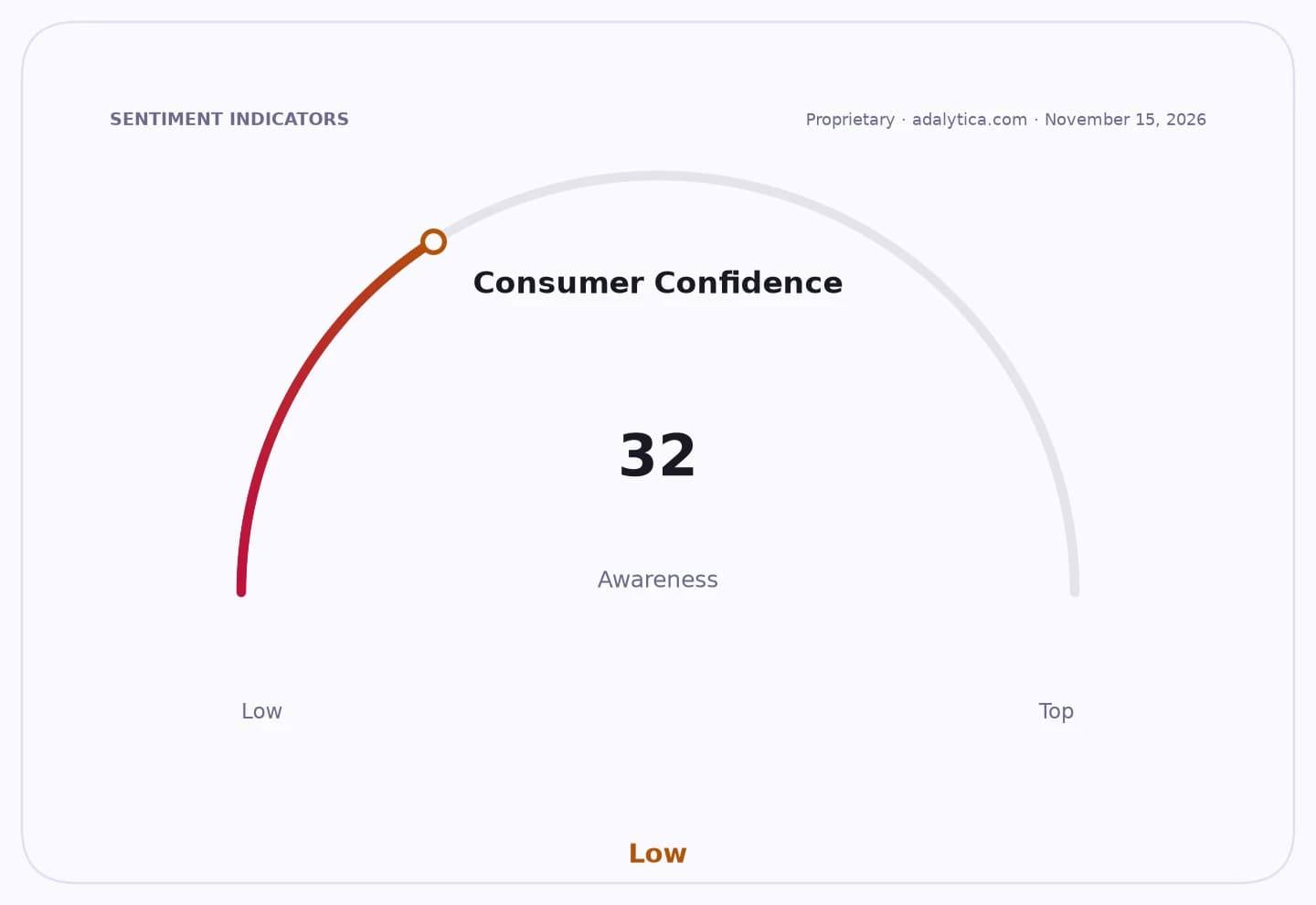
The economic logic is straightforward: the government is trying to turn dormant savings into immediate consumption at a time when France’s cost-of-living debate remains politically charged. Supporters argue that employees should not be forced to borrow at consumer-credit rates when they already hold money set aside from their labor. With household sentiment weak and purchasing power still a dominant political issue, a one-off release of savings could offer a modest lift to demand, especially for durable goods and services.
But the measure also highlights the limits of using savings policy as a substitute for higher wages. Opposition lawmakers on the left said the bill merely lets workers spend their own money rather than addressing stagnant pay. That critique matters economically because the release is a temporary liquidity fix, not a structural income boost, and its impact on consumption will depend on how much of the eligible pool is actually withdrawn rather than left invested.
The scale is large enough to matter for both households and employers. At the end of 2025, employee savings and company retirement assets totaled 229.4 billion euros, up nearly 15% from a year earlier, across more than 13 million savers and about 442,000 companies. That means even a limited take-up could move meaningful sums. Yet lawmakers built in safeguards to protect corporate balance sheets: if savings are held in company shares, partnership interests or certain investment vehicles, withdrawals still require employer approval. The design is meant to preserve treasury stability and employee shareholding, underscoring the tension between immediate cash access and long-term corporate financing.
For investors, the bill is a reminder that French policy remains willing to lean on private savings to support consumption rather than rely solely on fiscal transfers or wage acceleration. Retail demand-sensitive sectors could benefit if withdrawals are spent quickly, while employers with significant employee share ownership may face some administrative and liquidity complexity. For equity holders, the larger question is whether the policy encourages short-lived spending at the expense of reinvestment, especially if workers use the proceeds to meet current bills rather than rebuild financial buffers.
The legislation is not yet final and still has to clear further parliamentary steps, including a possible joint committee to reconcile the Assembly and Senate versions. Even so, the vote signals that Paris is prepared to use employee savings as a pressure valve for household purchasing power — a choice that may ease near-term strain, but does little to resolve the broader problem of weak real income growth.
| Entity | Gains | Losses |
|---|---|---|
| French employees | ▲Immediate cash access | ▼Long-term savings growth |
| Consumer-facing retailers | ▲Higher spending demand | ▼If withdrawals stay limited |
| Employers with employee share plans | ▲Some employee relief, preserved ownership base | ▼Administrative and liquidity complexity |
| Left-wing opposition | ▲Political contrast on wages | ▼Influence over policy outcome |