Marine Le Pen’s push to give French citizens priority for jobs, welfare and public housing is turning into one of the biggest policy and constitutional risks facing Europe’s second-largest economy, with the proposal aimed squarely at voters ahead of next year’s presidential race.
France Le Pen Pushes National Preference Plan
The National Rally leader wants to write “national preference” into the constitution, a move that would put French nationals ahead of foreigners in some administrative decisions and delay access to certain social rights for non-citizens until they have worked in France for a set period. The plan also calls for tighter asylum and family reunification rules, an end to birthright citizenship and tougher regularization for undocumented migrants.
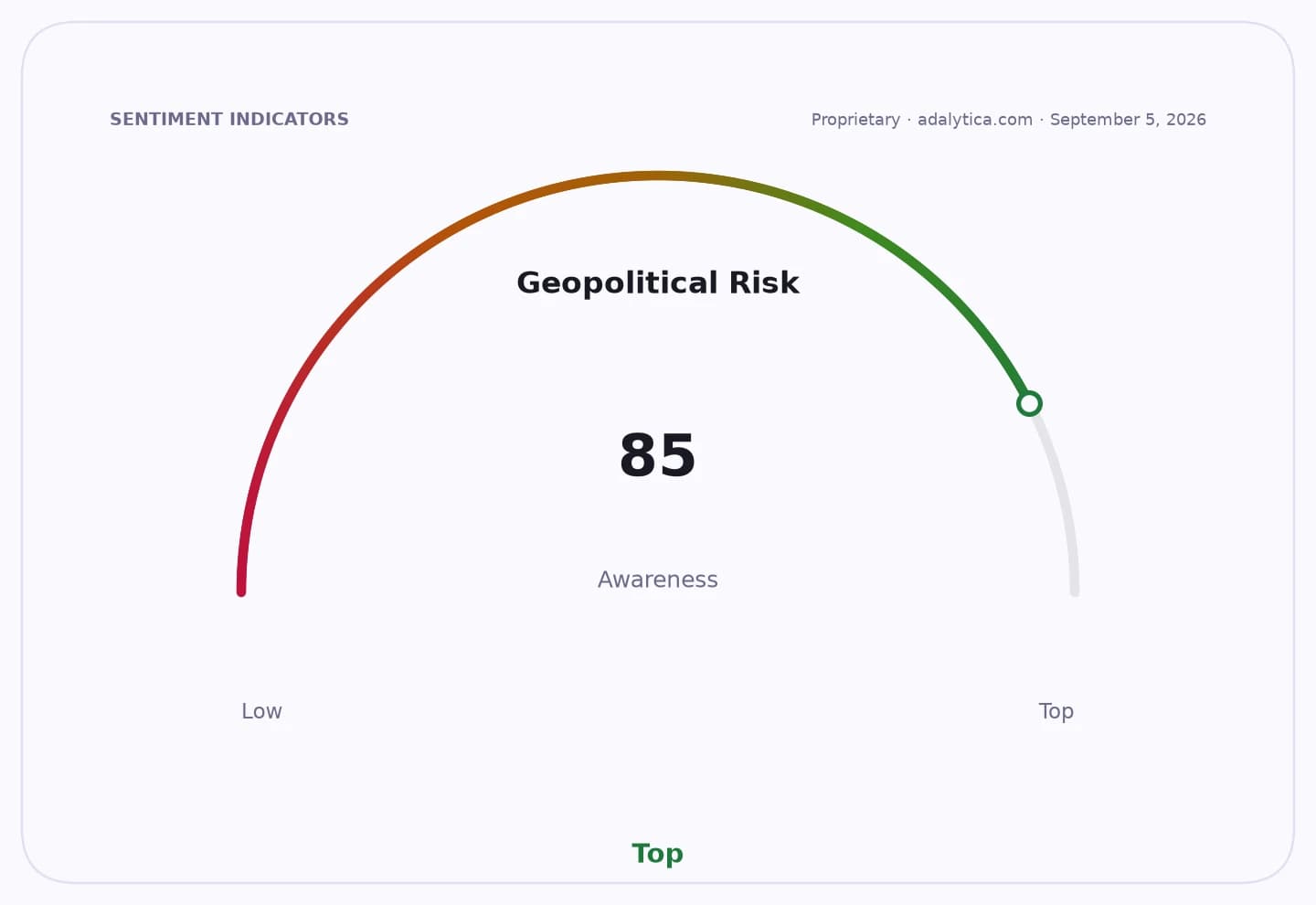
Sentiment IndicatorsⓘProprietary · adalytica.com · September 5, 2026
This is a snapshot — live sentiment, awareness and momentum for 130+ markets update continuously in the dashboard.Open AlphaPulse
That matters economically because France relies heavily on migrant labor in sectors such as services, construction, health care and transport, while its social model is already under strain from sluggish growth, high public spending and pressure on housing supply. Any move to restrict access to benefits or public housing would alter how labor is allocated and could affect employers struggling to hire, particularly in low- and mid-wage roles.
Investors care because the proposal is not just political rhetoric; it would require rewriting the constitution and would likely trigger a fight with France’s courts, parliament and EU law if Le Pen tries to bypass the normal amendment process. A prolonged clash over constitutional authority could raise policy uncertainty around the euro zone’s core sovereign, while also complicating funding, migration and labor-market assumptions for companies with large French operations.
Le Pen’s camp says France should be free to reserve limited public resources for its own citizens, while opponents argue the plan would discriminate against legally resident foreigners who work and pay taxes in the country. The constitutional route is the central obstacle: France’s standard amendment process runs through both houses of parliament, but Le Pen is reportedly preparing to appeal directly to voters by referendum, a path legal scholars say is meant for economic, social and environmental policy, not for rewriting the constitution itself.
The debate echoes France’s long-running struggle over identity, sovereignty and immigration, but its market relevance is broader. It could shape wage pressure, labor availability, consumer demand and the political risk premium on French assets if the far right gains momentum into 2027. For now, the legal battle over how such a vote could even be held is likely to determine whether the proposal stays a campaign slogan or becomes an institutional fight with economic consequences.
| Entity | Gains | Losses |
|---|---|---|
| French citizens | ▲Priority for jobs and benefits | ▼Less access for foreigners |
| Foreign workers | ▲Little to gain | ▼Restricted welfare and housing access |
| Employers in France | ▲Potentially clearer immigration rules | ▼Tighter labor supply |
| French courts/EU rules | ▲Constitutional test case | ▼Pressured by referendum push |