Éric Zemmour has confirmed he will run in France’s next presidential election, putting immigration back at the center of the country’s political debate and raising the odds of another campaign built on anti-immigration rhetoric, fiscal grievance and pressure on the political mainstream.
France Zemmour confirms 2027 presidential run

The significance for investors and businesses is not that Zemmour is a frontrunner — he is not — but that his candidacy can still reshape the tone of the race, pull the debate toward border control and social spending, and keep French politics in a state of elevated uncertainty. In a country that sits at the heart of the euro zone, that matters because policy direction, labor supply and investor confidence all depend on whether centrist forces can hold the line against nationalist challengers.
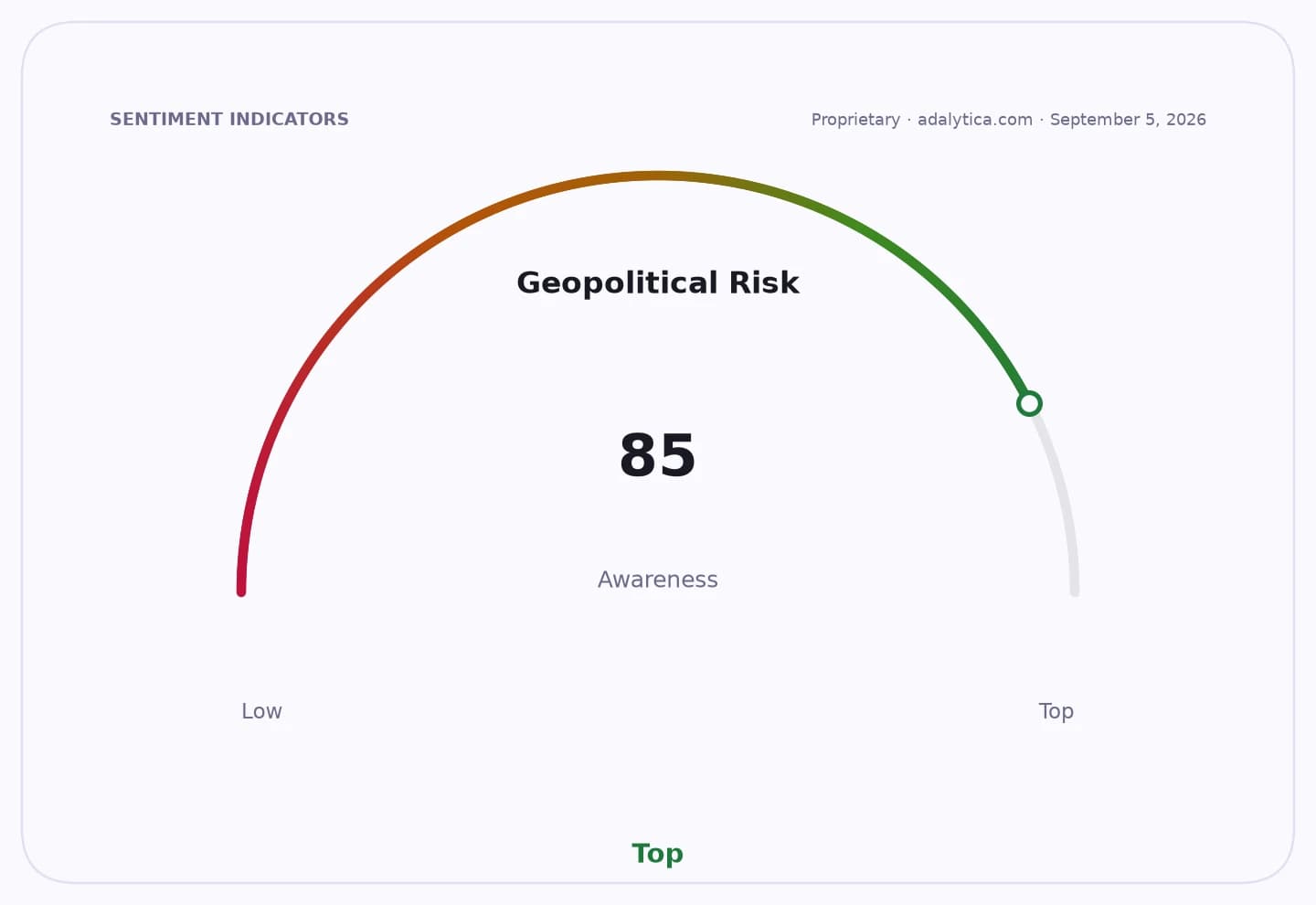
Sentiment IndicatorsⓘProprietary · adalytica.com · September 19, 2026
This is a snapshot — live sentiment, awareness and momentum for 130+ markets update continuously in the dashboard.Open AlphaPulse
Zemmour, who led the far-right Reconquête party and won 7.07% in the first round of the 2022 election, said on BFMTV that he would be a candidate, even if the formal declaration is expected later this autumn. He used the interview to double down on his “remigration” doctrine, arguing that long-term unemployed foreigners, even those legally resident, should be forced to leave France after a year without work. He also called for the expulsion of foreign prisoners, other foreign offenders and undocumented migrants.
That pitch is politically familiar, but economically important. France is grappling with weak growth, stubborn fiscal pressure and a labor market that still needs workers in sectors ranging from care to construction. A campaign built around shrinking immigration and tightening access to welfare would speak directly to a deeper national argument about who pays into the system and who gets to benefit from it. It also lands at a moment when the euro area remains sensitive to any sign that domestic politics in a core member state could complicate reform, budgeting or labor policy.
Zemmour’s remarks also show how immigration, not just taxes or pensions, remains a central fault line in French politics. His argument that people who draw on public support should be expelled — and his suggestion that robots could eventually replace immigrant labor — taps into a broader populist case that resonates with part of the electorate even when it runs into legal and practical obstacles. For investors, that matters because political campaigns can shape sentiment long before they shape law. They influence whether markets price in policy continuity or policy disruption.
The euro also looked vulnerable in the immediate emotional sense, with Adalytica’s Euro Trade Signals showing sentiment in “extreme fear” and the broader Global Stability Sentiment gauge in “fear.” Those are proprietary sentiment readings, not market fundamentals, but they fit the larger picture: French electoral politics can quickly spill into currency and risk appetite, especially when the debate turns toward immigration, fiscal strain and national identity.
The bigger lesson for long-term investors is that France’s next election is likely to be less about a single candidate than about whether the political center can answer voters’ anxieties without adopting the most divisive parts of the far right’s agenda. That contest will help determine the policy backdrop for French equities, banks, domestic lenders, consumer companies and any business exposed to labor availability or state spending.
Zemmour’s run is unlikely to settle the race now, but it does confirm that immigration will be one of its defining issues. For investors, that means more noise, more headline risk and another reminder that in Europe, politics can still move markets. Worth watching.
| Entity | Gains | Losses |
|---|---|---|
| Éric Zemmour / Reconquête | ▲Visibility, media attention | ▼Need for broader support |
| Far-right voters | ▲Hard-line immigration agenda | ▼Policy moderation |
| Centrist parties | ▲Chance to contrast on credibility | ▼Pressure to harden rhetoric |
| Euro / French assets | ▲Limited from stability alone | ▼From rising political uncertainty |