French bank shares have dropped enough to reopen the valuation debate, but the bigger question for investors is whether the selloff reflects temporary risk aversion or a more durable deterioration in France’s economic and sovereign backdrop.
French bank shares fall below book value

The answer matters because BNP Paribas, Crédit Agricole and Société Générale sit at the intersection of three pressures: weaker French growth, a still-elevated sovereign risk premium and the possibility of another ECB rate hike in mid-December. That combination can raise funding costs, delay credit losses and compress market multiples even when banks’ balance sheets remain much stronger than in the eurozone debt crisis.
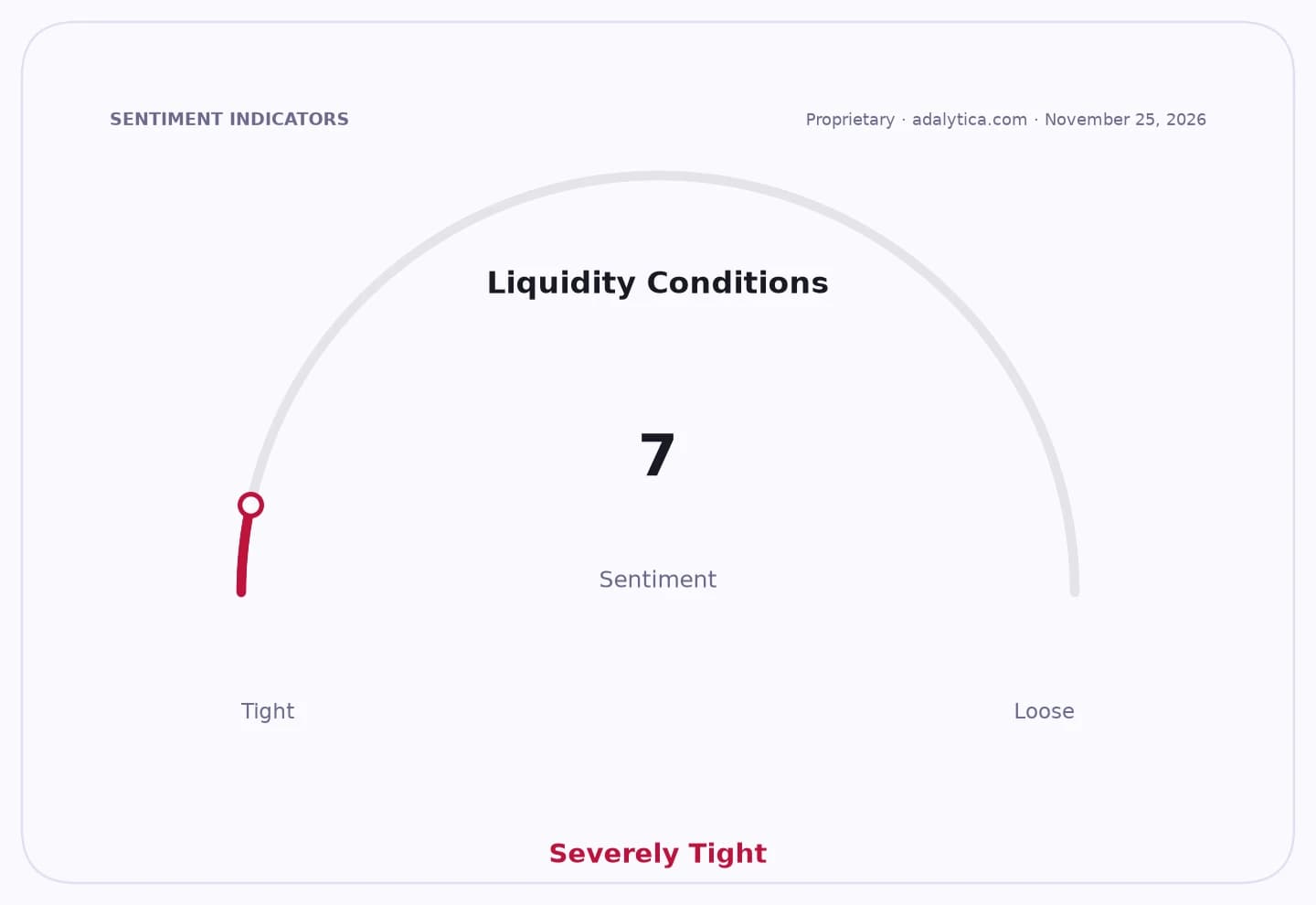
Sentiment Indicators

The recent correction has taken some of the heat out of valuations. French bank shares are trading below book value, while the sector in June was changing hands at about 10 times earnings on average. That discount has widened as investors reassessed French assets more broadly after the CAC 40 and other European equities fell on a renewed wave of risk aversion.
Part of the market’s caution is tied to France itself. The spread between 10-year French and German government bonds remains around 1.57 percentage points, down from a recent peak of 1.74 points but still far above February’s 0.55 point gap. For banks, that matters because a wider sovereign spread typically feeds into funding perceptions, capital-markets confidence and, eventually, loan demand.
The macro picture is not especially helpful. France’s economy contracted 0.1% in the third quarter, and another rate increase from the European Central Bank would reinforce pressure on borrowers before the full effect of higher rates has worked through the system. That is why some market participants, including Citi, still argue French lenders are not yet cheap enough relative to the macro risk embedded in their domestic franchise.
Yet the bull case has not disappeared. European banks have materially less exposure to domestic sovereign debt than they did in 2011-12, limiting the danger of a self-reinforcing bank-sovereign spiral. Asset quality has also improved, with non-performing loans around 2%, and shareholder returns remain robust. ING has just announced 1.65 billion euros of buybacks and BBVA has already executed 1 billion euros of a 2 billion euro program, underscoring how much cash the sector is returning.
For BNP Paribas, Crédit Agricole and Société Générale, the valuation argument is therefore less about momentum than about whether investors are being paid enough to own a cyclical, capital-heavy sector with solid barriers to entry. The French lenders still trade at a discount to book, unlike some Spanish or Italian peers that are more profitable but also more expensive. That gap may appeal to medium-term value investors if France’s macro stress proves contained.
Technical indicators in the share prices also point to a sector that has cooled rather than broken. BNP Paribas is near its 50-day moving average after slipping from recent highs, while Crédit Agricole and Société Générale are both trading below their 200-day moving averages, a sign that sentiment has weakened. The pullback reduces near-term enthusiasm, but it also lowers the entry point for investors willing to bet that sovereign noise and a softer French economy will not turn into a full banking-cycle deterioration.
For now, the investment case hinges on whether the market is pricing in too much French weakness. If sovereign spreads stabilize and earnings resilience holds, the selloff could prove an opportunity. If the economy softens further and credit costs start to rise, today’s discounts may look less like value and more like a warning.
| Entity | Gains | Losses |
|---|---|---|
| Value investors | ▲Lower entry multiples | ▼Near-term price momentum |
| BNP Paribas, Crédit Agricole, Société Générale shareholders | ▲Potential re-rating | ▼Further French risk premium |
| French borrowers | ▲Easier equity outlook if banks recover | ▼Tighter credit if risk rises |
| Short-term traders in bank stocks | ▲Volatility to trade | ▼Directional uncertainty |