COCOBOD’s GHS4 billion debt is now large enough to threaten the agency’s ability to fund the next cocoa crop, tightening a financing chain that sits at the center of Ghana’s export earnings and farmer payments.
Ghana COCOBOD Debt Threatens Cocoa Financing
The risk is not just a balance-sheet problem for the regulator. COCOBOD is the main conduit through which Ghana finances cocoa purchases before beans are exported and dollar revenue comes in. When that mechanism weakens, the strain quickly spreads to farmers, local banks, exporters and, ultimately, the country’s foreign-exchange inflows. In a country where public debt has climbed to 132% of GDP, lenders are becoming more selective about anything tied to sovereign-style risk, and COCOBOD’s obligations are increasingly being judged in that light.
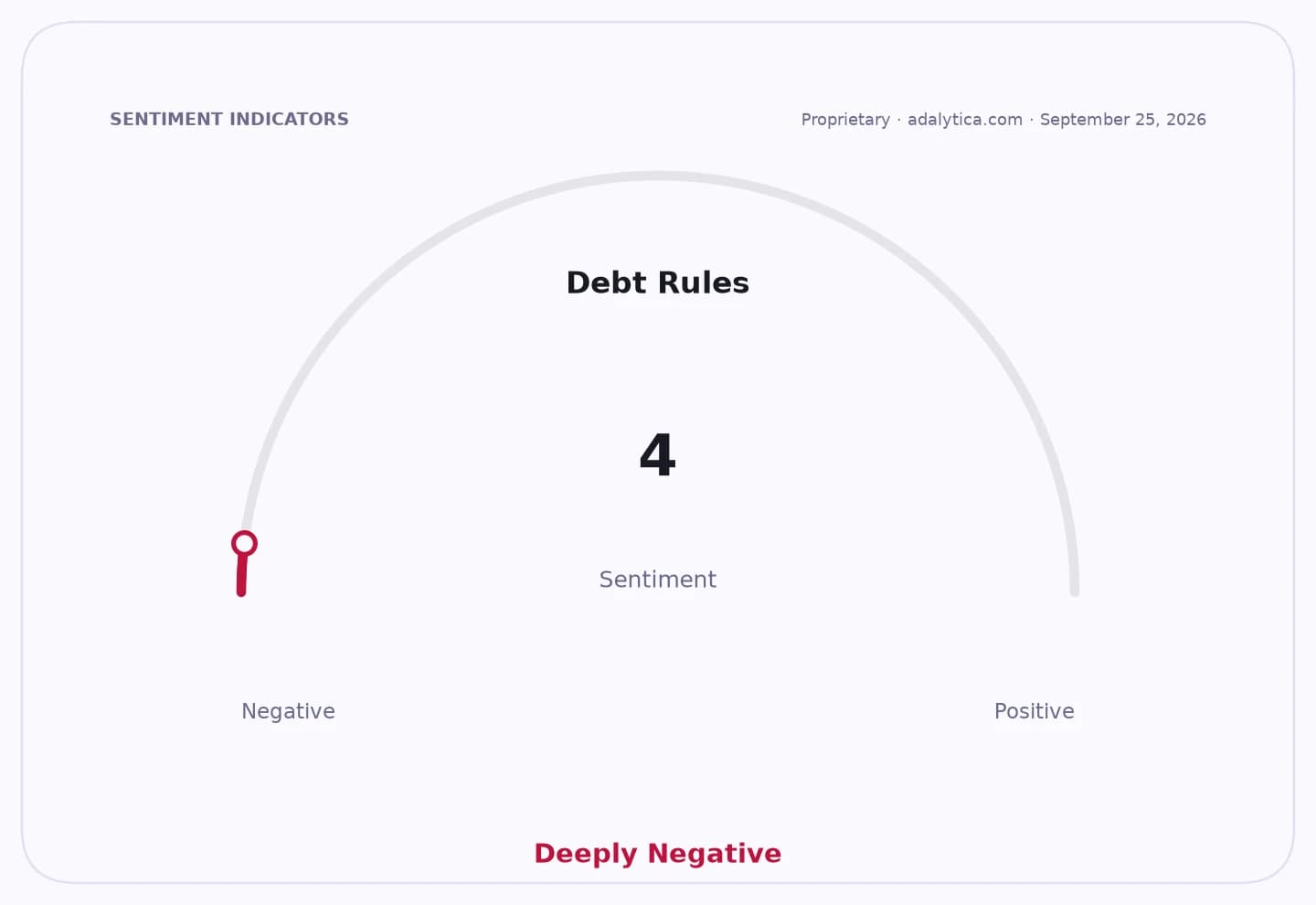
Sentiment IndicatorsⓘProprietary · adalytica.com · September 25, 2026
This is a snapshot — live sentiment, awareness and momentum for 130+ markets update continuously in the dashboard.Open AlphaPulse
The timing is awkward for Ghana and for the global cocoa market. Cocoa costs have already been volatile, and processors have been warning in filings that supply remains exposed to weather, climate shifts and government policy. Hershey and Mondelez have both highlighted cocoa in recent quarterly reports as a material input risk, even as the broader supply outlook has improved from the acute shortages of the prior year. If COCOBOD struggles to line up financing, the near-term effect would be more about logistics and cash flow than global supply shortages, but any disruption in Ghana — one of the world’s key cocoa origins — would still matter for grinders and confectioners that rely on predictable bean flows.
For investors, the issue is twofold. Ghana’s credit profile comes under renewed pressure if a strategic commodity agency cannot refinance itself smoothly, which can keep domestic borrowing costs elevated and complicate fiscal repair. At the same time, cocoa-linked companies may face renewed uncertainty around procurement timing, inventory management and input-cost hedging. The immediate market read-through is not a sudden spike in cocoa prices, but a reminder that the supply chain remains financially fragile even after the recent easing in the commodity itself.
The bearish case is that COCOBOD’s debt load becomes another example of how heavy sovereign leverage bleeds into quasi-public institutions, making future funding more expensive and less reliable. The more constructive case is that Ghana can still stabilize the agency through restructuring, targeted support or new export-linked financing before the next crop cycle is disrupted.
What matters now is whether COCOBOD can secure funding on terms that do not deepen the state’s debt burden further. If it cannot, the pressure will extend beyond cocoa into Ghana’s broader external financing needs, with implications for the cedi, for farmgate payments and for the firms that turn cocoa beans into global consumer staples.
| Entity | Gains | Losses |
|---|---|---|
| Ghana government | ▲Preserves export flow | ▼Faces higher fiscal strain |
| COCOBOD | ▲Gets refinancing room | ▼Suffers funding stress |
| Cocoa farmers | ▲Benefit from stable payments | ▼Risk delayed receipts |
| Hershey/Mondelez | ▲Gain from orderly supply | ▼Face procurement uncertainty |