Central banks accelerated gold buying in the third quarter, adding 321 tonnes and pushing year-to-date purchases to 675 tonnes, a 6% increase from a year earlier, according to the World Gold Council.
Gold demand rises on central bank buying and ETF inflows
The surge matters because official-sector buying is one of the most powerful sources of structural demand in the gold market. It helps explain why prices have stayed elevated even as jewellery and retail bar demand soften under the strain of record costs.
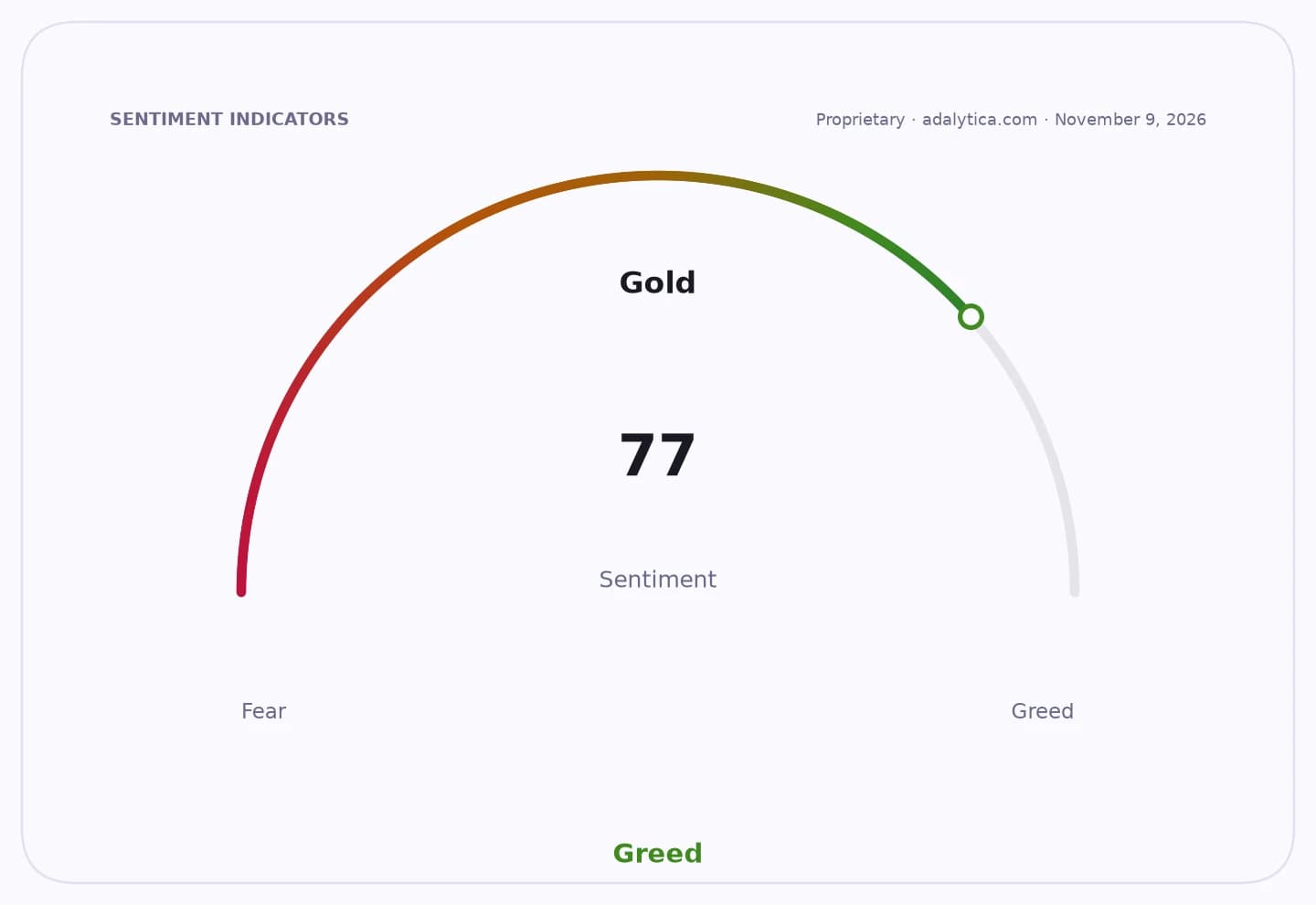
Sentiment Indicators
The World Gold Council said the third-quarter tally exceeded recent typical quarterly buying levels and should be enough to keep annual central bank demand at least in line with 2025. Overall gold demand was only 1% lower year on year at 1,369 tonnes in the quarter, but in value terms demand hit a record $566 billion as the LBMA gold price averaged $4,262 an ounce, its third-strongest quarterly average on record and 23% above a year earlier.
Investment flows also remained strong. Gold-backed exchange-traded funds added 211 tonnes in the quarter after outflows in the second quarter, while demand for bars and coins fell 19% year on year as investors waited for a clearer price direction. Jewellery consumption dropped 17% to 313 tonnes, the weakest third quarter in the WGC’s data series, underscoring how high prices are squeezing end-user demand.
That split is important for markets. Central bank buying and ETF inflows provide support for bullion and gold miners, while weak jewellery demand limits the breadth of physical consumption. Technology demand rose 3%, helped by artificial intelligence-related manufacturing, but not enough to offset the softness elsewhere.
Gold supply is not keeping up with value demand. Mine production rose 3% to a third-quarter record of 1,071 tonnes, yet total supply fell 1% and recycling volumes dropped 8% to 314 tonnes, their lowest in three years. The imbalance suggests the market remains price-supported even with production growth.
For investors, the message is that gold’s rally is still being underpinned by sovereign buying, sticky inflation concerns and fiscal worries, not just speculation. Gold ETFs such as GLD and IAU, along with miners represented by GDX, are likely to remain sensitive to whether official-sector demand stays near current levels and whether retail buyers eventually return at lower prices.
| Entity | Gains | Losses |
|---|---|---|
| Central banks | ▲Reserve diversification | ▼Currency exposure |
| Gold ETFs | ▲Inflows and asset growth | ▼Outflows and weak flows |
| Gold miners | ▲Higher revenue support | ▼Cost pressure and volatility |
| Jewellery buyers | ▲Potential relief if prices ease | ▼Record bullion costs |