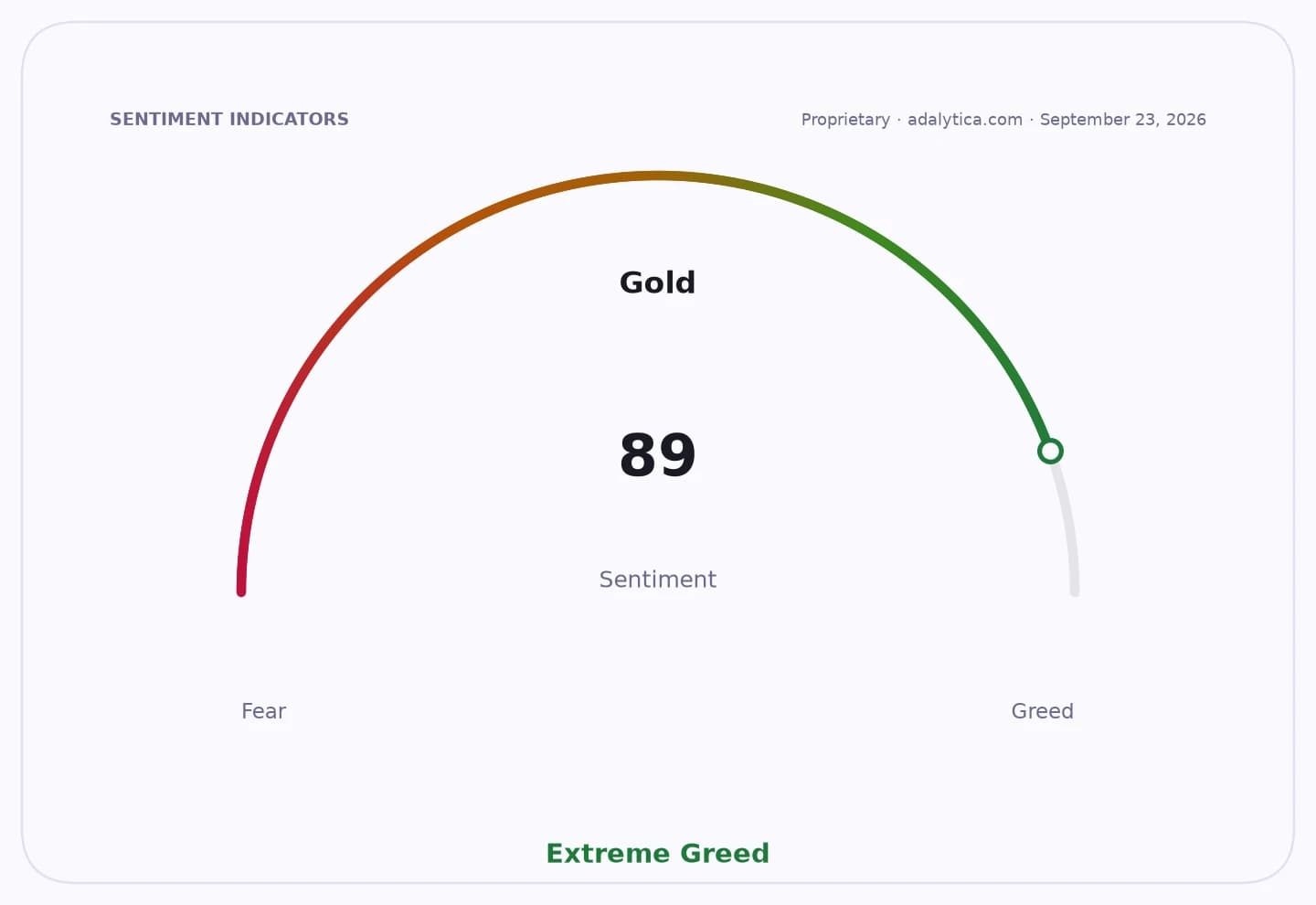
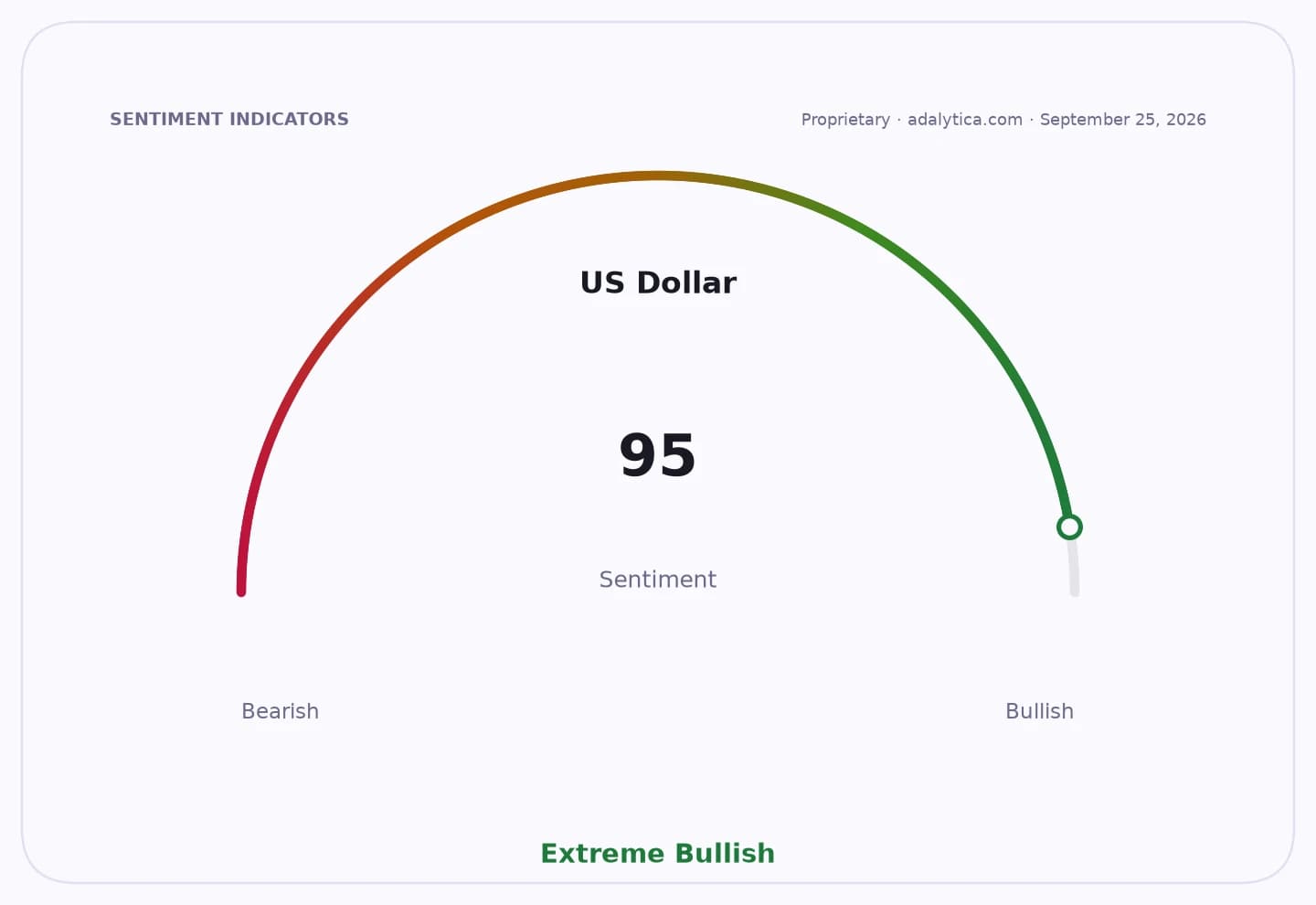
Gold buyers in Egypt are facing another price increase in 24-karat bullion, and that matters because the local market is still being driven less by domestic jewelry demand than by the same forces pushing global gold higher: persistent uncertainty, a stronger appetite for safety, and a U.S. rate backdrop that remains supportive of non-yielding assets.
Gold prices rise in Egypt on global safe-haven demand
For investors, the key point is that gold’s appeal has not been built on a one-day spike. It has been reinforced by a broad macro setup. Spot gold futures were last around $4,476.60 an ounce on Sept. 4, after a powerful run that carried prices from $3,997.00 in mid-July and through repeated swings in the summer. The metal is still trading well above its 50-day moving average, even after some cooling in momentum, which tells you the longer-term uptrend remains intact despite short-term volatility.
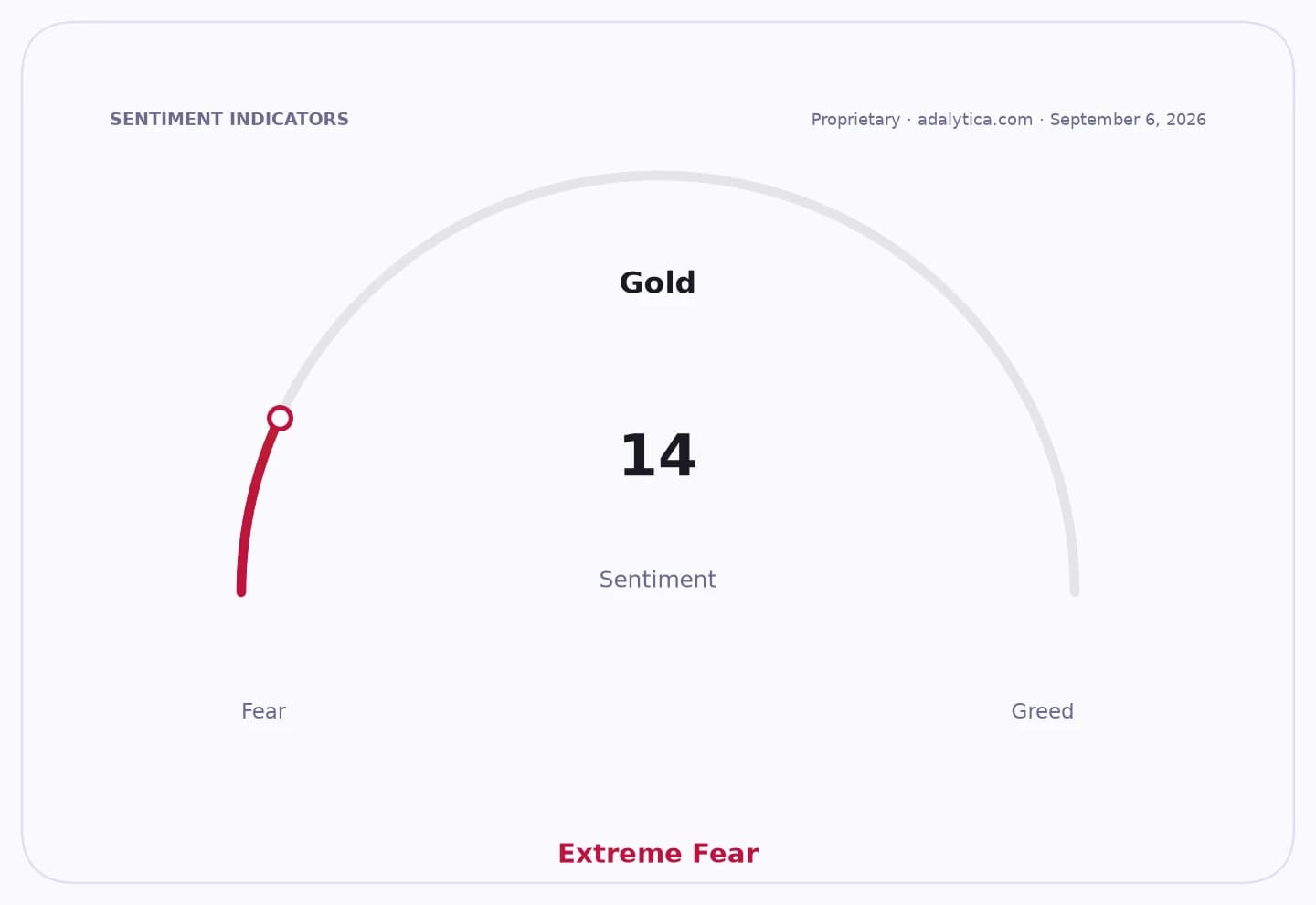
Sentiment IndicatorsⓘProprietary · adalytica.com · September 6, 2026
This is a snapshot — live sentiment, awareness and momentum for 130+ markets update continuously in the dashboard.Open AlphaPulse
That backdrop is especially important in Egypt, where bullion prices often reflect not just world gold but also currency pressure and local hedging behavior. When international prices climb, retail buyers, jewelry shoppers and small savers tend to rush toward physical gold as a store of value. That can lift premiums on local bars and coins, and it is one reason Egypt’s 24-karat price updates draw so much attention whenever global markets get uneasy.
The broader macro picture still favors gold. The U.S. 10-year Treasury yield was around 4.77% to 4.79% in early September, high enough to matter for bond markets but not enough to extinguish gold demand. Meanwhile, Adalytica’s Gold Fear & Greed Index showed “Extreme Fear,” a reading that often aligns with strong safe-haven interest rather than confidence in risk assets. In other words, the market is still telling you investors want protection, not just return.
That is where gold’s long-term case becomes more interesting. Central banks, retail savers and portfolio managers do not buy bullion for earnings growth or dividends. They buy it for resilience. When inflation fears, geopolitical tension or currency instability rise, gold tends to regain its role as portfolio insurance. For investors in Egypt, that makes local gold pricing more than a consumer headline; it is a real-time gauge of confidence in money itself.
The near-term risk is obvious: gold can correct sharply when the dollar strengthens or when yields rise further. GLD, the SPDR Gold Trust, has also shown that internal volatility, with momentum indicators easing from more stretched levels after the recent run-up. But the long-term picture remains constructive as long as uncertainty stays elevated and central banks keep enough easing potential on the table to limit real-rate pressure.
For long-term investors, the lesson is simple: gold is not about chasing every daily move. It is about owning a diversifier that tends to work when other assets are under stress. Egypt’s latest 24-karat price rise is another reminder that bullion still has a place in a well-diversified portfolio, especially for investors thinking in years rather than weeks. Worth watching, and worth holding with patience.
| Entity | Gains | Losses |
|---|---|---|
| Gold sellers in Egypt | ▲Higher retail prices | ▼Lower buyer demand |
| Local buyers | ▲Safe-haven access | ▼More expensive bullion |
| Gold miners and bullion funds | ▲Stronger metal prices | ▼Less upside if rates rise |
| Dollar and higher yields | ▲Relative support | ▼Gold momentum |