Gold’s retreat from recent highs is easing the sticker shock for retail buyers, but it is doing little to narrow the gap between what customers pay on the way in and what dealers are willing to pay on the way out.
Gold resale spreads stay wide as prices ease
That spread is the real economics of the gold trade, and it is where the market’s most important story now sits: volatility has shifted bargaining power back toward dealers, even as underlying bullion remains expensive enough to keep investors, savers and household sellers highly sensitive to pricing. In practical terms, the test of where someone sells gold — a luxury district, a retail chain or a train-station area — can still produce differences approaching 1,000 euros for roughly the same item, underscoring how fragmented and opaque the physical gold resale market remains.
Sentiment IndicatorsⓘProprietary · adalytica.com · October 21, 2026
This is a snapshot — live sentiment, awareness and momentum for 130+ markets update continuously in the dashboard.Open AlphaPulse
Recent price action shows the broader backdrop has turned less frenetic, though not benign. GLD, the SPDR Gold Shares ETF, closed at $378.95 on Oct. 21, down from $490 in early March and below its 50-day moving average of $395.87, a sign the metal has cooled after a powerful run. The ETF’s relative strength index, or RSI, sits at 45.5, while MACD remains negative, both pointing to a market that is no longer overheated but has yet to re-establish a clear upward trend. Fellow gold proxy IAU traded at $77.71, also below its 50-day average, while miners tracked by GDX were at $86.72, just under both the 50-day and 200-day moving averages.
For investors, the key implication is that softening spot prices do not automatically translate into a better exit for holders of jewelry, coins or small bars. Dealers typically quote buyback prices at a substantial discount to prevailing bullion levels to cover refining, assay, transport, inventory and margin risk. When price swings are large, those cushions widen. That matters for households treating gold as emergency savings, for small sellers deciding whether to liquidate and for arbitrage-minded traders watching whether retail channels are passing through moves efficiently.
The dealer market is also being shaped by a shift in demand mix. As prices eased, buyers have become more price-sensitive and in some cases have preferred old gold over newly imported product, a pattern that tends to favor local liquidity over fresh retail demand. At the same time, authorities are stepping up scrutiny of smuggling routes, including a recent arrest tied to a Bangladesh-to-Hyderabad gold smuggling ring, which highlights how policy enforcement can affect informal supply and the premiums dealers are willing to pay.
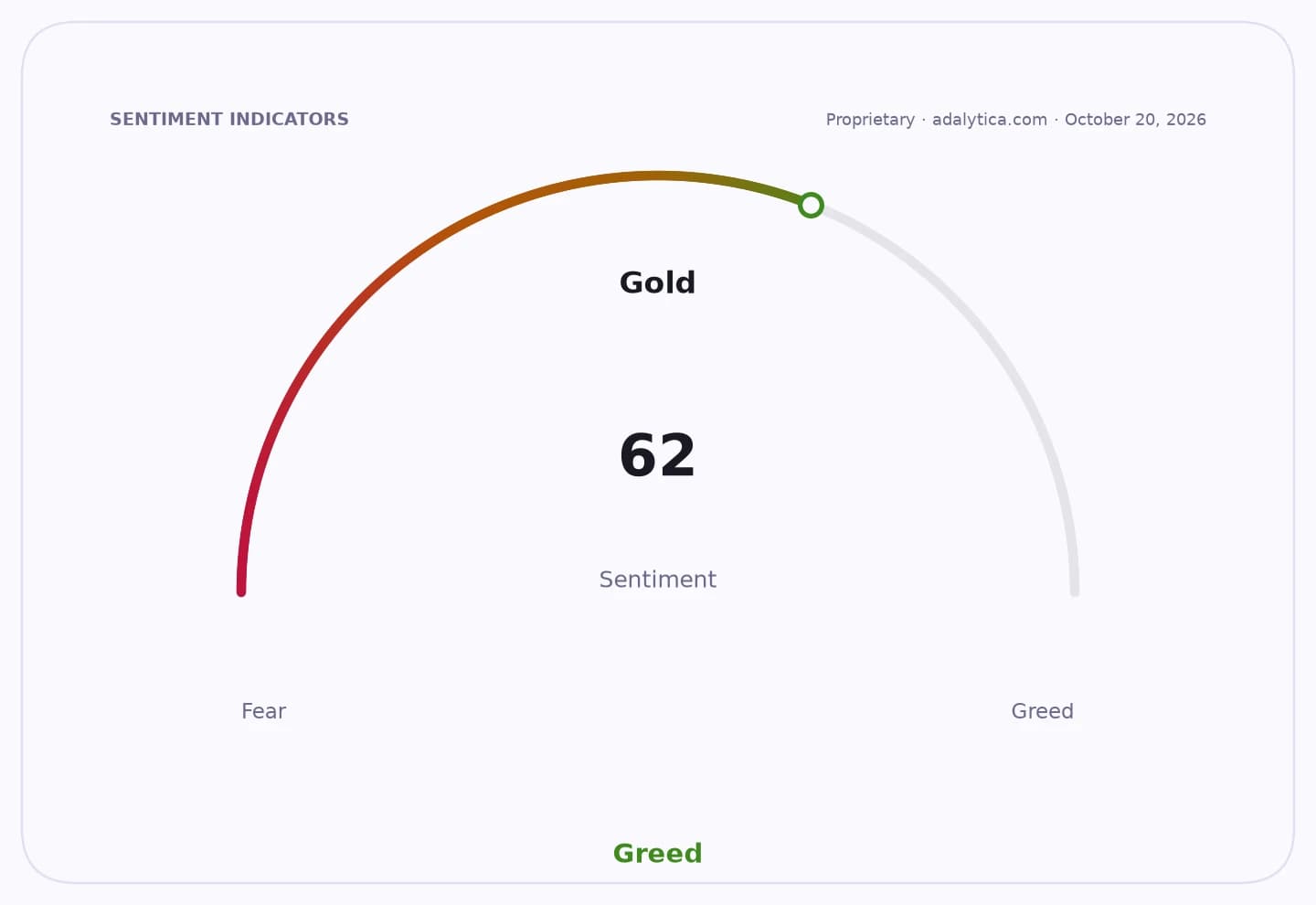
Adalytica’s Gold Fear & Greed Index sits at a neutral 53, but its awareness gauge reads “Extreme Fear,” suggesting elevated caution even after the worst of the price turbulence has passed. That combination points to a market where sentiment has stabilized faster than confidence.
The bull case is that lower bullion prices and tighter enforcement could gradually normalize retail spreads if transaction volumes recover and dealers compete more aggressively for stock. The bear case is that, with volatility still elevated and the physical market fragmented, sellers will continue to face steep haircuts while buyers see only modest relief. For now, the main lesson is simple: in gold, the headline price matters less than the spread, and that is still where the money is made or lost.
| Entity | Gains | Losses |
|---|---|---|
| Gold dealers | ▲Wider margins | ▼Inventory risk |
| Retail buyers | ▲Lower spot prices | ▼Limited buyback value |
| Households selling gold | ▲Cash liquidity | ▼Price realization |
| Bullion market regulators | ▲Better oversight | ▼Informal trade activity |