Gold’s case for a run toward 2,00,000 rupees per tola is being driven less by local jewellery demand than by a global macro trade built on central-bank buying, sticky rates, a softer dollar and persistent demand for safe assets.
Gold and rupee price outlook in India
The move matters because it would push bullion into a new price regime for Indian buyers and intensify the pressure on households, jewelers and importers already dealing with a volatile rupee and uneven physical demand. With domestic gold near 1.49 lakh rupees per 10 grams in some markets, the gap to 2,00,000 narrows quickly if global prices keep climbing and the currency weakens.
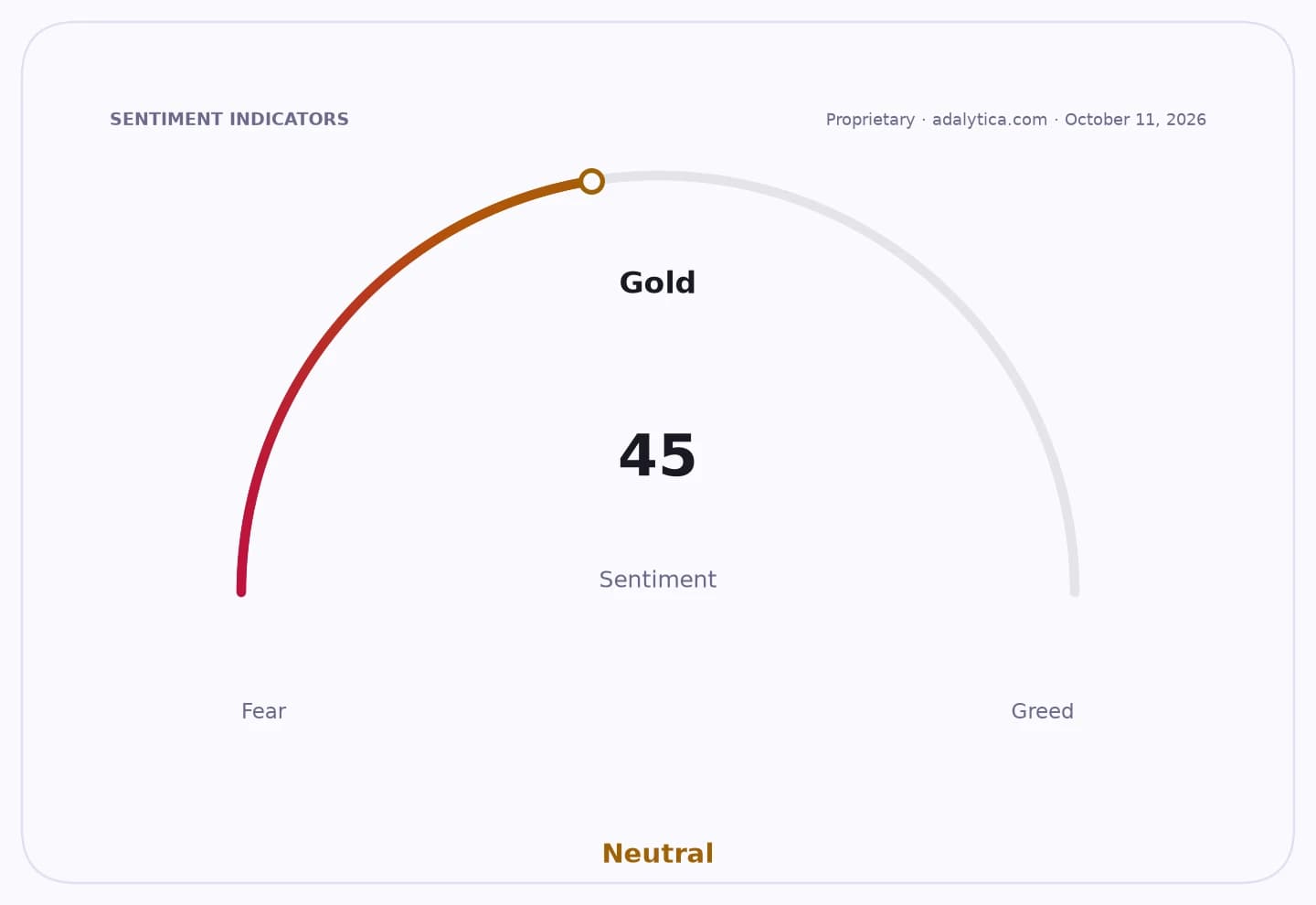
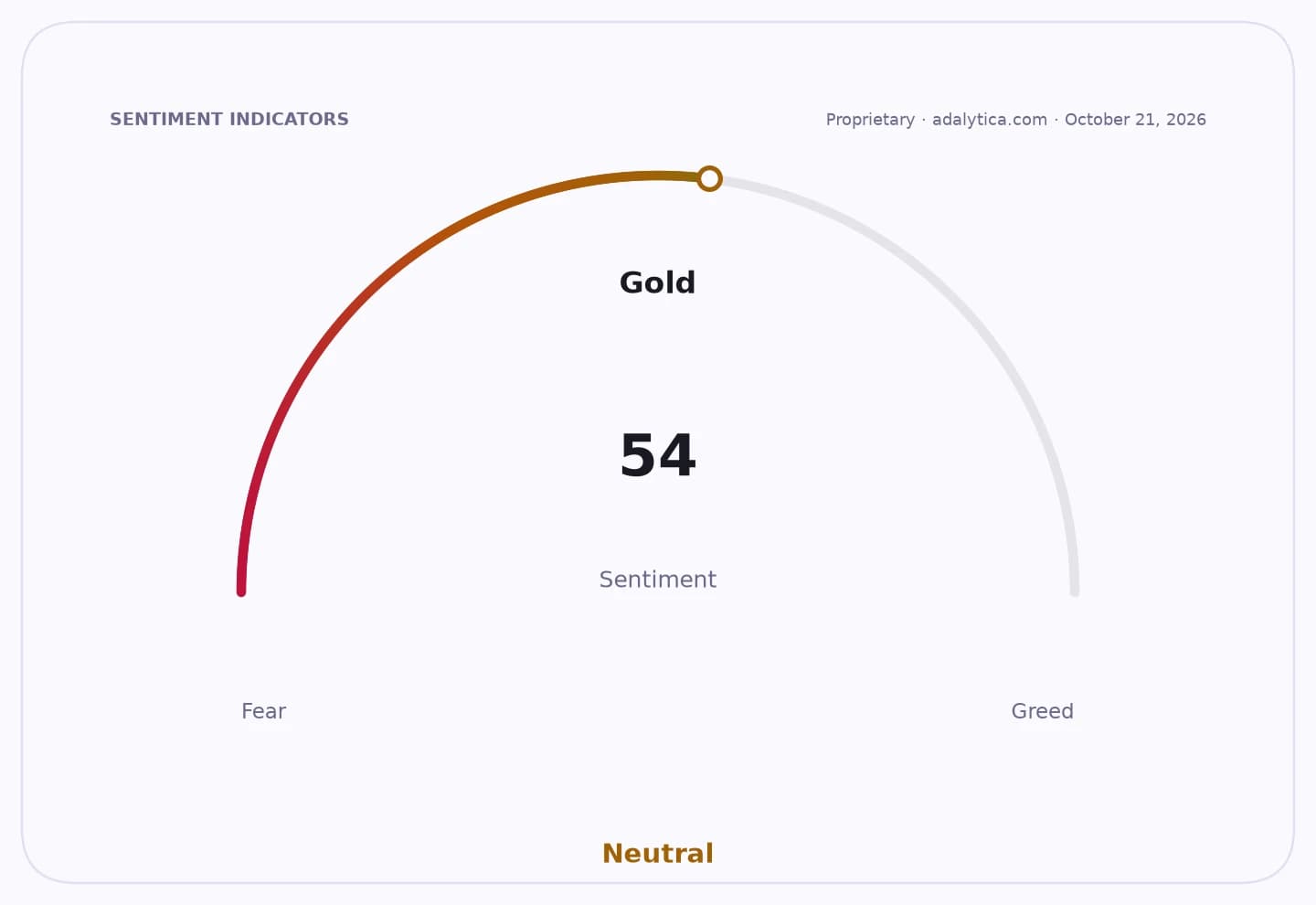
Sentiment IndicatorsⓘProprietary · adalytica.com · October 21, 2026
This is a snapshot — live sentiment, awareness and momentum for 130+ markets update continuously in the dashboard.Open AlphaPulse
Internationally, gold futures on COMEX have climbed to about $4,177.50 an ounce, underlining how firmly the market has repriced the metal as a hedge against policy uncertainty and financial stress. That rally has been reinforced by steady central-bank demand: latest figures cited in market reports show official-sector buyers added about 63 metric tons in September alone, a pace that keeps the structural bid under bullion intact.
The macro backdrop is supportive. Investors are increasingly treating gold as insurance against the erosion of bond values and currency strength, especially with benchmark yields still elevated and the U.S. 10-year Treasury near 5.1%. In that setting, gold competes less with cash and more with long-duration assets that look fragile if growth slows or deficits stay large.
Gold — 30-day sentimentadalytica.com
Explore this data interactively — full history, time series and cross-market comparisons.Open AlphaPulse
Technical indicators also show the rally is not yet extinguished, even after recent volatility. Gold futures briefly topped the 50-day moving average earlier this year and, while the latest contract price around $4,148 is below both the 50-day and 200-day averages, the metal remains well above levels seen before this year’s surge, suggesting the broader uptrend has not been broken.
For investors, the bull case is straightforward: official buying, safe-haven flows and currency weakness can keep adding fuel. The bear case is that a stronger dollar, a pullback in geopolitical anxiety or a firmer physical market discount in India could slow the ascent and keep local prices below the psychologically important 2,00,000 mark.
Adalytica’s Gold Fear & Greed Index sits at 54, or neutral, while its awareness gauge shows “extreme fear,” a combination that points to a market still supported by caution rather than euphoria. That leaves room for further upside if macro volatility deepens — and more downside risk for consumers if bullion’s next leg higher becomes a matter of when, not if.
| Entity | Gains | Losses |
|---|---|---|
| Central banks | ▲Reserve diversification | ▼Bond-market volatility |
| Gold bulls | ▲Higher prices | ▼Yield-driven competition |
| Indian jewelers | ▲None | ▼Lower affordability |
| Buyers in India | ▲Hedge value | ▼Higher rupee cost |