Gold and silver traders are holding back for one thing: proof that the latest pullback has run its course, even as real yields stay elevated and volatility keeps the precious-metals market on edge.
Gold and Silver Pull Back as Rates Stay High
That hesitation matters because it leaves bullion exposed to more downside before the next wave of strategic buying arrives. December COMEX gold was recently trading near $3,956 an ounce after sliding to about $3,904, while silver fell to roughly $48.62 before recovering to around $50.00. Jeffrey Christian of CPM Group said gold could still probe toward $3,800, a move that would not necessarily end the broader bull market but would likely force out weaker hands before longer-term buyers step back in.
Sentiment Indicators
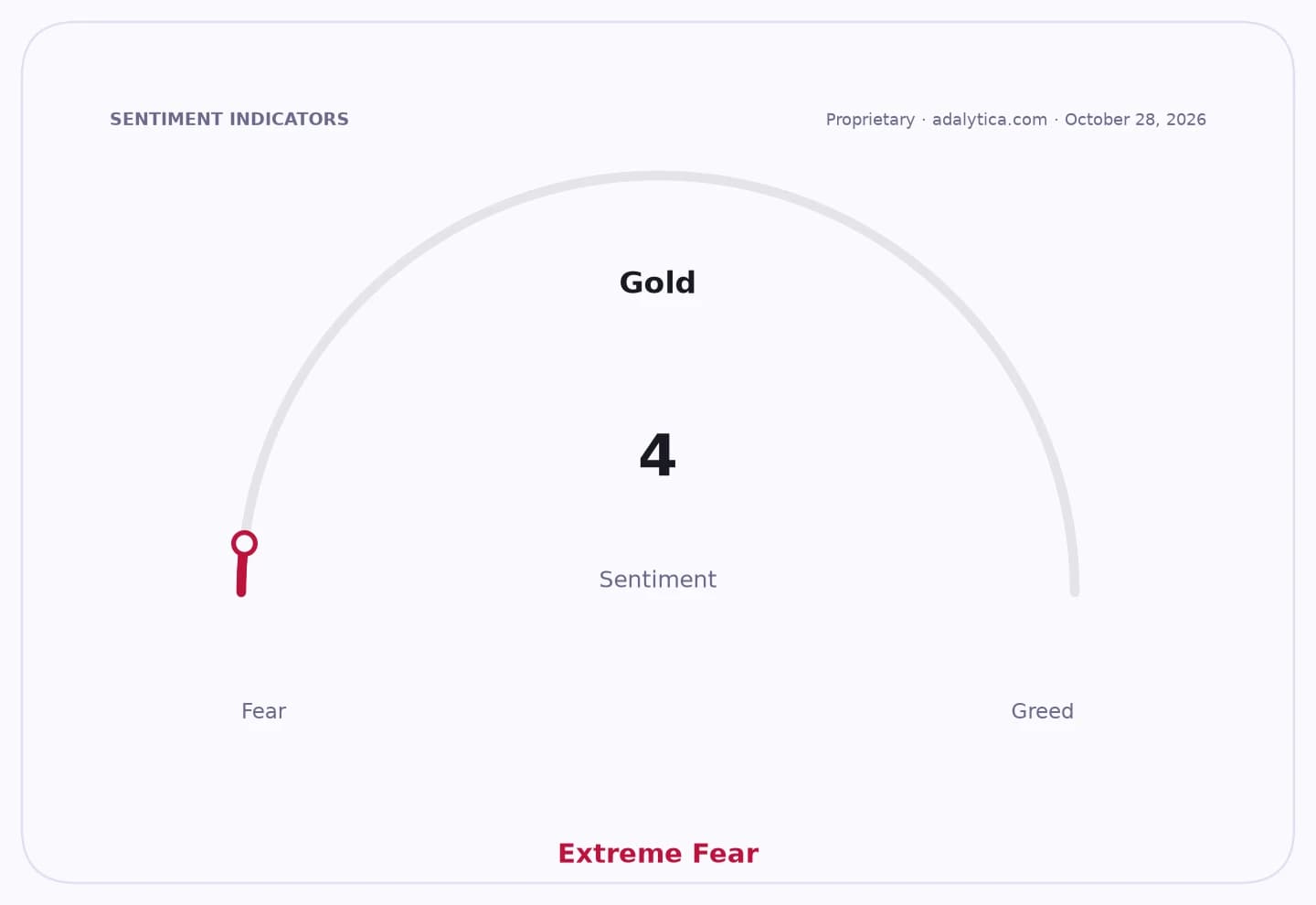
Gold
The economic backdrop is doing part of the work. U.S. Treasury yields remain stubbornly high, with the 10-year near 4.59% and the 2-year around 4.58%, a setup that raises the opportunity cost of holding non-yielding assets. Oil near $98.20 a barrel also keeps inflation risks alive, reinforcing the case for investors who still want hard-asset exposure. At the same time, the dollar has been under pressure, but that has not been enough to prevent profit-taking in precious metals after a powerful run.
That tension is exactly why the selloff matters to investors. Gold and silver have already posted spectacular gains, and exchange-traded funds reflect that larger trend even after the recent shakeout. GLD closed at $375.49 on Thursday, still far above where it traded earlier this year, while SLV finished at $46.93 after a sharp retreat from its highs. Miners have also become more volatile: GDX ended at $85.75, rebounding from recent weakness but still below its summer levels. In other words, the trend has not broken — it has simply become more selective.
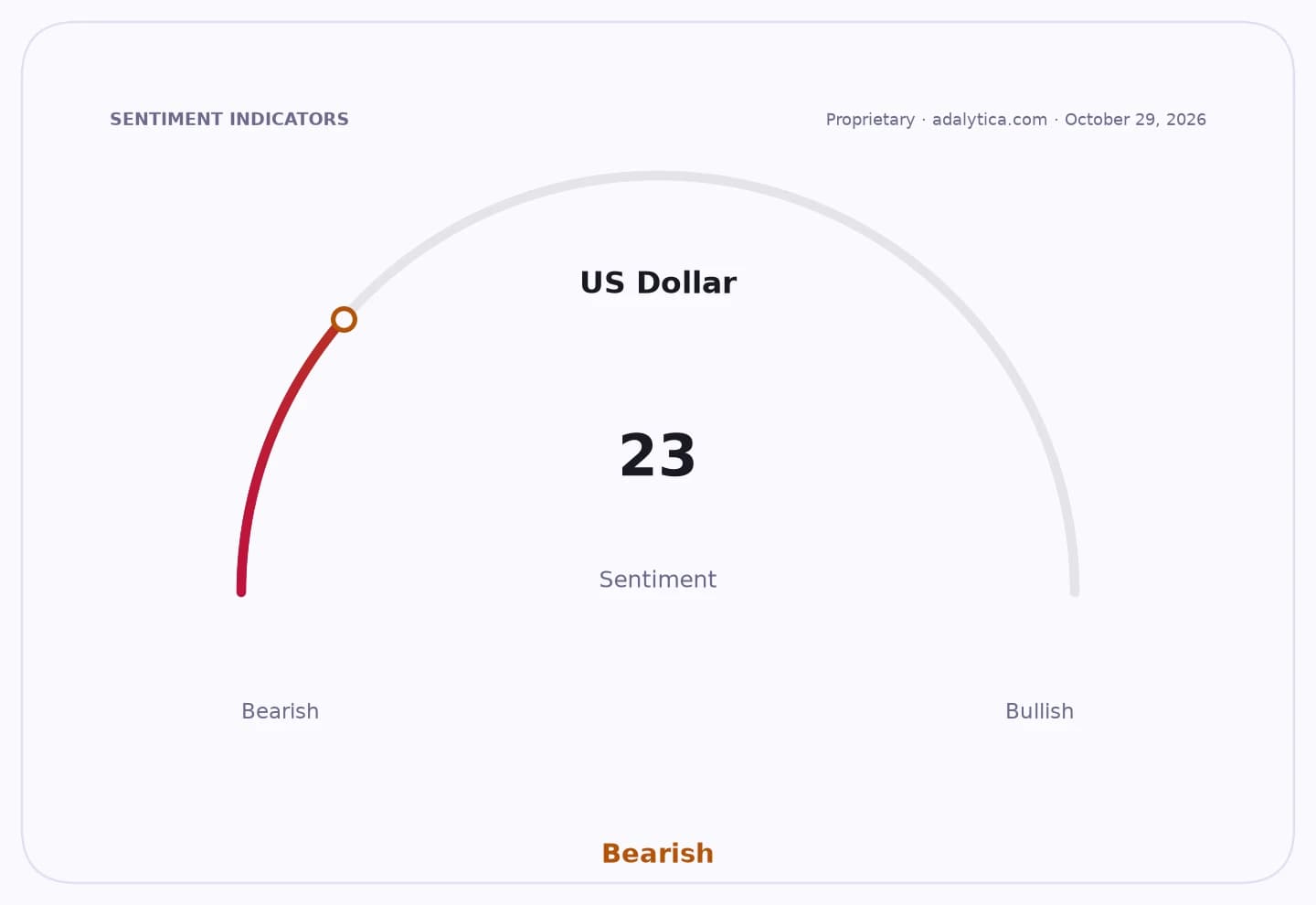
US Dollar
Christian’s point, and the market’s current dilemma, is that a lot of buyers want confirmation before they commit fresh capital. That leaves a temporary vacuum in which prices can overshoot to the downside even in an intact secular bull market. For contrarian investors, that is often where the best entry points appear: not when momentum is hottest, but when conviction is shaken and capital waits on the sidelines.
The longer-term case for gold and silver remains anchored in the same forces that have driven the rally so far: fiscal deficits, geopolitical tension, and persistent uncertainty over the path of rates. If those pressures continue, the next durable move may not come from chasing breakouts, but from buying the dips after the market finishes testing whether support around $3,800 in gold and the high-$40s in silver can hold.
For investors, the message is straightforward: stay exposed to the precious-metals complex, but be ready for a final washout before the next leg higher. That favors patient positioning in bullion, quality miners, and leveraged proxies only after the market shows the stability buyers are waiting for.
| Entity | Gains | Losses |
|---|---|---|
| Long-term bullion buyers | ▲Better entry levels | ▼Near-term price pain |
| Gold and silver bulls | ▲Secular uptrend intact | ▼Waiting for confirmation |
| Miners such as GDX holdings | ▲Higher realized prices over time | ▼Margin pressure if spot falls |
| Short-term momentum traders | ▲Volatility opportunities | ▼Whipsaw risk |