Greece is widening its debt restructuring scheme to 120 monthly installments, a move that could pull more than 1.5 million taxpayers and social security debtors back into repayment and offer the government a better chance of collecting arrears that have proven too heavy for many households and small businesses to service.
Greece widens debt repayment plan to 120 installments
The upgraded plan extends eligibility to overdue debts registered through Dec. 31, 2024, instead of stopping at 2023 as under the existing 72-installment arrangement. That change matters economically because it lowers the monthly burden enough to make repayment feasible for a larger pool of debtors, while also giving the state a longer runway to recover money that might otherwise remain uncollected. The trade-off is clear: Athens is offering more time, but not a haircut.
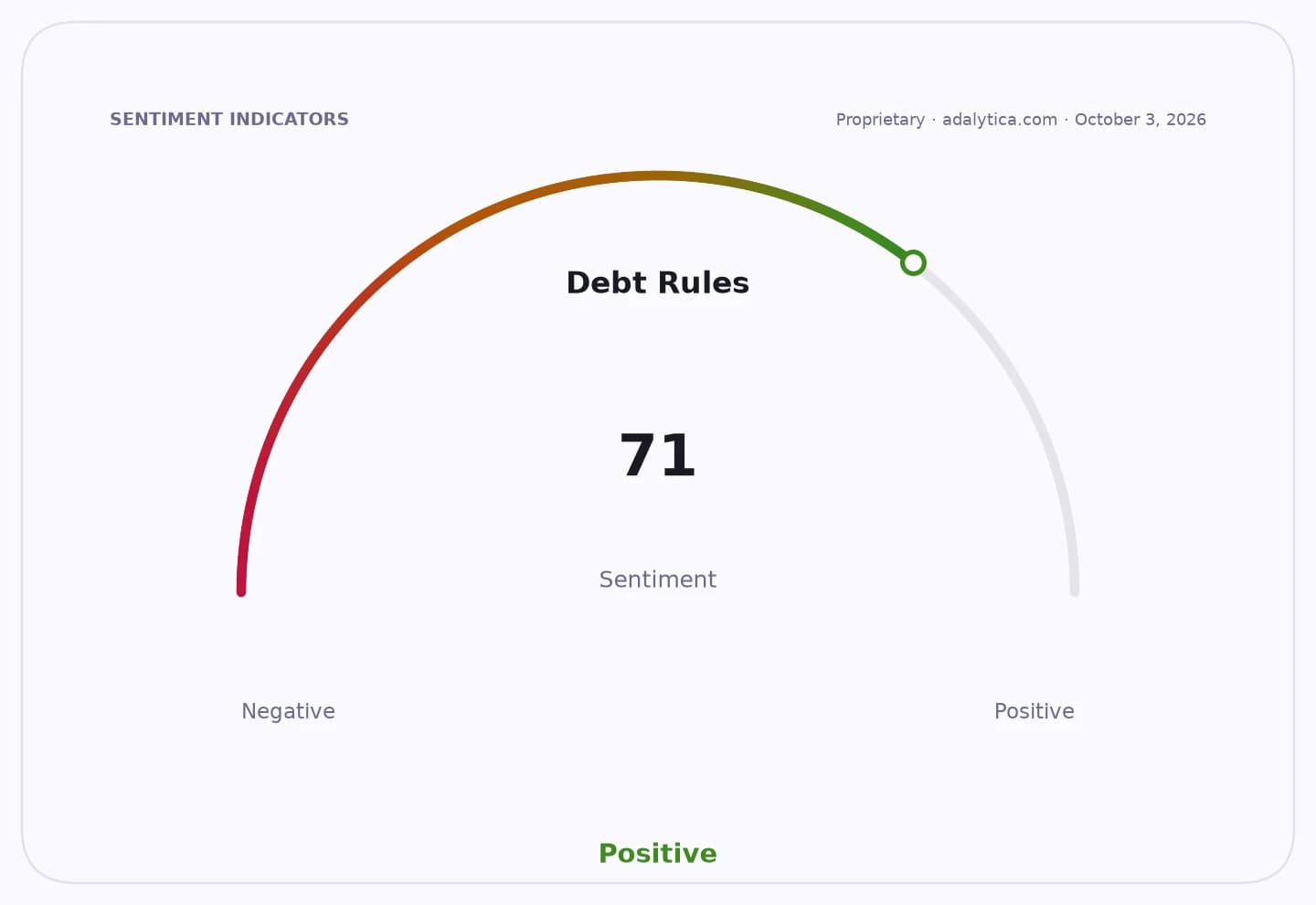
Sentiment IndicatorsⓘProprietary · adalytica.com · October 12, 2026
This is a snapshot — live sentiment, awareness and momentum for 130+ markets update continuously in the dashboard.Open AlphaPulse
The scheme covers debts to the tax office and EFKA, Greece’s social security agency, and is expected to be open for applications in November, with a deadline for joining until June 30, 2027. A legislative amendment is due in parliament by the end of October. The government’s bet is that a broader, more flexible framework will draw in debtors who stayed out of the 72-installment program because it excluded 2024 liabilities, required all newer debts to be settled in 24 installments and offered no principal relief.
For investors, the significance is twofold. First, a larger and more workable repayment program should improve collection rates for the public sector over time, which is relevant in a country where debt sustainability remains a watchpoint for bondholders and ratings-sensitive markets. Second, the policy reduces the risk that a large stock of arrears continues to drift outside the formal system, a drag on household consumption, small-business liquidity and the broader tax base.
The financial logic of the new terms is straightforward. A 7,000-euro debt would translate into a 77-euro monthly payment under 120 installments, versus 116 euros under the 72-installment plan. For a 55,000-euro obligation, the monthly charge falls to 606 euros from 908 euros. That easing comes at the cost of higher total interest, with the applicable rate held at 5.85%, but the lower monthly bill is likely to matter more for stretched debtors deciding whether to re-enter the system.
The government is also allowing those already in the 72-installment program to move to the 120-installment schedule for the remaining balance and to incorporate arrears verified through Dec. 31, 2024. Debtors already on the 24-installment plan for 2024 liabilities will be able to shift those debts into the longer arrangement as well, provided they also regularize newer obligations. That makes the policy less punitive than the previous setup, which automatically pushed many delinquent taxpayers out of the scheme if they could not keep up with fresh liabilities.
Still, the program is not a giveaway. Debtors must have filed income tax returns for the past five years, cannot have unresolved post-2024 debts outside a lawful arrangement and will lose the settlement if they miss two consecutive monthly payments. That keeps the scheme focused on repayment discipline rather than outright amnesty, a balance likely designed to blunt criticism that repeated installment plans weaken compliance.
The broader narrative is one of Greek policymakers trying to convert chronic arrears into manageable cash flow rather than let them remain frozen on the state’s balance sheet. If take-up is strong, the scheme could ease pressure on vulnerable borrowers while improving the state’s near-term collection prospects. If participation disappoints, it will underscore how little room indebted households and firms still have, even with a more generous timetable.
| Entity | Gains | Losses |
|---|---|---|
| Greek debtors | ▲Lower monthly payments | ▼Higher total interest |
| Greek state | ▲Better collection prospects | ▼Less immediate cash |
| EFKA and tax office | ▲More accounts back in repayment | ▼More administrative complexity |
| Existing 72-installment participants | ▲Path to longer tenor | ▼No principal haircut |