A Rhodes court has erased most of a pensioner’s 243,676.76-euro debt burden and allowed him to keep his only home, underscoring how Greece’s debt-relief framework continues to be used as a last-resort shield for vulnerable households squeezed by inflation, higher living costs and weak income growth.
Greek court cuts pensioner debt and protects home
The Single-Member Court of First Instance in Rhodes ruled in favor of a retired father of three, one of them permanently disabled, cutting 194,158.76 euros from his obligations and setting a total repayment of 49,518 euros over 240 months, or 206.32 euros a month. The decision also imposes zero payments for three years on consumer loans and credit cards and fully exempts his primary residence from liquidation.
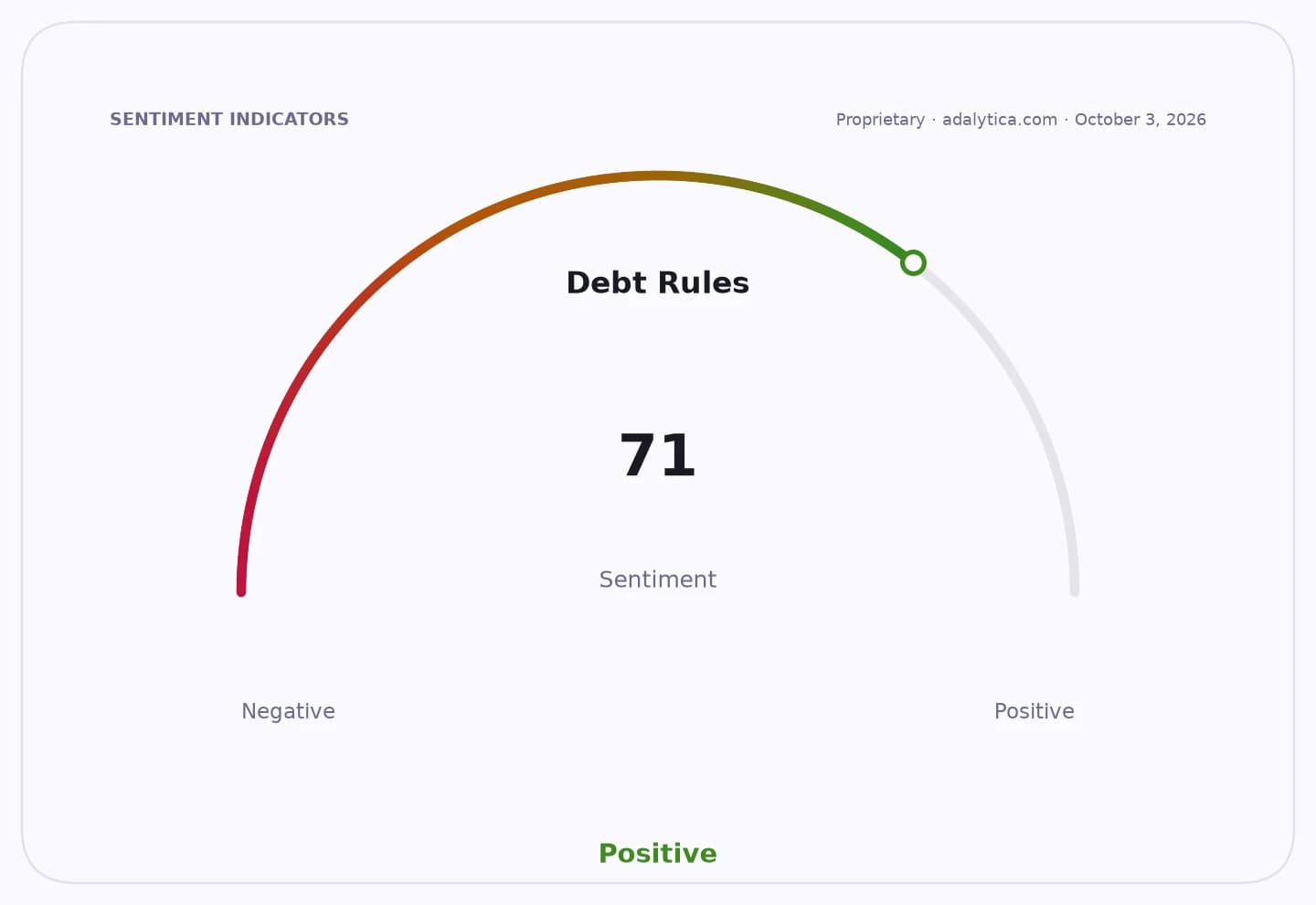
Sentiment IndicatorsⓘProprietary · adalytica.com · October 3, 2026
This is a snapshot — live sentiment, awareness and momentum for 130+ markets update continuously in the dashboard.Open AlphaPulse
The ruling matters well beyond one household. It shows how Greek courts are balancing creditor claims against social protection at a time when debt stress remains elevated across Europe and policymakers are under pressure to prevent vulnerable borrowers from slipping into foreclosure. For banks and loan servicers, such decisions reinforce the need to work through restructurings and loss recognition rather than expect blanket recovery from distressed retail books.
The court said the borrower faced a permanent inability to service overdue bank debt because his net monthly income had fallen sharply and no longer covered basic family needs. It also cited his age, the broader economic crisis, the jump in living expenses and higher health-related costs for him and his child as factors making a material income recovery unlikely. When the loans were originally granted, the court noted, household income was sufficient to meet the instalments without undermining living standards.
The debt write-off leaves the pensioner paying roughly 80% of the objective value of the home, while the remainder of the debt is permanently extinguished. That structure is important for creditors: it preserves some recovery value linked to collateral while reducing the risk of forcing a distressed borrower into selling a primary residence at a loss. For investors watching Greek consumer credit, the message is that household balance-sheet repair is still happening through judicial intervention rather than market-based refinancing.
More broadly, the case fits into a wider European backdrop in which debt burdens, from households to sovereigns, remain a political and financial flashpoint. As inflation has eased but living costs remain elevated, borrowers with fixed incomes are still vulnerable, and courts are increasingly asked to decide whether repayment obligations are realistic. The next test will be whether such rulings remain isolated protections for the most fragile households or become part of a wider pattern of relief that could reshape recovery expectations for lenders.
| Entity | Gains | Losses |
|---|---|---|
| Pensioner borrower | ▲Keeps main home; debt reduced | ▼Must still repay 49,518 euros |
| Greek household sector | ▲More legal relief for vulnerable borrowers | ▼Credit access may tighten |
| Banks and loan servicers | ▲Partial collateral recovery | ▼Larger write-offs and slower collections |
| Creditors in distressed debt | ▲Court-backed repayment framework | ▼Full recovery expectations reduced |