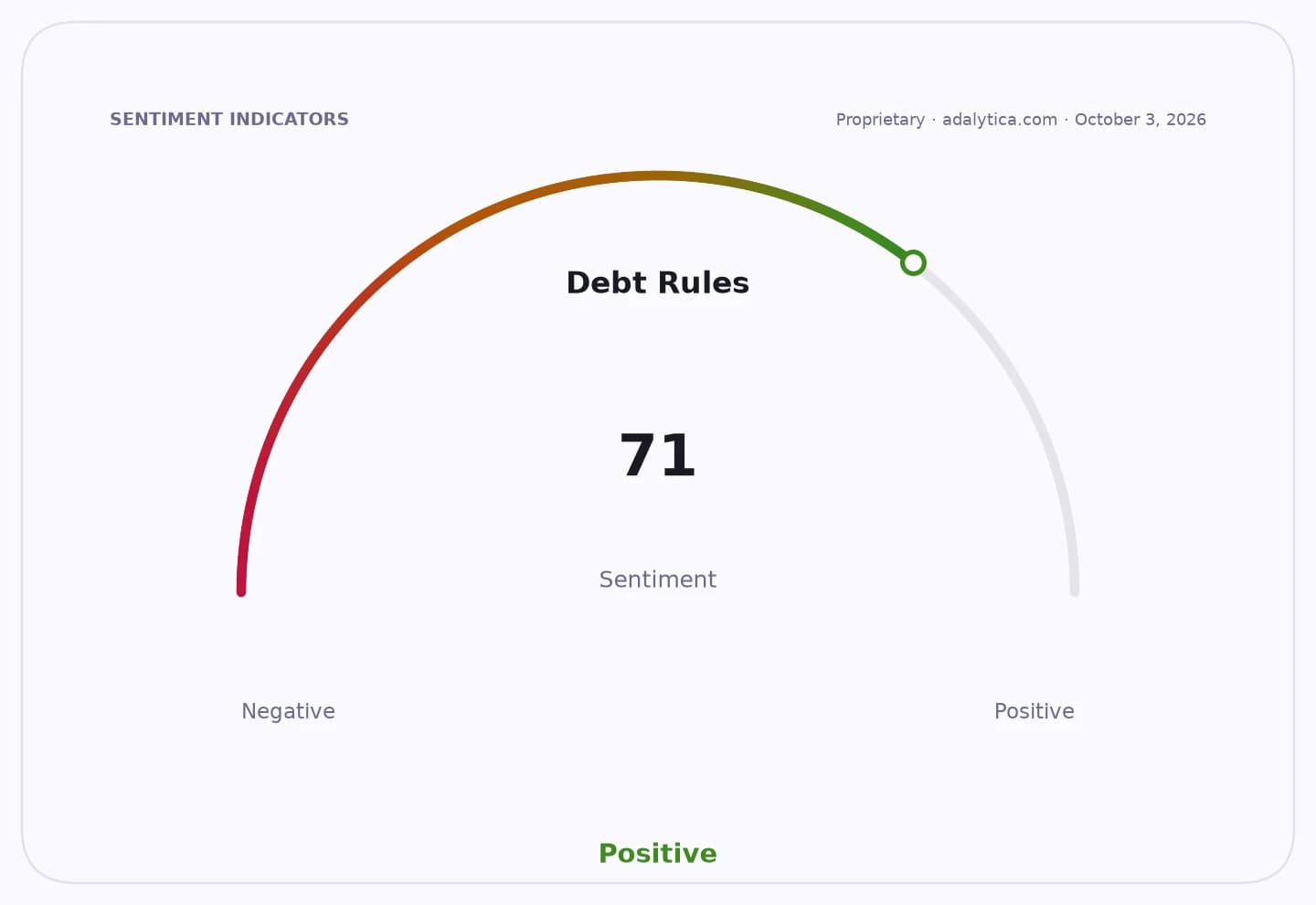
Bornholm’s court received 21 debt-restructuring cases in the first eight months of the year, down from 26 in the same period last year, a small but useful sign that some household finances are stabilizing even as debt stress remains a wider Nordic concern.
Bornholm debt restructuring cases fall to 21
That matters because debt restructuring is usually a lagging indicator: people do not turn to the courts until after months of rising bills, lost income or higher borrowing costs. A drop in filings does not mean families are suddenly comfortable, but it can suggest fewer households are being pushed past the point where they can keep up with repayments. For local lenders, retailers and service businesses, that is good news. Fewer distressed consumers typically means less pressure on loan books, less forced spending cutback and a slightly better backdrop for local demand.
The Bornholm figures are modest in scale, but they sit against a broader European picture in which heavy household and public debt have become a real economic drag. When debt burdens climb, households are forced to prioritize creditors over consumption, and that weakens growth. That is why even a decline of five cases in a small market matters: it hints at some relief in the channels that feed consumer stress.
For investors, the bigger lesson is that credit quality often turns before headline growth does. If repayment pressure is easing in pockets of the economy, that can help banks, consumer lenders and companies exposed to discretionary spending. It does not make the story bullish on its own, but it does suggest the worst of the squeeze may not be deepening everywhere at once. In a market where investors are constantly watching for signs of strain in consumer credit, even a small improvement is worth noting.
At the same time, the trend should not be overstated. Twenty-one cases in eight months is still a meaningful level of distress for a small community, and one local court report cannot outweigh the broader warnings around debt in Finland and across Europe. But if more households are managing to stay current without seeking formal restructuring, that is exactly the sort of incremental progress long-term investors want to see: slow, uneven and important.
For now, Bornholm looks less like a breakout recovery story and more like a reminder that financial pressure can begin to ease before the headlines do. That makes the local credit outlook worth watching, especially for banks and consumer-facing businesses with exposure to households that live close to the edge.
| Entity | Gains | Losses |
|---|---|---|
| Bornholm households | ▲Less repayment stress | ▼Still exposed to shocks |
| Local lenders | ▲Fewer bad-debt cases | ▼Less growth from distressed lending |
| Consumer businesses | ▲Better spending stability | ▼Fewer gains if demand stays subdued |
| Debt advisers/courts | ▲Steadier caseload | ▼Lower demand for restructurings |