Brazil’s federal government has given informal workers another 30 days to renegotiate up to 15,000 reais of consumer debt under the Desenrola Adimplentes program, extending a policy aimed at easing household balance-sheet stress without forcing a broader fiscal intervention.
Brazil extends Desenrola debt renegotiation deadline

The move matters because the program targets a large but often overlooked part of Brazil’s labor market: workers who rely on irregular income, have debts current or less than 90 days past due, and need lower monthly payments to stay solvent. By pushing the deadline to Oct. 26, Brasília is trying to prevent relatively small personal debts from turning into longer-term arrears that would weigh on consumption, credit quality and delinquency trends in a higher-rate economy.
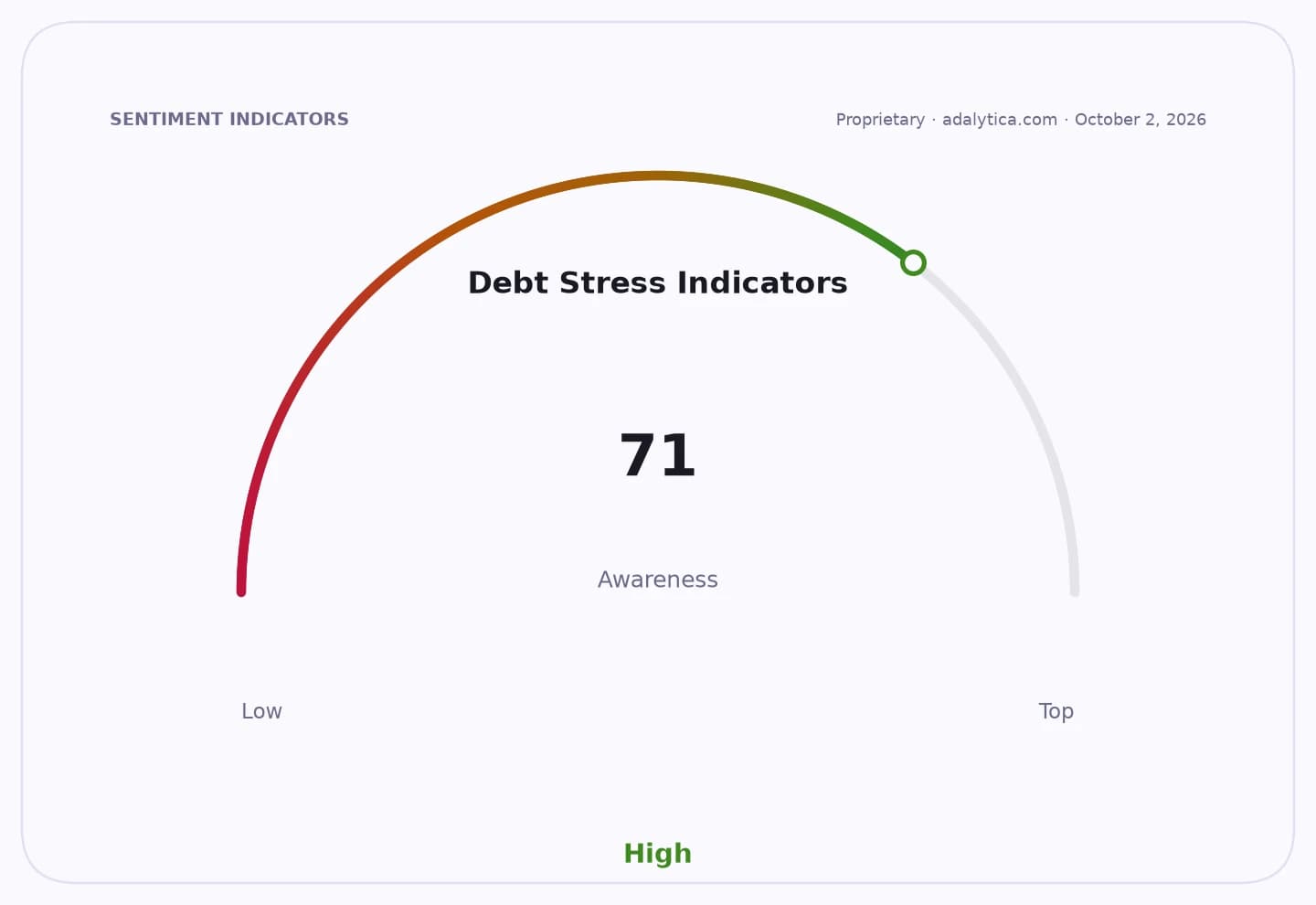
Sentiment IndicatorsⓘProprietary · adalytica.com · October 3, 2026
This is a snapshot — live sentiment, awareness and momentum for 130+ markets update continuously in the dashboard.Open AlphaPulse
Under the program, eligible borrowers can restructure personal credit balances at interest rates of up to 1.99% a month, provided they have already paid at least four installments of the original financing. That combination of a capped rate and a modest debt ceiling makes the initiative less about credit expansion than about containing defaults among households most exposed to volatility in income and borrowing costs.
The extension also has a macroeconomic rationale. In an economy where policy rates remain a key constraint on spending, debt relief can support near-term consumption by reducing the share of income absorbed by service costs. That may offer some help to retailers, lenders and consumer-facing businesses if it prevents a further tightening in household cash flow, though the effect is likely to be limited by the program’s narrow size and eligibility rules.
For investors, the immediate read-through is mixed. Consumer lenders and banks may benefit if the program reduces late-stage delinquencies and improves recoveries, but a wider take-up of renegotiation also underscores continued stress in Brazil’s lower-income credit segment. In that sense, the policy is supportive for asset quality in the short run, while also confirming that credit normalization remains incomplete.
The broader backdrop is a world in which debt burdens are becoming harder to manage as borrowing costs stay elevated. In that environment, small-scale restructuring programs such as Desenrola Adimplentes are being used as a pressure valve: they can stabilize vulnerable borrowers and support spending, but they do not solve the underlying problem of weak income growth and expensive credit. The key question for markets is whether this kind of targeted relief becomes a bridge to healthier repayment behavior or simply delays the next round of household stress.
| Entity | Gains | Losses |
|---|---|---|
| Informal workers | ▲Lower monthly debt burden | ▼Less leverage in creditor talks |
| Consumer lenders | ▲Fewer near-term delinquencies | ▼Lower interest income |
| Retailers/services | ▲Some support to household spending | ▼Limited impact if distress persists |
| Federal government | ▲Political goodwill | ▼Fiscal-policy scrutiny |